Physiology of the Skin
Dr Sami Fathi Billal MBBS, MSc, MD, PhD
Objectives
- By completing this lecture, you should be able to:
- Gain familiarity with skin functions and how relevant dysfunction contributes to disease
- Approach dermatologic disease with an understanding of basic skin structure and microanatomy
Functions of the Skin
1- Barrier function
- The skin provides a physical barrier that regulates water loss and protects against mechanical, chemical and microbial insults from the external environment.
- Dysfunction of the skin barrier leads to injury, dehydration, infection and inflammation.
Example: Loss of skin barrier functions
- This child has atopic dermatitis, a chronic skin condition associated with barrier dysfunction.
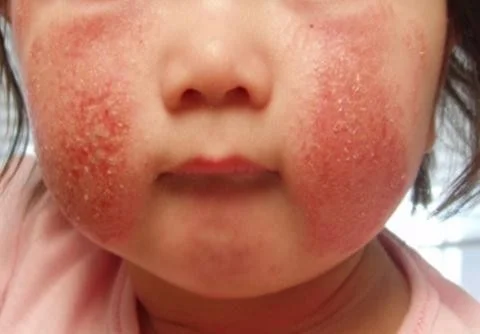 bilateral erythematous scaly plaque in cheeks of female child - ill demarcated - Atopic Dermatitis
usually related to flagryne
2- Immunologic function
- As an immunologic barrier, the skin both senses and responds to pathogens.
- Dysfunction of the immunologic barrier leads to infection, skin cancer, inflammatory skin conditions and allergy.
Example: Loss of Immunologic function This HIV-positive man has molluscum contagiosum, a skin infection caused by a virus.
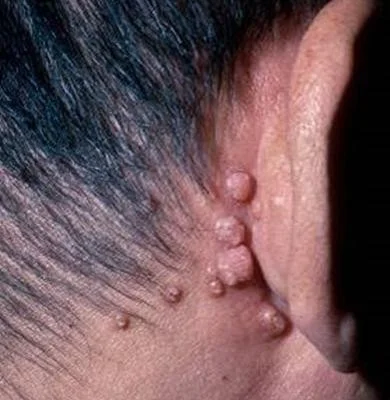 Multiple variable sized Pappules/nodules, located right post auricular, Male
3- Temperature regulation
- The skin maintains a constant body temperature with the insulating properties of fat and sweating and a dense superficial microvasculature.
- Dysfunction of temperature regulation leads to hyper- or hypothermia.
syphilis hypo malaria hyper
4- Protection from radiation
- The dark pigment melanin in the epidermis protects cells against ultraviolet radiation.
- Dysfunction of melanin production causes the patient to be more susceptible to skin cancer.
Example: Loss of Protection from radiation
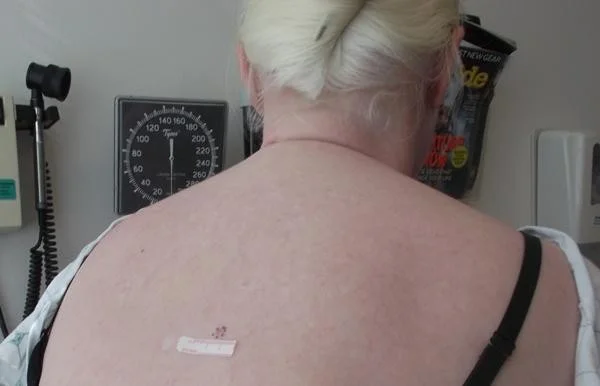
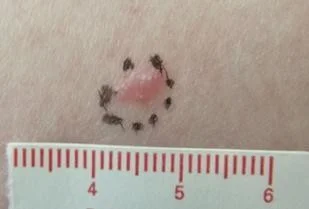
This patient with albinism has a skin cancer on the back.
5- Nerve sensation
- Sensory receptors allow the skin to constantly monitor the environment and mechanoreceptors in the skin are important for the body’s interactions with physical objects
- Dysfunction leads to pruritus (itch), dysesthesia (abnormal sensation), and insensitivity to injury (e.g. diabetes, leprosy).
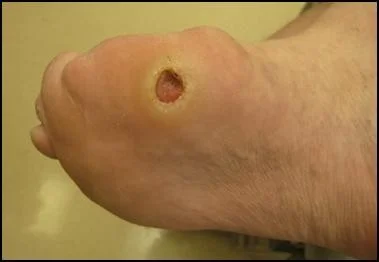
Example: Loss of sensation function
Chronic ulcer on the foot of a patient with peripheral neuropathy related to diabetes.
6- Injury repair
- The cutaneous wound repair process has four phases: coagulation, inflammatory phase, proliferative-migratory phase (tissue formation), and remodeling phase
- Loss of ability to repair injury (e.g. post-radiation treatment) leads to delayed wound healing.
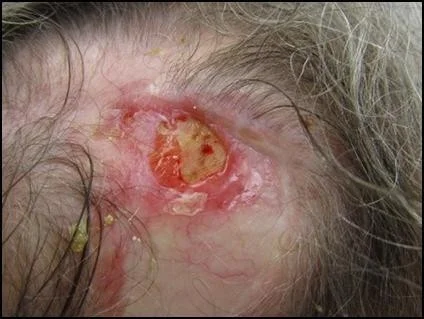
Example: Loss of Injury repair ability
This patient has a chronic ulcer following trauma on the scalp in a site previously irradiated as part of treatment for squamous cell carcinoma.
#RR
7- Appearance, Quality of Life (Cosmetic impact)
- Skin defects and even physiologic aging can result in considerable psychological distress, an important clinical feature of many cutaneous diseases.
Example: Loss of Cosmetic Impact
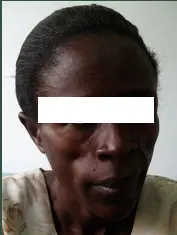
- This patient has HIV-associated lipoatrophy, characterized by loss of fat throughout the face.
- Atrophy of buccal fat pads have an impact on self-esteem.