Knee Examination
Table of Contents
- Preparation
- General Assessment
- Inspection
- Detailed Inspection
- Palpation
- Detailed Palpation
- Movement
- Anterior Drawer Test
- Posterior Drawer Test
- Collateral Ligament Tests
- Tests for Tears in Cruciate Ligaments
- Anterior Drawer Sign
- Posterior Drawer Sign
- Varus Stress Test
- Valgus Stress Test
- Tests for Tears in Cruciate Ligaments
- Popliteal Fossa Examination
- Knee Reflex Test
- Range of Motion and Strength Test
- Range of Motion
- Patellar Tap Test
- Anterior & Posterior Drawer Tests
- Notes
Knee Examination
Preparation
- Washes hand/uses Alcohol rub before and after knee examination.
General Assessment
- General appearance, vital signs, BMI.
Inspection
- Gait: Deformities (Varus VS Valgus)
- Skin changes: Scars, redness, rashes, effusion, muscle wasting, any joint deformities
- Popliteal swelling: Baker’s cyst
- Compares both sides.
Erythema, swelling, bruising, lacerations, gross deformity, discoloration, and any asymmetry of bony or soft tissue landmarks, including atrophy and valgus or varus deformities, should be noted.
Palpation
Palpation should assess for pain over all bony and soft tissue landmarks, warmth, and effusion.
-
Asks if patient is in any pain.
-
Assesses skin temperature.
-
Palpates joint line and surrounding structures.
- Temperature
- Tenderness over:
- Tibial tubercle
- Patella and patellar tendon
- Joint line
- Medial and lateral sides of the joint
- ?Bursitis
- Effusion:
- Bulge/Sweep test (for minimal effusion)
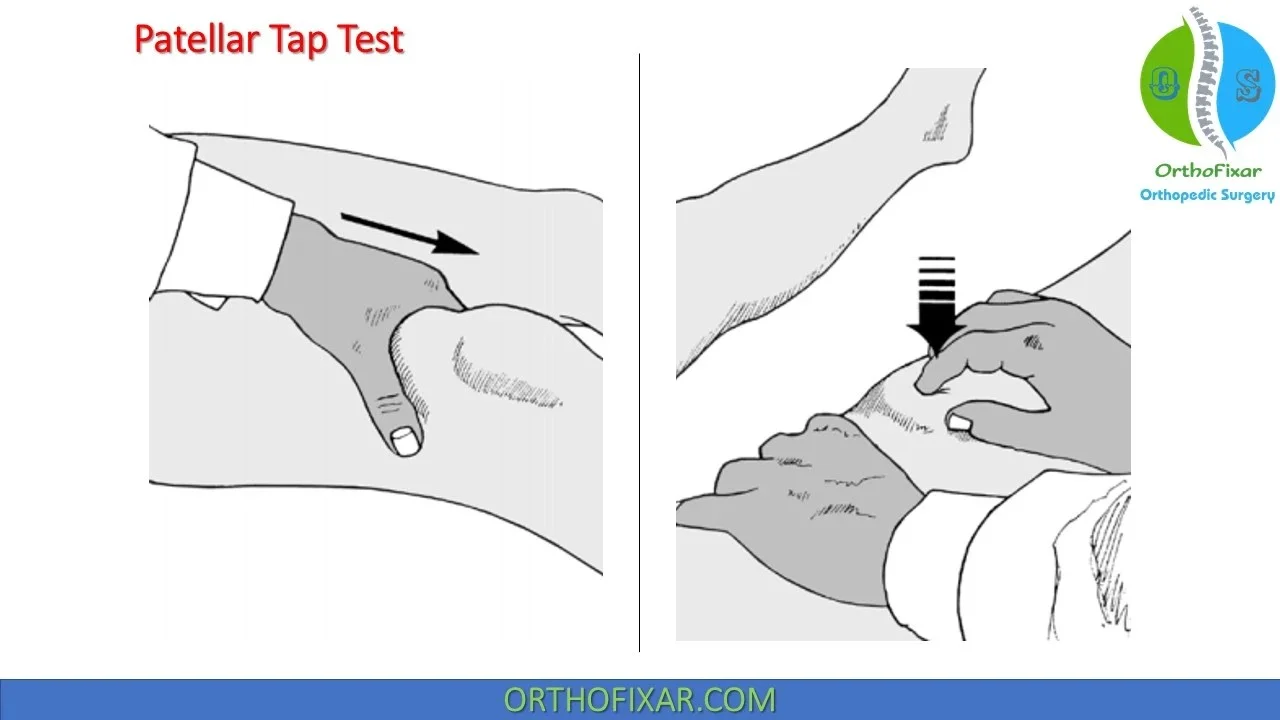
- Patellar tap test (for large effusion)
-
Examines popliteal fossa.
-
Performs knee reflex test.
RANGE OF MOTION AND STRENGTH TEST
Range of motion (active and then passive) should be used to assess flexion and extension of the knee. Normal limits of knee range of motion include extension from 0 to –10° and flexion to 135°.
Movement
- Examines active and passive flexion and extension.
- Checks for crepitus.
- Assesses cruciate ligament tears (Anterior & posterior drawer tests).
Anterior Drawer Test
- Performed with knee in 90° flexion and foot flat on the couch by pulling the tibia anteriorly.
Posterior Drawer Test
- Performed with knee in 90° of flexion by pushing the tibia posteriorly.
Range of Motion and Strength Test
Range of Motion
- Active and then passive range of motion should be used to assess flexion and extension of the knee.
- Normal limits of knee range of motion include extension from 0 to -10° and flexion to 135°.
PATELLAR TAP TEST
Anterior & Posterior Drawer Tests
Tests for Tears in Cruciate Ligaments
Varus Stress Test
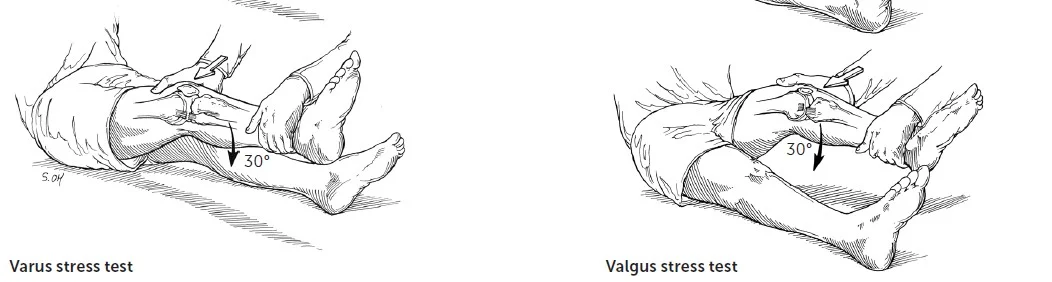 ANTERIOR & POSTERIOR DRAWER TESTS
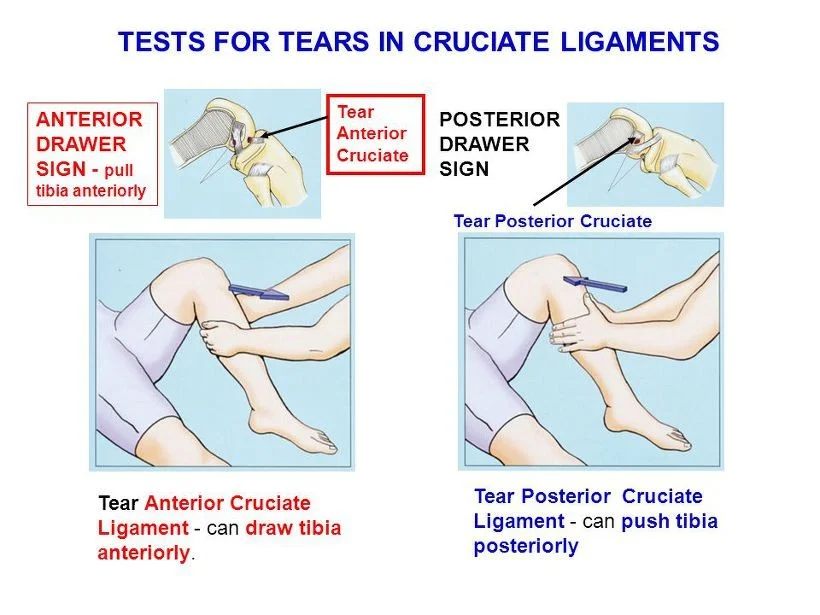
Anterior Drawer Sign
- Pull tibia anteriorly
- Tear Anterior Cruciate
- Tear Anterior Cruciate Ligament - can draw tibia anteriorly.
Posterior Drawer Sign
- Push tibia posteriorly
- Tear Posterior Cruciate
- Tear Posterior Cruciate Ligament - can push tibia posteriorly.
OSCE Knee Examination
Table of Contents
- Introduction
- Inspection
- Standing
- Supine
- Palpation
- Movement
- Special Tests
- Conclusion
- Checklist
OSCE Knee Examination
Introduction
- Introduction
- Introduce yourself
- Wash hands
- Briefly explain to the patient what the examination involves
- Ask the patient to remove their bottom clothing, exposing the knee
Inspection
Standing
- Patient Gait
- Assess for:
- Asymmetry
- Deformity
- Assess for:
- Muscle bulk
Supine
- Assess for:
- Scars
- Symmetry
- Swellings
- Skin changes
Palpation
- Temperature
- Joint Swelling
- Patella Tap
- Bulge Test (assesses for smaller effusions)
- Palpate:
- Quadriceps muscle and quadriceps tendon
- Patella and patella ligament
- Tibial tuberosity
- Joint line
- Medial and lateral collateral ligaments
- Popliteal fossa
Movement
- Straight Leg Raise
- Check Passive Movements:
- Flexion and extension
- Check Active Movements:
- Flexion and extension
- Flexion and extension (against resistance)
Special Tests
- Anterior and Posterior Drawer Tests
- Lachman’s Test
- Varus and Valgus Stress Tests
Conclusion
- Thank the patient and allow them to redress
- Examine the hip and ankle joints
- Total
Checklist
| # | Item | Not done | Partially done | Done |
|---|---|---|---|---|
| 1 | Introduction | |||
| - Introduce yourself | ||||
| - Wash hands | ||||
| - Briefly explain to the patient what the examination involves | ||||
| - Ask the patient remove their bottom clothing, exposing the knee | ||||
| 2 | Inspection (whilst patient standing) | |||
| - Patient gait Assess for: | ||||
| - Asymmetry | ||||
| - Deformity | ||||
| - Muscle bulk | ||||
| 3 | Inspection (whilst patient supine) | |||
| - Assess for: | ||||
| - Scars | ||||
| - Symmetry | ||||
| - Swellings | ||||
| - Skin changes | ||||
| 4 | Palpation | |||
| - Temperature | ||||
| - Joint swelling | ||||
| - Patella Tap | ||||
| - Bulge Test (assesses for smaller effusions) | ||||
| - Palpate: | ||||
| - Quadriceps muscle and quadriceps tendon | ||||
| - Patella and patella ligament | ||||
| - Tibial tuberosity | ||||
| - Joint line | ||||
| - Medial and lateral collateral ligaments | ||||
| - Popliteal fossa | ||||
| 5 | Movement | |||
| - Straight leg raise | ||||
| - Check passive movements: | ||||
| - Flexion and extension | ||||
| - Check active movements: | ||||
| - Flexion and extension | ||||
| - Flexion and extension (against resistance) | ||||
| 6 | Special Tests | |||
| - Anterior and Posterior Drawer Tests | ||||
| - Lachman’s Test | ||||
| - Varus and Valgus Stress Tests | ||||
| - Complete the Examination |