Future of FM in SA
The Future of Primary Care in Saudi Arabia
- Presenter: Dr. Khalid I. AlQumaizi
- Date: 24/09/2024

Historical Background
- SALUT AUX PARTICIPANTS
- DE LA CONFERENCE INTERNATIONALE
- SUR LES SOINS DE SANTE PRIMAIRE!
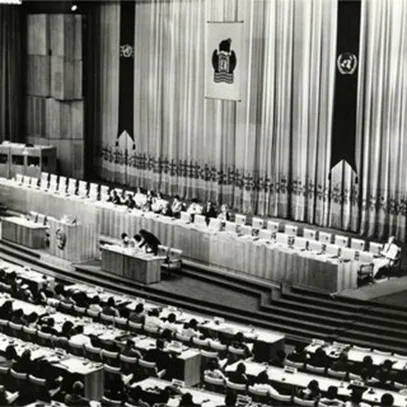
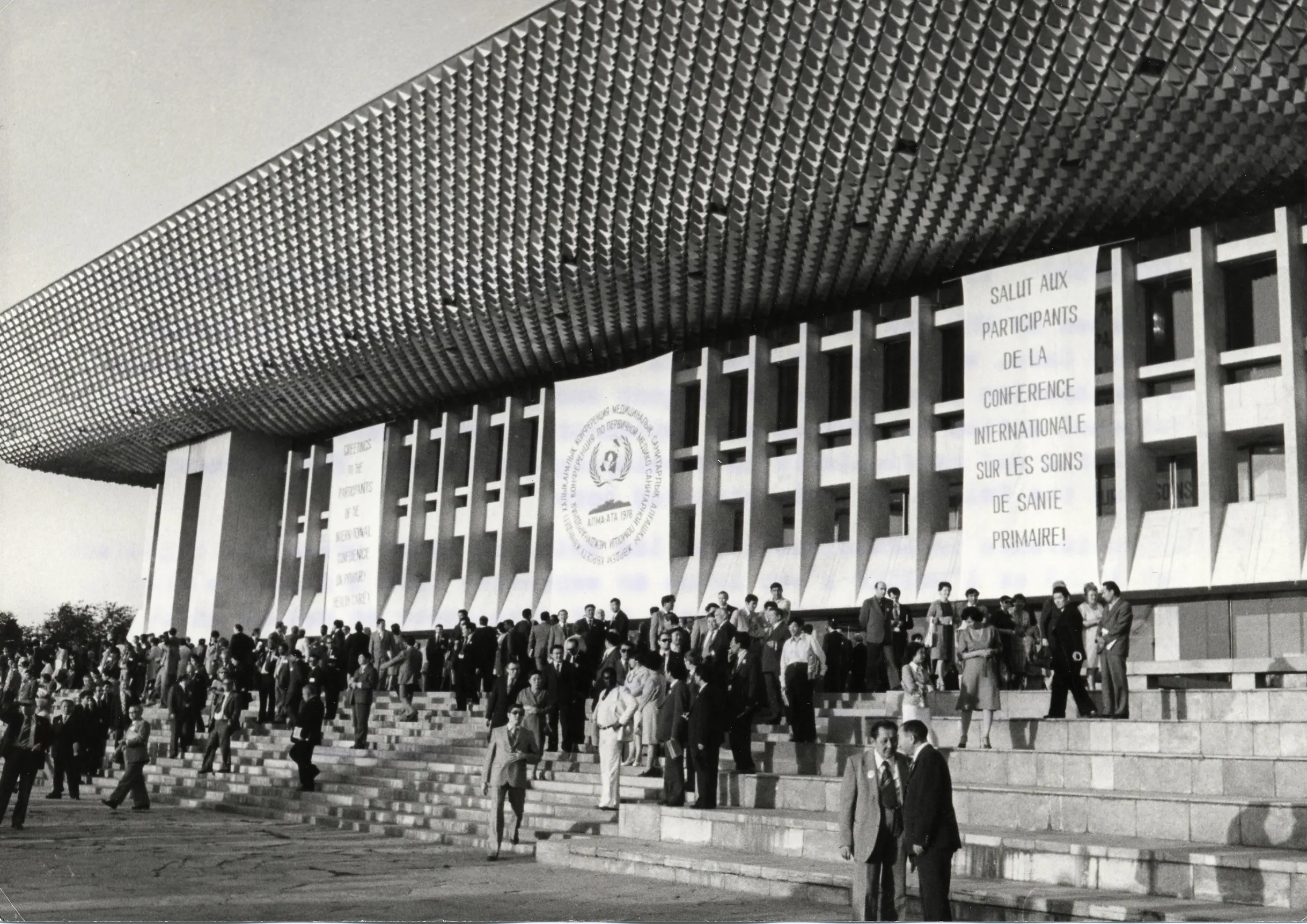
Alma’ Ata Declaration
- The Conference strongly reaffirms that health is a fundamental human right.
- The existing gross inequality in the health status of the people is politically, socially, and economically unacceptable.
- The people have a right and duty to participate individually and collectively in the planning and implementation of their health care.
- Primary health care is essential health care based on practical, scientifically sound, and socially acceptable methods and technology.
- An acceptable level of health for all the people of the world by the year 2000 can be attained through a better use of the world’s resources.
The Beginning of the Newly Structured Primary Care Services
- In accordance with the Alma-Ata declaration, Saudi Arabia has committed to develop its primary health care services.
- The Ministry of Health integrated both preventive and basic curative health care services in 1984.
- These services targeted individuals, families, and the community, and provided a range of health care services including maternal and child health, immunization for communicable diseases, follow-up for patients with chronic diseases, dental care services, health education, and essential drugs.
Whole-Person Care
- Whole-person care is the hallmark of good Primary Care. The patient-centered consultation not only takes into account the diagnosed disease and its management but also adds another dimension—that of the psychosocial hallmarks of the patient, including details about:
- The patient as a person
- Emotional reactions to the illness
- The family
- The effect on relationships
- Work and leisure
- Lifestyle
- The environment
The Main Elements of Primary Care
There are eight essential components of Primary Health Care (PHC):
- Health education on prevailing health problems and the methods of preventing and controlling them.
- Nutritional promotion including food supply.
- Supply of adequate safe water and sanitation.
- Maternal and child health care.
- Immunization against major infectious diseases.
- Prevention and control of locally endemic diseases.
- Appropriate treatment of common diseases and injuries.
- Provisions for essential drugs.
All these basic requirements are incorporated in the SDGs for 2030 from goal 2 to goal 4.
The Degrees of Care
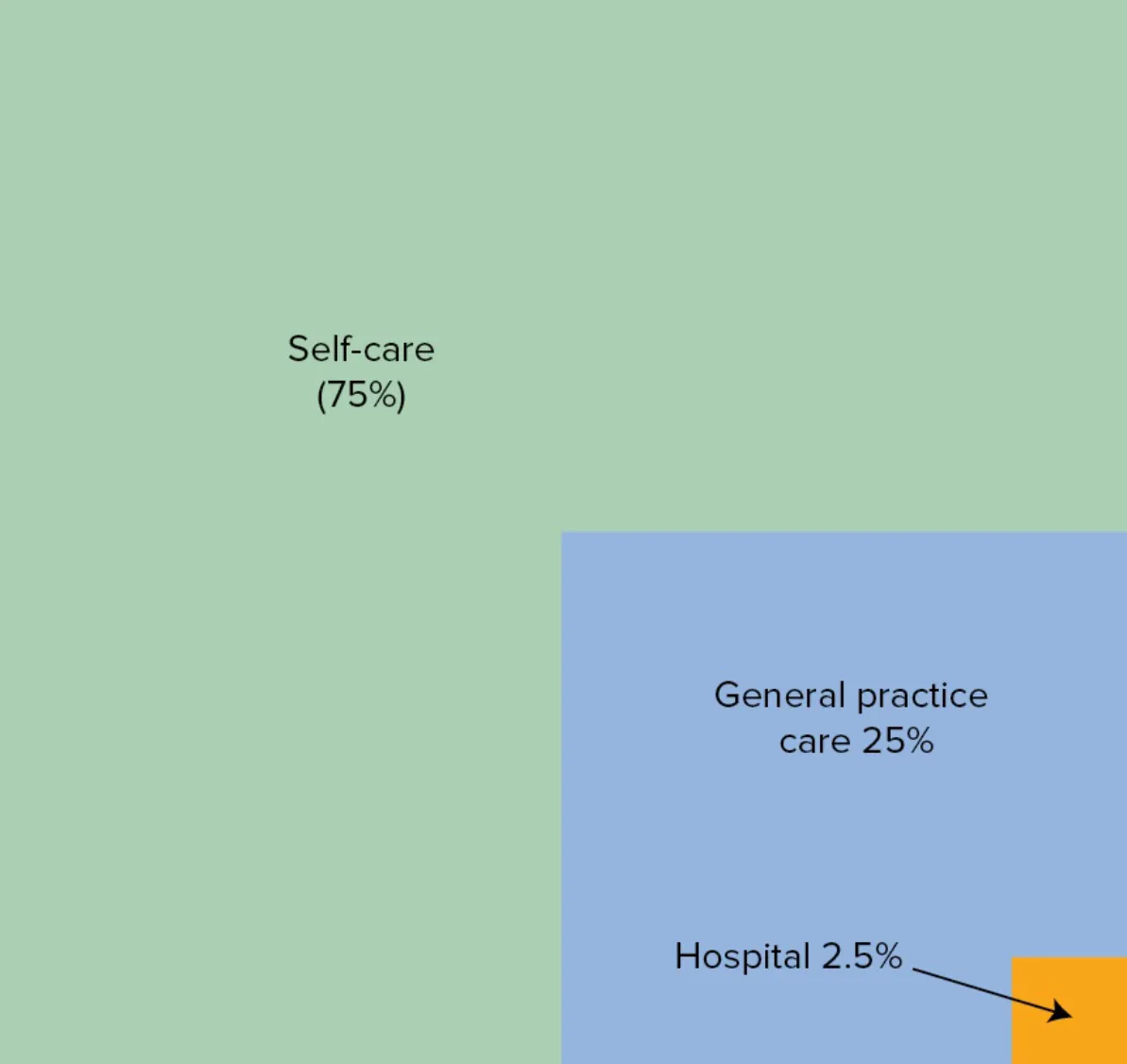
- Self-care (75%)
- General practice care (25%)
- Hospital (2.5%)
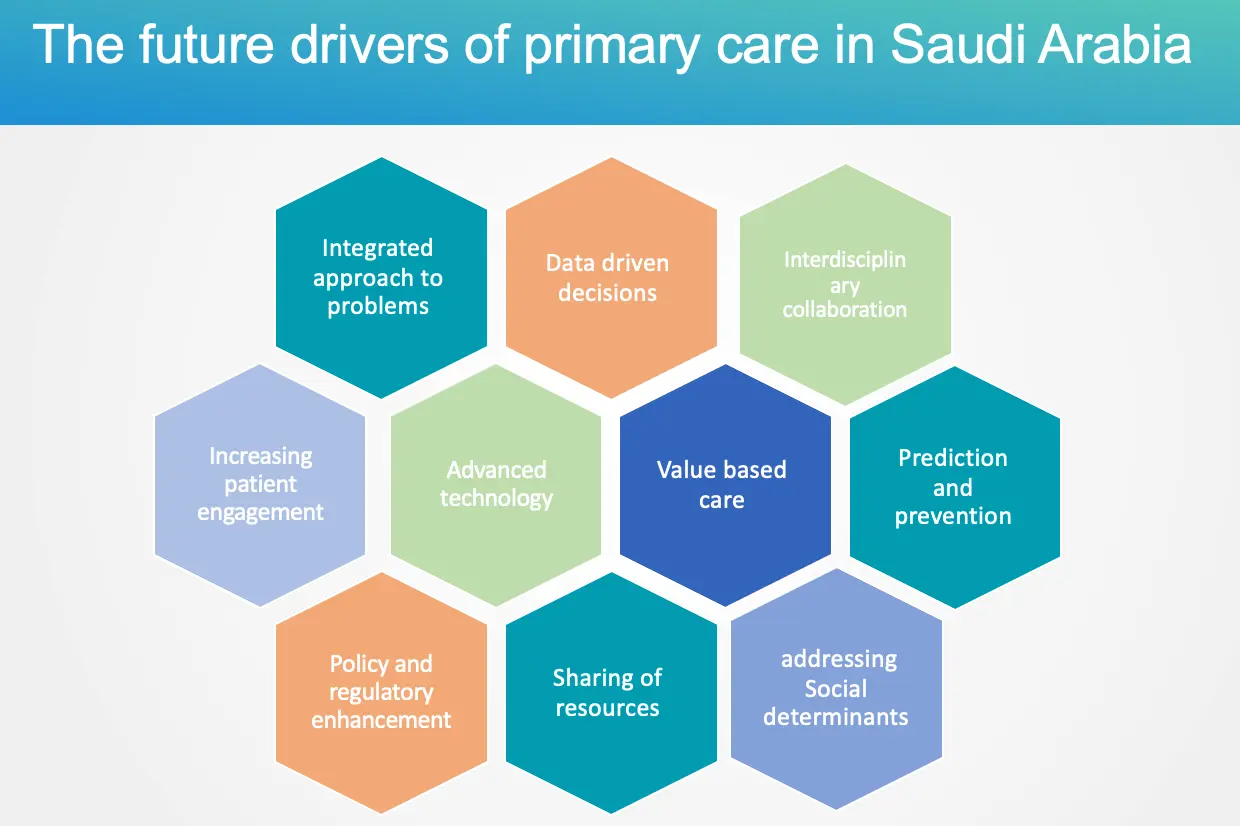
The future of primary care in Saudi Arabia
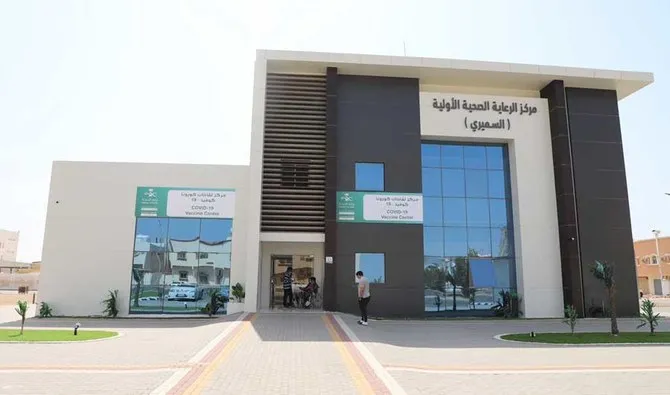
Enhancement of Primary Care Project
The Saudi Healthcare Transformation
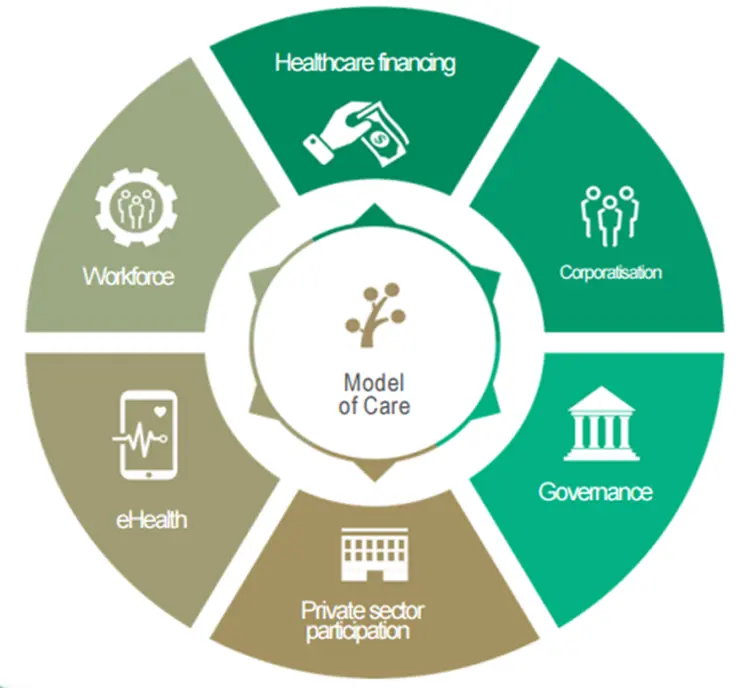
- Healthcare Financing
- Establish a value-based payment system
- Workforce
- Enhance quality and quantity of workforce
- National Healthcare Workforce Planning Unit
- eHealth
- Provide digital tools (apps) for patients and workforce
- Accelerate IT infrastructure build-up at MoH
- Private Sector Participation
- Privatization of healthcare services
- Support localization of pharmaceutical and medical devices.
- Corporatization
- Corporatize health services delivery.
- Create local clusters that ultimately form accountable care organizations.
- Governance
- Strengthen MoH to lead sector reform and transform it to be more strategic.
- Create a range of regulatory bodies.
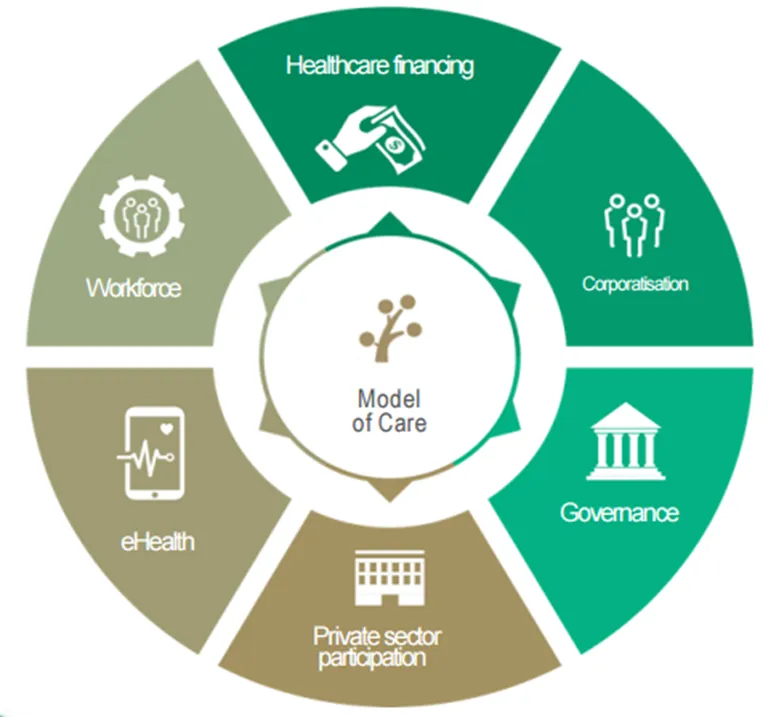
Model of Care
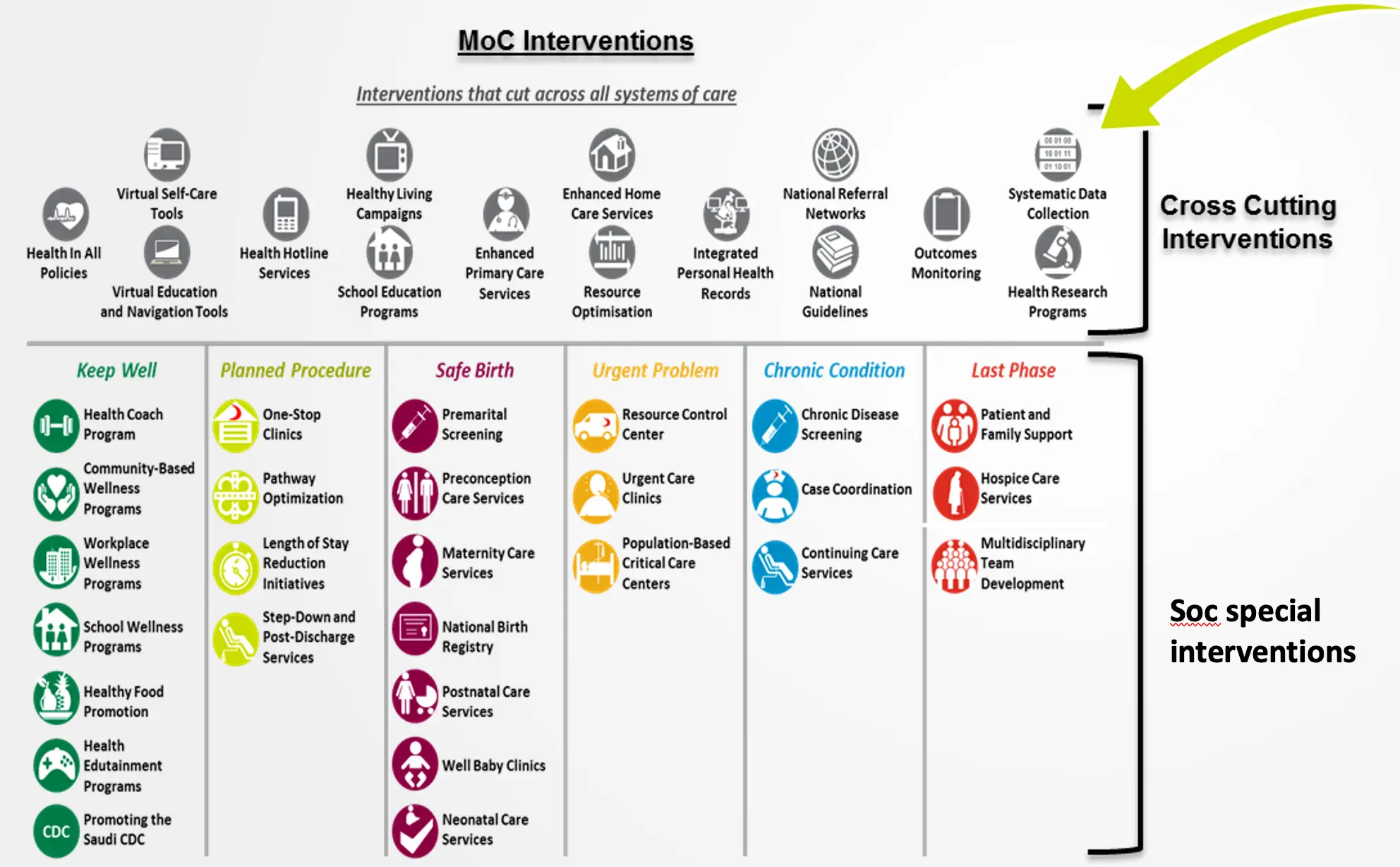
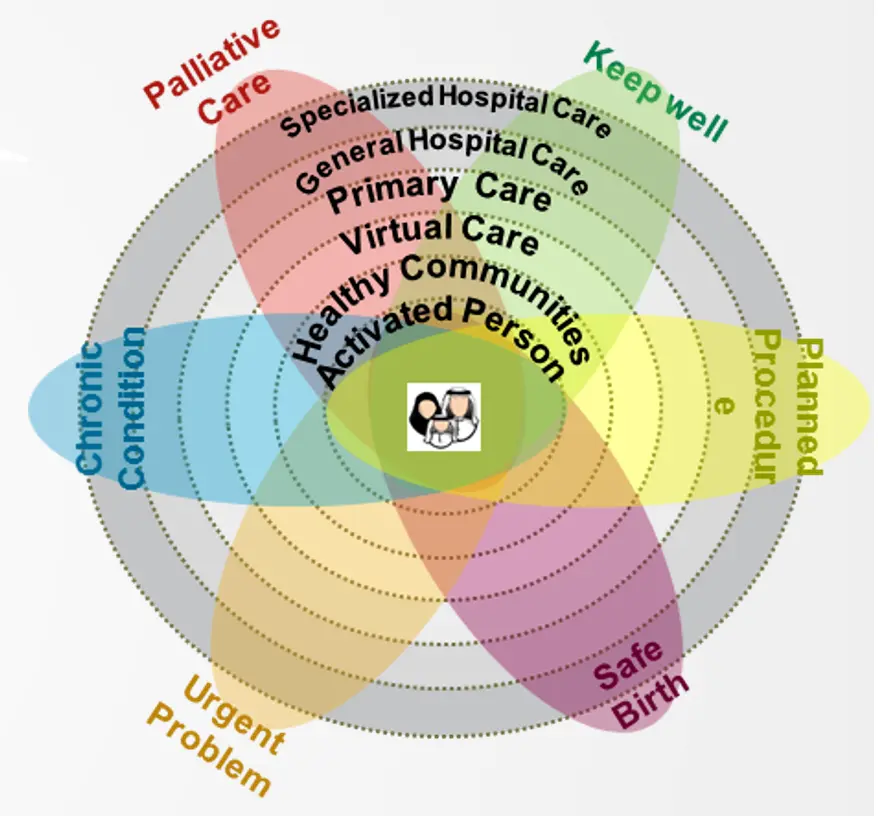
Shifting the Mindset
| Treating Sickness | Promoting Wellness |
|---|---|
| Hospital-based/specialized care | Community-based/primary care |
| Facility-based (silos) | Cluster-based (integrated) |
| Paying for infrastructure | Paying for services |
| Focusing on inputs | Focusing on outputs/outcomes |
| Delivering care | Delivering value |
| Bringing patients to doctors | Bringing doctors to patients |
The future of primary care in Saudi Arabia
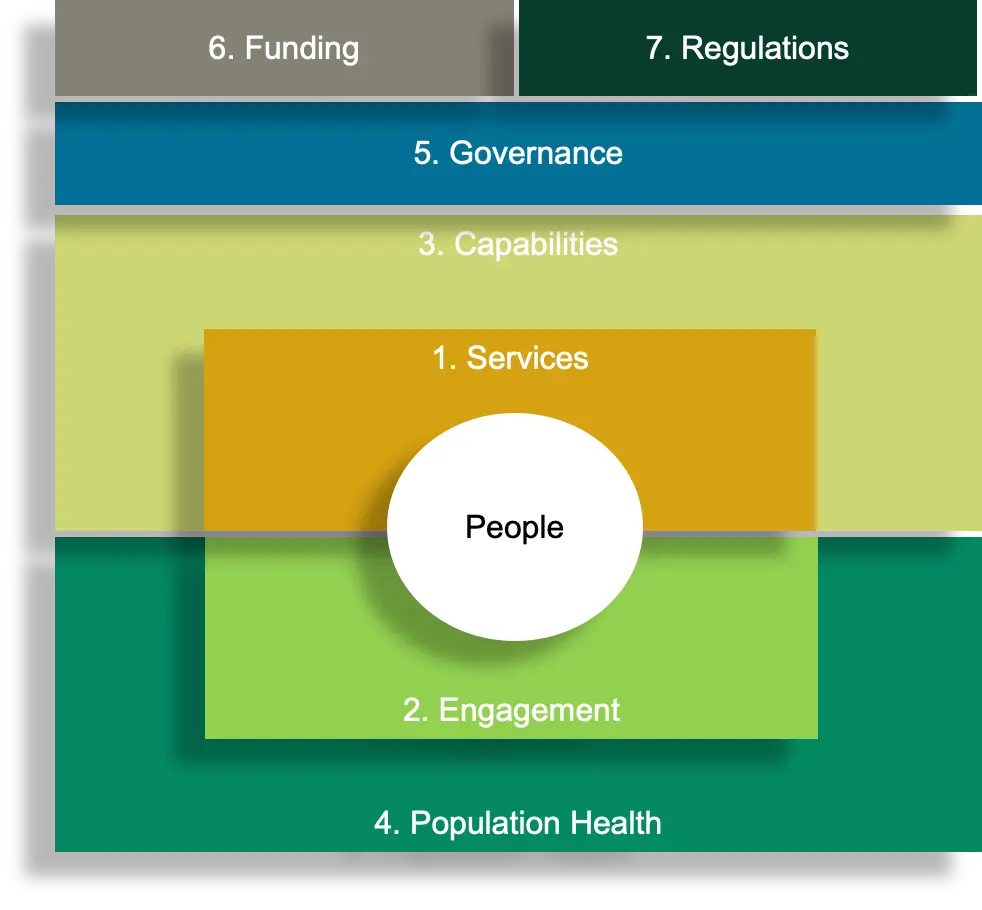
Enhancement of Primary Care Framework
- Services
- Engagement
- Capabilities
- Population Health
- Governance
- Funding
- Regulations
The future of primary care in Saudi Arabia
Services
- Defining the scope of services
- Essential and essential plus
- Mega centers
- Urban vs rural
- Extended working hours
- Urgent Care Centers
Engagement
- Defining catchment population
- Population registration
- Empanelment
- Improving access
- Patients satisfaction
Capabilities
- Capabilities profiling
- Assessment methodology
- Leadership training
- Family medicine residency
- Case coordinator , health coach
- Repurposing of the staff
- Building teams capabilities
- Change management
- Physical and IT capabilities
Population Health
- Defining population health KPIs
- Population health need
- assessment
- Defining the contractual
- requirements with payer
- Training the PHM teams
Governance
- Designing the governance of Primary care
- The authority matrix within the ecosystem and within the clusters
- Interaction with other stakeholders
- Culture of accountability
- Reporting requirments
Funding
- Defining funding strategy
- Incentivize mobilization of services to primary care
- Funding the Capex by PPP
- Measuring the ROI
Regulations
- Revising the policies that hinder the empowerment
- Regulating the private sector to adopt family medicine based approach
- Revising the privileges of the PHC staff
- Clinical guidelines
- Professional licenses
- Infrastructure standards
- Non clinical standards