Etiology in Psychiatry
Khaldoun Marwa, MD / Kimarwa@mcst.edu.sa
Date: 17-Aug-23
Version: 1
Main Topics
Etiology
- Nature
- Nurture
Investigations
- Lab test
- IQ Scales
- Social report
Manifestations & Diagnosis
- Signs, Symptoms & Diagnosis
Management Plan
- Drugs
- Psycho Intervention
- Social Intervention
- Spiritual Support
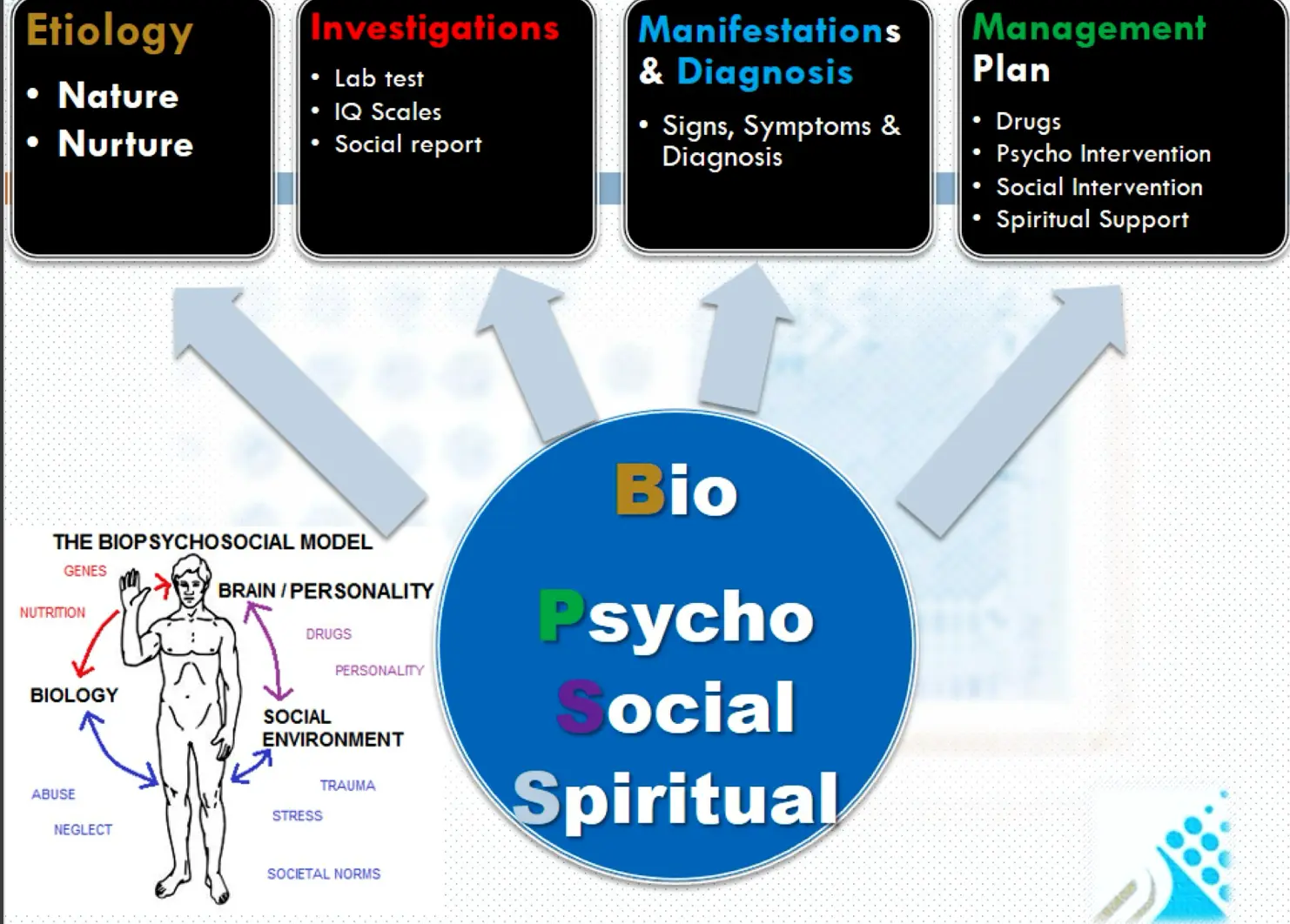
The Biopsychosocial Model
Biology
- Genes
- Nutrition
- Abuse
- Neglect
Brain/Personality
- Drugs
- Personality
Social Environment
- Trauma
- Stress
- Societal Norms
Etiology in Psychiatry
Causes of Psychiatric Disorder
Key Points in Etiology
-
In Psychiatry, the study of causation is complicated.
- Causes are often remote in time from the effects that they produce (e.g., childhood experience → adult anxiety disorders).
-
A single cause may lead to several effects.
- Example: deprivation of parental affection → antisocial behavior, suicide, depression…
-
A single effect may arise from several causes.
- Example: Depression.
Importance of Understanding Etiology
Vague but important to: 4. Diagnose and understand. 5. Allow early intervention. 6. Optimize treatment.
Classification of Causes
-
According to the effect
- Predisposing factors
- Precipitating factors
- Perpetuating (maintaining) factors
-
According to nature
- a. Biological
- b. Psychological
- c. Social
Detailed Classification of Causes
- According to the effect:
- a. Predisposing factors
- b. Precipitating factors
- c. Perpetuating (maintaining) factors
Predisposing Factors
- Operating from early life, determining a person’s vulnerability to causes acting close to the time of illness.
- Examples:
- Genetic endowment
- Environment in utero
- Trauma at birth
- Social & psychological factors in infancy & early childhood.
- Examples:
Precipitating Factors
- Events that occur shortly before the onset of a disorder and appear to have induced it.
- Examples:
- Physical disease
- Drug
- Loss of job
- Changing residency
- Examples:
Perpetuating Factors
- These factors prolong the course of a disorder after it has been provoked.
- Examples:
- Intrinsic to the disorder (e.g., avoidance in phobic disorders)
- Social circumstances:
Expressed Emotions = over criticizing & over involvement (e.g., marital discords, overprotecting parents).
- Examples:
Classification of Causes According to Nature
- According to nature
- a) Biological
- b) Psychological
- c) Social
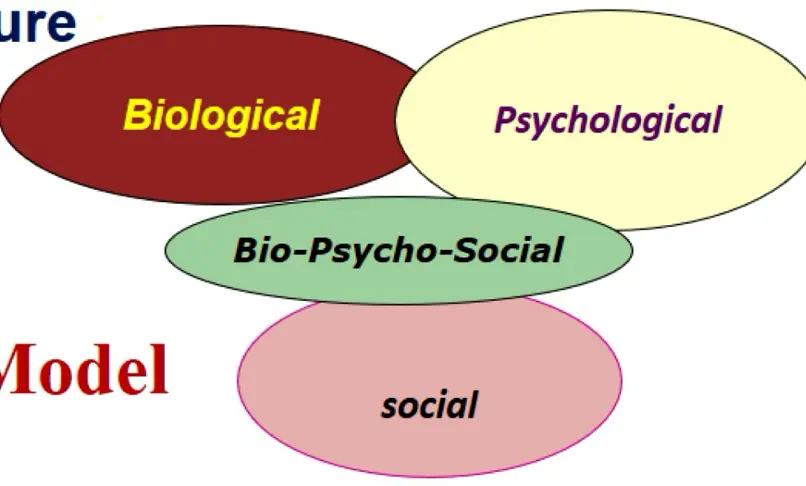
Biopsychosocial Model
Bio-Psycho-Social Theories of Etiology
Etiology: Biological
- GENETIC
- NEUROPATHOLOGICAL
- ENDOCRINOLOGICAL
- PHARMACOLOGICAL
- METABOLIC
- INFLAMMATORY
- AUTOIMMUNE
Etiology: Psychological
a) Psychodynamics
- Provides a comprehensive range of explanation for clinical phenomena.
- The central feature is the concept of the unconscious mind characterized by:
- a – being dynamic
- b – being in conflict with the conscious mind.
- Important in the etiology of neurotic disorders.
- Anxiety is the central symptom of all neurosis.
- Defense mechanisms (such as rationalization and projection) are used to reduce anxiety.
Obsolete Psychoanalysis theory of neurosis originates from failure to pass normally through 3 stages of development: oral → anal → genital.
b) Learning theories:
- Experiences in childhood and later life give rise to neurosis.
c) Cognitive theories:
-
Symptoms and behavior are produced and maintained by maladaptive ways of thinking.
-
Many concepts used by sociologists are relevant to psychiatry.
-
Life events
- Migration
- Marital Discord
- Financial Difficulties
- Educational Stress
- Occupational Stress
- Daily Hassles
-
Family Conflict & Factors
- a) Lack of social support, criticism, and
- b) Overprotection within the family.
Effects of Etiological Factors
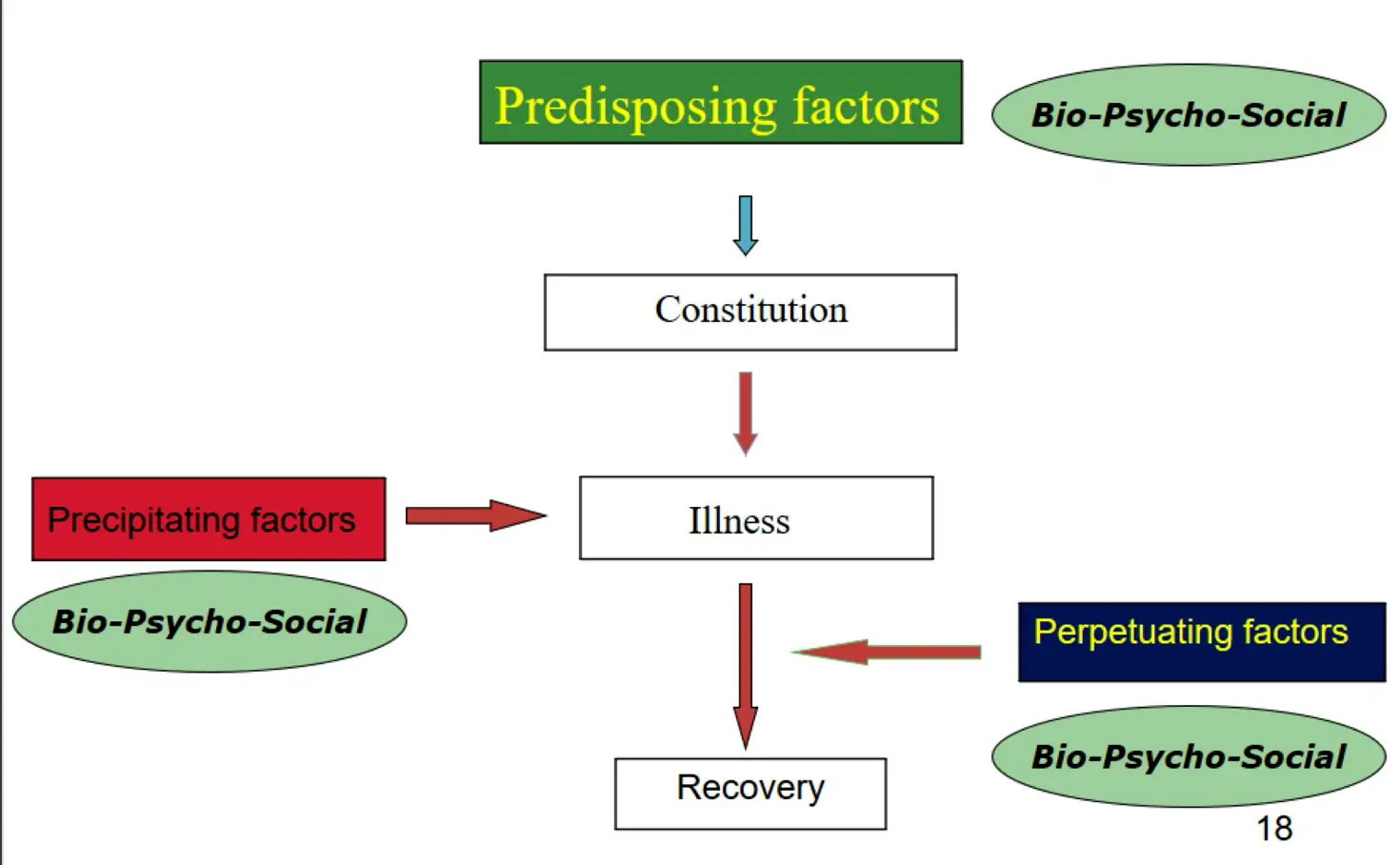
-
Predisposing factors
- Bio-Psycho-Social
-
Constitution
-
Precipitating factors
- Bio-Psycho-Social
-
Illness
-
Recovery
- Perpetuating factors
- Bio-Psycho-Social
Investigation & Psychiatry
- Probing in the Etiology
- Screen for the causes
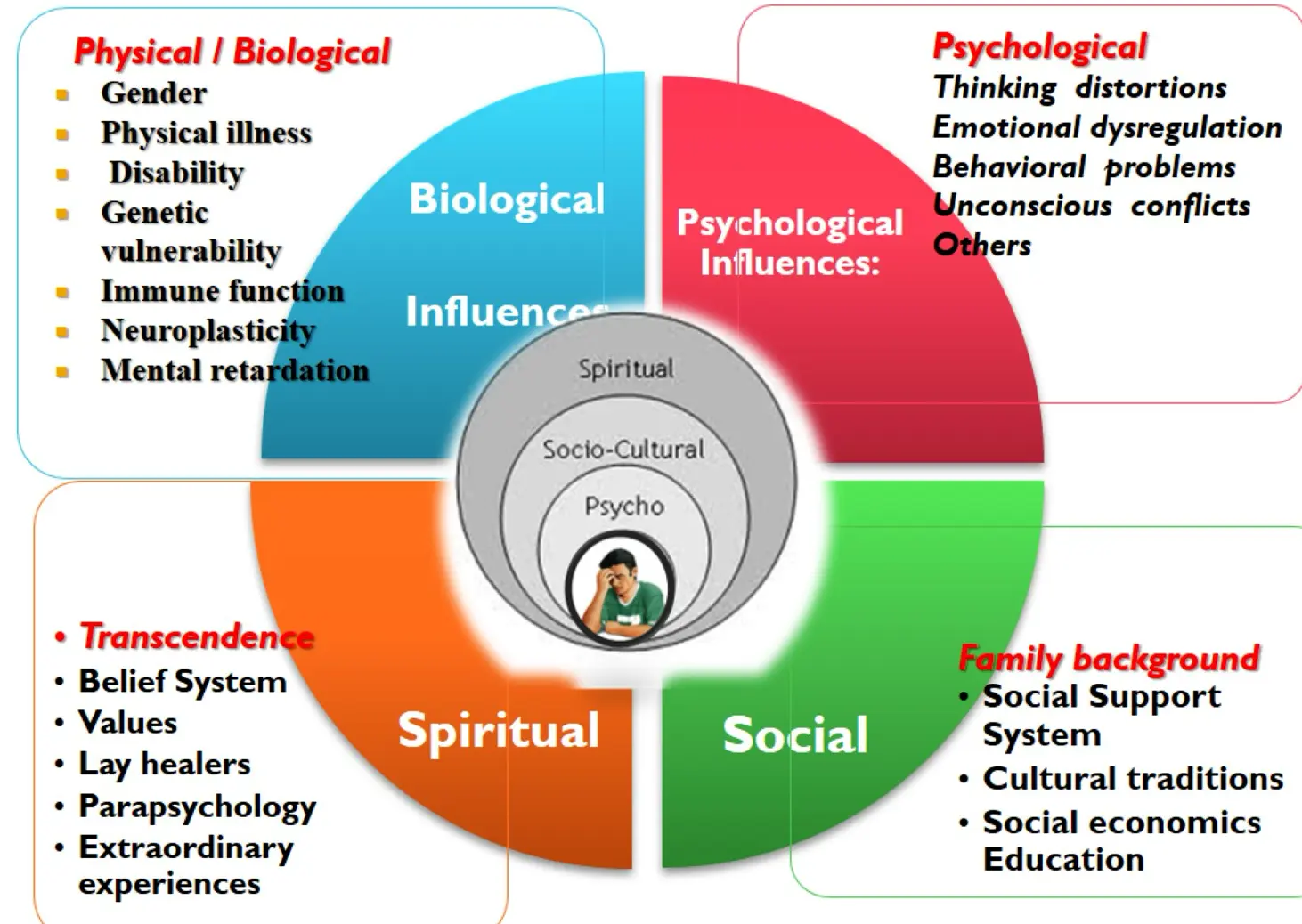
- BioPsychoSocialSpiritual Approach
The Scale of Islamic Religiosity Attitude, SiRA
-
Physical / Biological
- Gender
- Physical illness
- Disability
- Genetic vulnerability
- Immune function
- Neuroplasticity
- Mental retardation
-
Psychological Influences:
- Thinking distortions
- Emotional dysregulation
- Behavioral problems
- Unconscious conflicts
- Others
-
Spiritual
- Transcendence
- Belief System
- Values
- Lay healers
- Parapsychology
- Extraordinary experiences
- Transcendence
-
Social
- Family background
- Social Support System
- Cultural traditions
- Social economics
- Education
- Family background
Bio-Psycho-Socio-Spiritual Approach
Investigation plan:
- Bio: Blood Labs, Drugs & substance level, Imaging & Electric
- Psych: IQ test, Behavioural analysis & Psychological Scales.
- Social: Family/ marital dynamics & School/ work report.
- Spiritual: Belief system exploring (Over Valued Ideations)
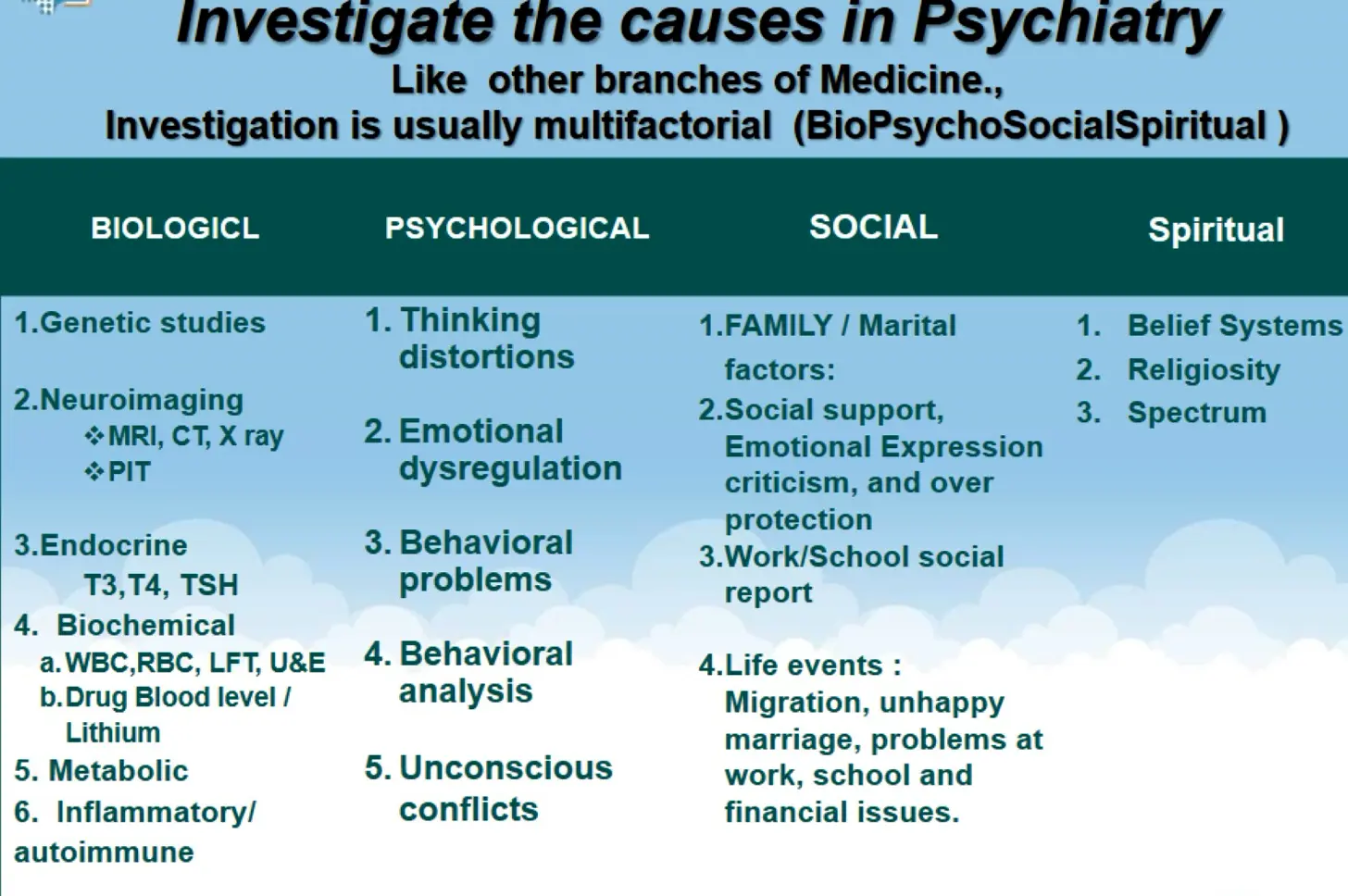
Investigate the Causes in Psychiatry
Like other branches of Medicine,
Investigation is usually multifactorial (BioPsychosocialSpiritual)
Biological
- Genetic studies
- Neuroimaging
- MRI, CT, X-ray
- PIT
- Endocrine
- T3, T4, TSH
- Biochemical
- a. WBC, RBC, LFT, U&E
- b. Drug Blood level / Lithium
- Metabolic
- Inflammatory/autoimmune
Psychological
- Thinking distortions
- Emotional dysregulation
- Behavioral problems
- Behavioral analysis
- Unconscious conflicts
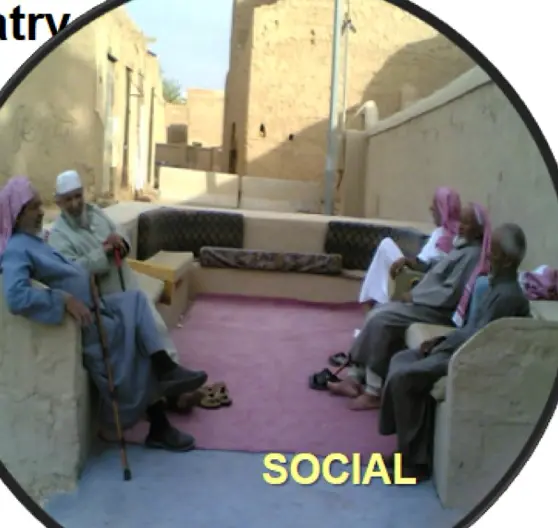
Social
- Family / Marital factors:
- Social support, Emotional Expression criticism, and overprotection
- Work/School social report
- Life events:
- Migration, unhappy marriage, problems at work, school and financial issues.
Spiritual
- Belief Systems
- Religiosity
- Spectrum