Emergency Airway Algorithms
Lecturer: Abdullah Alsakka
Introduction
The airway ماله كبيير
These algorithms serve as a guide for emergency airway management, derived from expert panels and the American Society of Anesthesiologists’ guidelines.
- Main Algorithms Covered:
- Emergency Airway Algorithm
- The Crash Airway Algorithm
- The Difficult Airway Algorithm
- The Failed Airway Algorithm
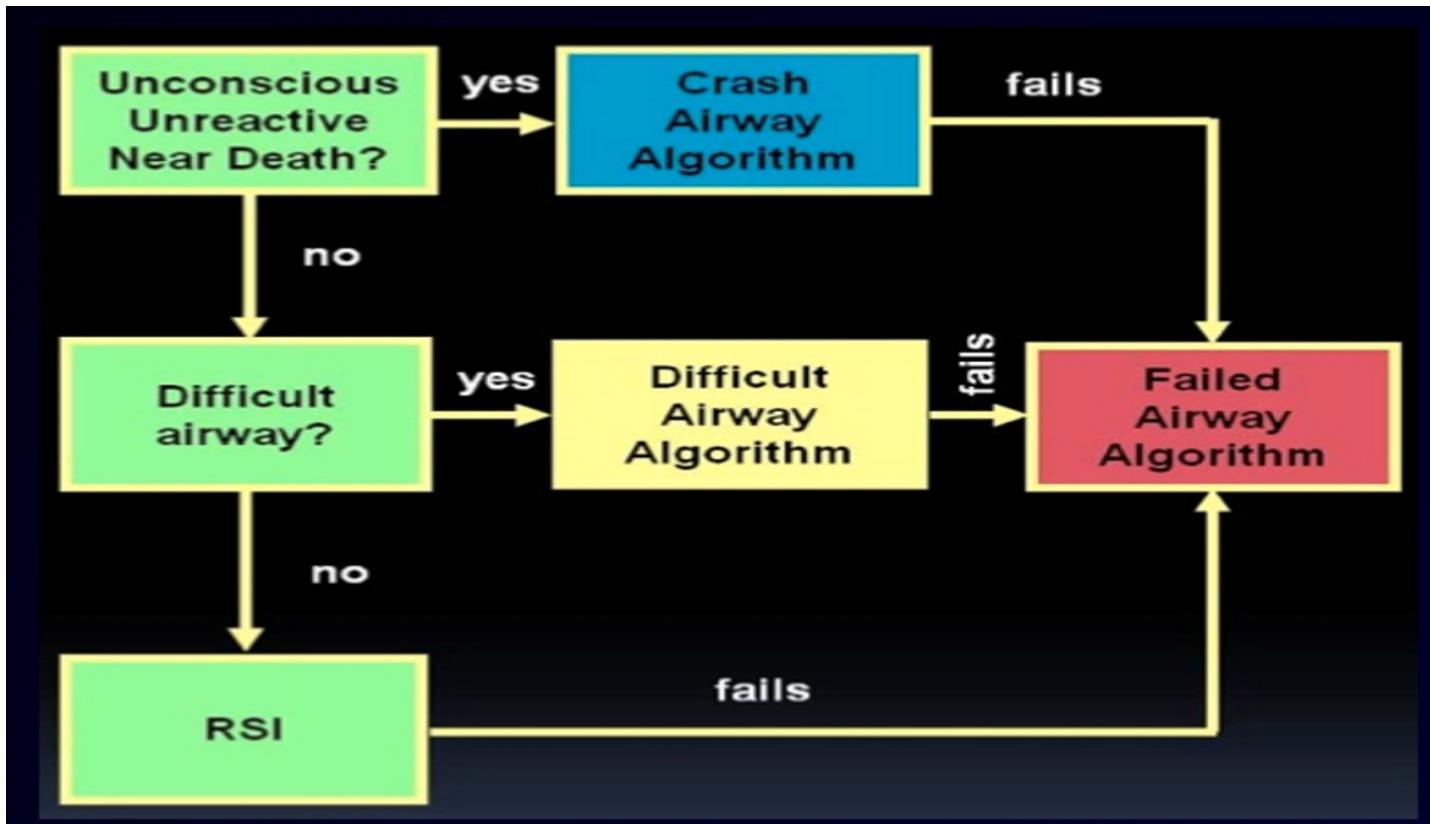
General Emergency Airway Algorithm
Key Assessment Questions
- Key question 1: Is it a crash airway?
- Key question 2: Is it a difficult airway?
- Critical action: Perform RSI (Rapid Sequence Induction).*
- Key question 3: Was intubation successful?
- Key question 4: Can the patient’s oxygenation be maintained?
- Key question 5: Have three attempts at orotracheal intubation been made by an experienced operator?
Management Flowchart
The Crash Airway Algorithm
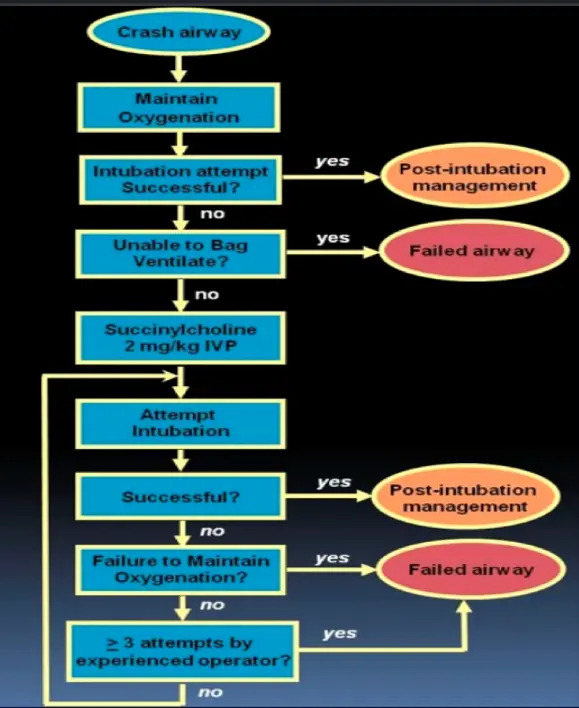
Entry Criteria
Entering this algorithm indicates an unconscious, unresponsive patient with an immediate need for airway management.
Critical Actions & Decisions
- Critical action: Intubate immediately.
- Key question 1: Was intubation successful?
- Key question 2: Is bag-mask oxygenation (BMV) adequate?
- Critical action: Administer Succinylcholine intravenous push (IVP).
- Critical action: Attempt intubation again.
- Key question 3: Was intubation successful?
- Key question 4: Is oxygenation maintained?
- Key question 5: Have there been attempts at intubation by an experienced operator?
Summary Path
The Difficult Airway Algorithm
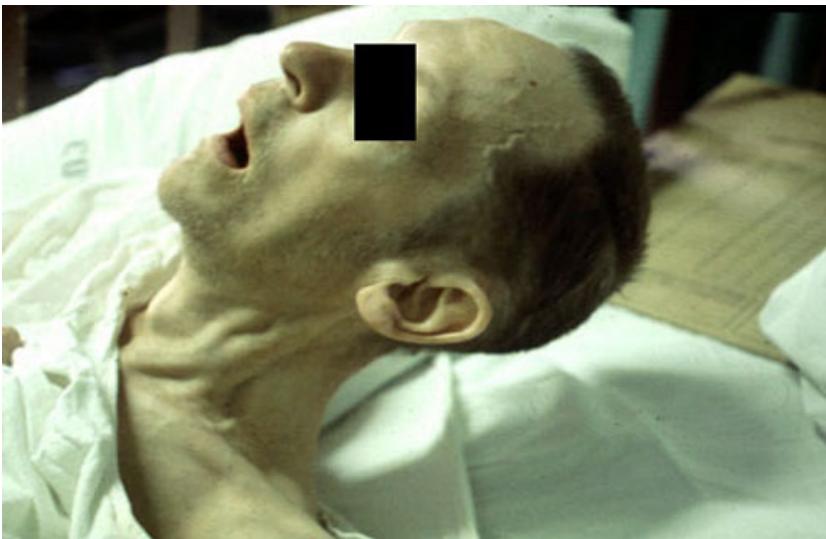
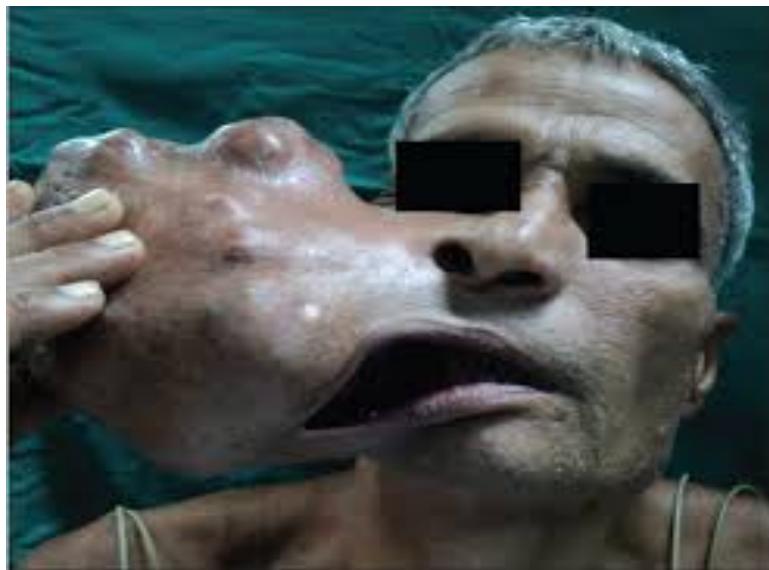
Critical Concepts
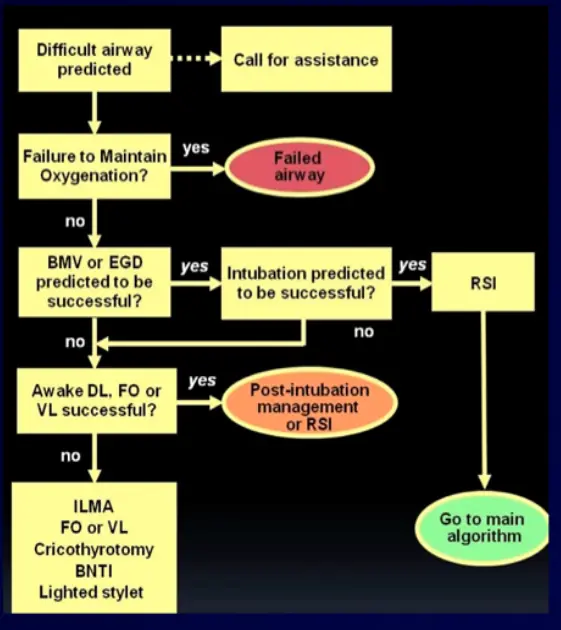
- Critical action: Call for assistance immediately.
- Awake intubation is the cornerstone of difficult airway management.
- RSI is often safe and effective if a difficult airway is identified in advance, permitting proper care planning.
Decision Process
- Adequate time?
- Failure to Maintain Oxygenation? → Go to Failed Airway Algorithm.
- BMV or EGD predicted to be successful?
- Intubation predicted to be successful? → Proceed to RSI.
- Awake DL, FO, or VL successful? → Post-intubation management.
Alternative Approaches
If primary attempts fail, consider:
- ILMA (Intubating Laryngeal Mask Airway)
- FO (Fiberoptic) or VL (Video Laryngoscopy)
- Cricothyrotomy
- BNTI (Blind Nasotracheal Intubation)
- Lighted stylet
The Failed Airway Algorithm
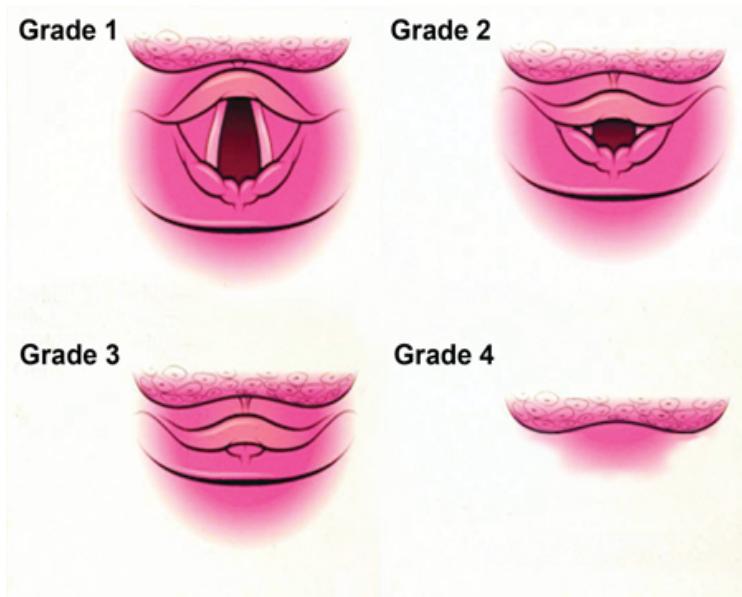
Definition of Failure
“Can not intubate, can not oxygenate” = Requires Cricothyrotomy in the vast majority of circumstances.
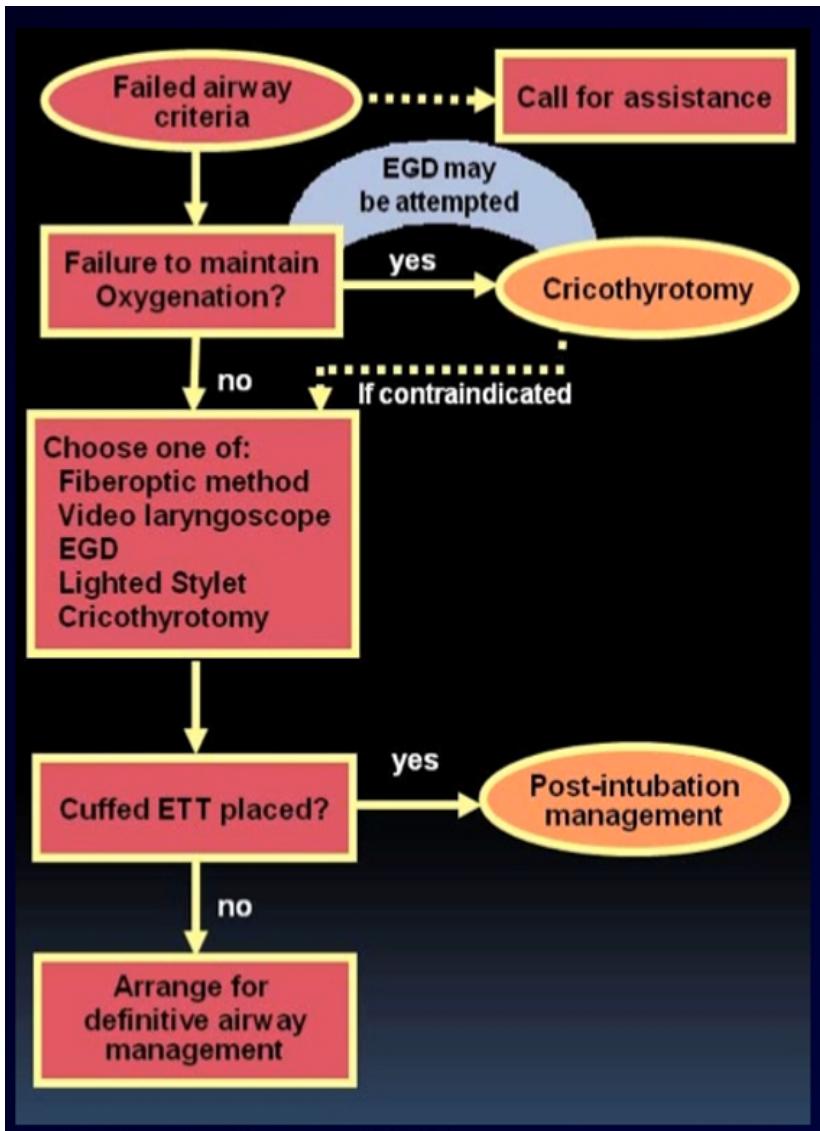
Critical Actions & Flow
- Critical action: Call for assistance.
- Key question 1: Is oxygenation adequate?
Scenario A: Failure to Maintain Oxygenation
- Critical action: Perform Cricothyrotomy.
- Note: EGD (Extraglottic Device) may be attempted if cricothyrotomy is contraindicated or delayed.
Scenario B: Oxygenation Maintained but Intubation Failed
Use alternative methods:
- Fiberoptic visualization
- Video laryngoscopy (VL)
- Extraglottic Device (EGD)
- Lighted Stylet
Final Verification
Ensure a cuffed ETT is placed. If not, arrange for definitive surgical airway management.
Summary of Airway Course Algorithms
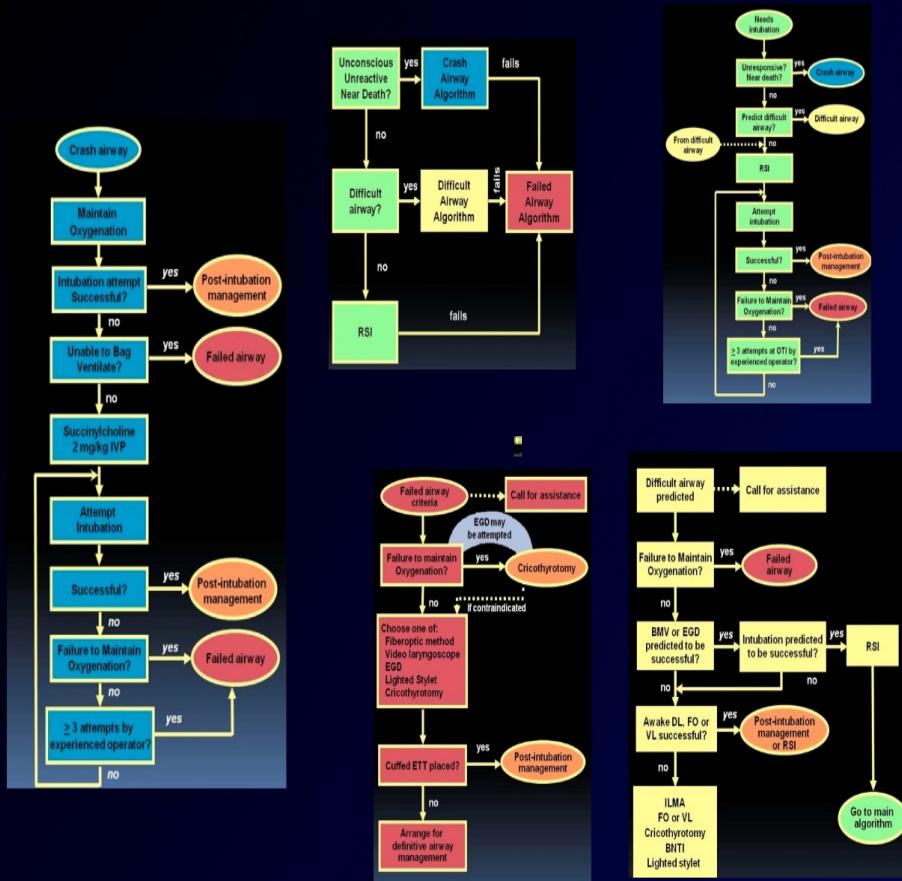
• The algorithm are intended as guide line only • Understanding the fundamental concept of the difficult and failed airway • Identification of the difficult, recognition of the crash airway and the use of RSI as airway management method of choice for the most emergency intubations which will result in successful airway management with minimal morbidity • There no systemized data supporting the algorithm • The algorithms are the result of careful review of the American society of anesthesiologists difficult airway algorithm and comprise knowledge and experience of the editors who functioned as an expert panel in this regard. • They are designed to help guide a consistent approach to both common and uncommon management situations