Collection from previous batches, made by Abdulmalik Abdulghani, Dania AbuObaid, Faisal Alkharji, Haneen H. Alsultan, Husna Merza, Lina Serhan, Maha Alasmari, Mujahid N Al-muhaydib, Yousef Edress
اللهم يا معلّم موسى علّمني، ويا مفهم سليمان فهّمني، ويا مؤتي لقمان الحكمة وفصل الخطاب آتني الحكمة وفصل الخطاب اللهم اجعل ألستنا عامرة بذكرك، وقلوبنا بخشيتك، وأسرارنا بطاعتك، إنك على كل شيء قدير، حسبنا الله ونعم الوكيل
Any updates of this file would be within https://medatlax.com/Clinical/Level-12/IM-2/Internal-Medicine-2 OSCE & OSPE-CS link.
https://www.youtube.com/playlist?list=PLHxXXvsPKjZk
Contents
- 1. Universal run sheet · 2. General exam · 3. Thyroid & neck
- 4. CVS · 5. Respiratory · 6. Abdomen
- 7. Neuro · 8. Limb & joints · 9. Vascular & diabetic foot
- 10. Histories (unified) · 11. BP & hypertension · 12. ECG
- 13. Labs & instruments · 14. Disease bank + management · 15. Numbers · 16. Breast
1. Universal run sheet
Opening: wash hands · name/role · confirm name/age · privacy + chaperone · explain + consent · right side.
History (11): 1 intro/consent · 2 personal data (name first+middle, age, nationality, gender, marital, occupation, residence; source/reliability) · 3 CC + duration (decide after HPI) · 4 HPI (background illness/duration/treatment; SOCRATES pain / OPERATES non-pain; CNS details; risk factors) · 5 systemic review (anatomical order) · 6 PMH/PSH · 7 drugs/allergy (reaction?) · 8 family (similar, chronic, communicable, hereditary) · 9 social (smoking, alcohol, drugs, relationships, travel, marital/children, housing, occupation, education, income, coping — 2nd consent) · 10 thank · 11 summarise.
SOCRATES site/onset/character/radiation/associations (last)/time/exacerbating-relieving/severity. OPERATES onset/progression/exacerbation/relief/associated/time/effect on life/severity.
Exam: expose then position · end-of-bed (age-look, gender, build/BMI, alert/oriented, ill/well, pain/distress, position, attachments + fluids + litres, vitals) · general related exam · system exam · close.
Close: summarise · problem list · diagnosis · DD + justify · Ix basic→specific · Rx starting ABC.
Technique: compare sides; neuro start normal side · painful area last · never compress suspected DVT · say when a sign is absent.
2. General exam
Indications: renal, swelling, endocrine, malignancy.
Run sheet: WIPER · hands → pulse → face → neck (JVP, nodes, thyroid) → chest → abdomen → legs → CNS screen → vitals.
From the end of bed
- State of health: well vs ill; if ill acute (painful/respiratory distress) · chronic (>3 months: wasting, bony prominences, skin folds) · acute-on-chronic, with evidence
- Posture: comfortable · decorticate (arms flexed, fists clenched, legs extended) · decerebrate (head back, limbs extended, internally rotated) · localisation: decorticate = above red nucleus, decerebrate = below
- Striking: moon face (Cushing) · “wise old man” (malnutrition) · dysmorphism · hair · scars · limb-length
- Attachments: cannula (fluid), O₂ litres, catheter, drains (volume/colour), monitor, samples
Hands
- Clubbing — 3 checks: eye-level loss of hyponychial angle · Schamroth (no diamond) · fluctuation (spongy nail bed)
- CVS: cyanotic CHD, S.A, IE, LA myxoma · Resp: cancer, fibrosis, CF, bronchiectasis, empyema, abscess, ILD · GI: coeliac/tropical sprue, Whipple, IBD · liver: abscess, cholestatic disease, HCC
- Koilonychia (iron deficiency; Plummer-Vinson/Paterson-Kelly = koilonychia + IDA + dysphagia + splenomegaly) · onycholysis (fungus, psoriasis, trauma, thyroid) · splinter haemorrhage (liver, IE) · leukonychia (low albumin, CKD)
- Fingers: oedema, deformity, Janeway + Osler (IE), tar
- Palms: oedema · erythema (liver, MS, RA) · xanthomata · tremor (paper) · sweating
- Forearm: wasting, nodules, scars, bruises, AV grafts · arm temperature · shoulder droop
Pulse (6)
- Rate (15–30 s ×; 60 s if irregular) · rhythm · volume · character (alternans HF; paradoxus = tamponade/asthma/COPD/PE/constriction; collapsing = AR/PDA/AV fistula/anaemia/pregnancy/thyrotoxicosis/Paget — ask shoulder pain, radial + brachial, raise arm) · radio-radial delay · radio-femoral delay (coarctation)
- BP both arms: inter-arm >20 mmHg abnormal (dissection/subclavian); pulse pressure >100 → AR/dissection · coarctation: BP all four limbs; arm ≈20 mmHg higher than legs, weak/absent leg pulses
Face
- Upper lids, gaze down → jaundice; lower lids → pallor; subconjunctival haemorrhage (HTN, IE, coagulopathy)
- Periorbital oedema · ptosis · xanthelasma · mention fundoscopy
- Nose: polyps, discharge, flaring
- Mouth: angular stomatitis · pigmentation · open mouth, tongue out, lift → ulcer, central cyanosis, pallor, hydration · hygiene · gingival hyperplasia (phenytoin, cyclosporine, CCBs)
JVP
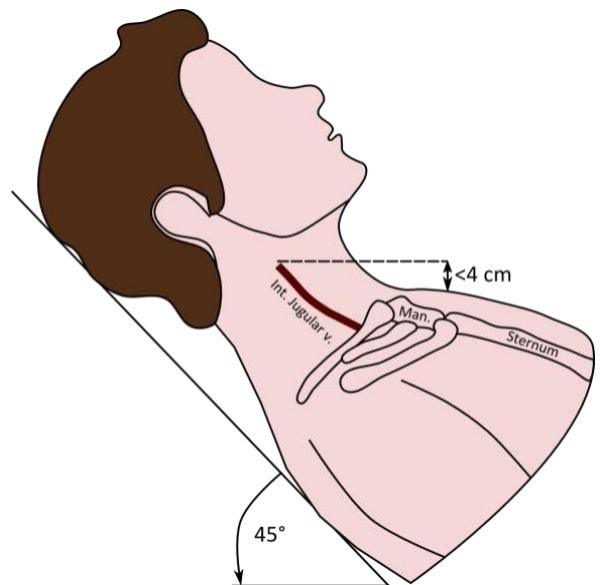
- Head left; if not visible lie 45° · right index at highest pulsation, other at sternal angle, measure +5 cm → normal 6–8 cm
- Two waves, reducible, ↓ inspiration · hepatojugular reflux (press RUQ 30–60 s → sustained rise >3 cm; falls on release) · a wave before carotid, v after · absent waves = SVC obstruction · carotid: one wave, palpable
Systemic features
- Pallor: mild conjunctiva/inner lip · moderate palms/creases/nail beds · severe skin/face/body
- Cyanosis: peripheral (extremities) vs central (lips, tongue, buccal); causes lungs/heart/blood; peripheral normal in babies if no central
- Jaundice: icteric/anicteric; pre-hepatic (haemolysis, malaria) · hepatic · post-hepatic
- Febrile state · mottling (hypoperfusion) · café-au-lait ≥5 >1.5 cm → neurofibromatosis · cranial bruit
- Clubbing stages: 1 spongy · 2 loss of Lovibond (Schamroth gone) · 3 convex nail fold · 4 drumstick · 5 hypertrophic osteoarthropathy
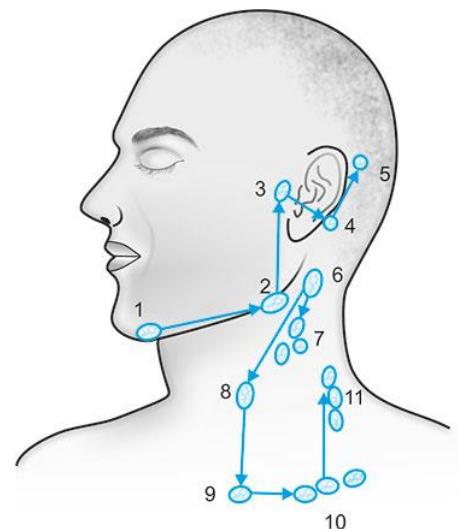
- Nodes significant if: cervical/axillary >1 cm · inguinal >1.5 cm · any supraclavicular (left = abdominal malignancy) · discharge/tenderness/redness; localised = one area, generalised = ≥2 non-contiguous
- Consistency: hard = malignancy · rubbery = lymphoma · soft tender = infection · matted = TB/metastatic
- Oedema: 1 ankle · 2 mid-shin · 3 knee · 4 above knee/sacral (pit 1+–4+ alternative)
- Hydration: mucosa · turgor (clavicle/back of hand) · tears in children
Lymph nodes
- Technique: pads of 2nd–4th fingers, press-and-roll, one side at a time (avoid carotid compression)
- Head/neck: preauricular · postauricular · occipital · tonsillar · submandibular · submental → turn head away: superficial cervical (along sternocleidomastoid) · posterior cervical · supraclavicular (shrug) · matted cervical = scrofula (TB)
- Axilla: pt holds your hand, abduct shoulder, flex elbow, arm on forearm — pectoral, posterior, central, lateral, apical
- Epitrochlear (3 cm above medial epicondyle) · inguinal (horizontal + vertical) · popliteal (knee 90°)
- Describe: size · tender · consistency · fixed/mobile · matted; nodule vs node: nodule moves with swallowing, fixed
Legs & finish
- Press 5 s over dorsum, medial malleolus, tibia, sacral (sit up)
- Causes: lymphatic obstruction/lymphoedema (non-pitting) · HF · cirrhosis · nephrotic; unilateral: cellulitis, lymphoedema
- Say you’d do: vitals, fundoscopy, all nodes, PR, urine dipstick, genitalia
- Close (summarise → problem list → dx → DD → Ix → Rx)
3. Thyroid & neck
Run sheet: WIPER · sitting · neck + upper chest exposed (nipple up — retrosternal goitre) · neck slightly flexed to relax SCM (never extend).
Before the neck
-
Hyperthyroidism → systolic HTN; hypothyroidism → diastolic HTN
-
Hands: onycholysis, warmth, sweating/dryness, thyroid acropachy
-
Pulse: tachy/AF → hyper; brady → hypo; bounding/collapsing → hyper
-
Reflexes: biceps (thumb over tendon, tap) or knee — brisk = hyper; delayed relaxation = hypo
-
Hair/eyebrows: loss, brittleness
-
Eyes: lid retraction, exophthalmos (front, side, behind), lid lag (fix head, finger up/down ×3), periorbital oedema, pretibial myxoedema (waxy, discoloured, non-pitting), eye movements (diplopia/pain)
-
Tongue: macroglossia = hypo · proximal myopathy: stand from sitting with arms crossed
Inspection
- General: cachexia · hoarse voice · dyspnoea/stridor · clothing inappropriate for temperature
- Triangles: anterior = mandible/midline/SCM · posterior = SCM/trapezius/middle third clavicle
- Scars · swelling · neck vein distension · upper-chest veins (SVC obstruction: malignancy, goitre, thymoma, lymphoma)
- Swallow — swelling attached to trachea rises · protrude tongue — thyroglossal cyst rises; thyroid does not
- Mass: site · size · colour · discharge · fistula/sinus · skin breakdown · mobility on head turn (tethering) · fluctuance · punctum · transillumination · bruit
- Don’t mistake scars for folds or cricoid for a mass
Palpation
- Warm hands, narrate; three-finger technique if uncooperative
- Trachea central? ring + index at clavicle heads, middle up midline
- Anterior: tenderness, masses · posterior (explain, behind): upper/middle/lower · never move both hands at once — press one lobe to make the other prominent, then switch
- Thyroid: palmar circular, not deep — right lobe, left lobe, isthmus; sip water, hold, swallow
- Gland: tender (thyroiditis, cyst bleed, carcinoma) · soft normal · firm (simple goitre, Hashimoto) · hard/stony (carcinoma, Riedel’s, calcified cyst) · fixed (malignancy/scar) · thrill (hyperthyroidism, large goitre)
- Consistency by facial landmark: forehead-hard = carcinoma · nose-tip firm/rubbery = benign MNG · chin-soft = colloid/cyst
- Nodule: single/multiple · site/size · well/ill-defined · moves with swallow · compressible/reducible
- Malignancy red flags: age <20 or >60, >35 with hoarseness/dysphagia/trismus/unilateral ear pain/mucosal lesion · childhood neck irradiation · MEN 2A/2B (RET) · rapid growth <1 year
- Subclinical = abnormal TSH, normal free T3/T4 · hot nodule <1 % vs cold 15–20 % malignancy
- Carotid — gently, one at a time (impalpable = compression by goitre or cancer → berry sign; benign goitre displaces it posterolaterally but it stays palpable, superficial temporal pulse palpable)
Percussion & auscultation
- Hand on manubrium at suprasternal notch, fingers abducted; percuss down → dullness = retrosternal goitre
- Confirm: can’t feel lower edge + Pemberton’s (arms to ears 60 s → plethora, cyanosis, distended neck veins, stridor)
- Auscultate bruit (Graves/hypervascular)
- Check legs for oedema/myxoedema → thank, cover → Close
Post-thyroidectomy: hypocalcaemia 24–72 h (peri-oral/finger paraesthesia, carpopedal spasm) — Chvostek (tap facial nerve → twitch), Trousseau (cuff 3 min → carpopedal spasm); severe → 10 mL 10 % calcium gluconate IV over 10 min under ECG. Tension haematoma <6 h → stridor/cyanosis: open bedside (remove clips/sutures, evacuate with gloved finger), then theatre. Storm: fever >40, HR >140, delirium → β-blocker + PTU + Lugol’s iodine + IV hydrocortisone. EBSLN injury = loss of high pitch/vocal fatigue; bilateral RLN = stridor. Ix: TSH first-line; calcitonin if MTC/MEN2; TI-RADS malignant: microcalcifications, hypoechoic, irregular margins, taller-than-wide, nodes; Bethesda IV (follicular, 25–40 % malignant) → diagnostic hemithyroidectomy.
Neck-lump DDx: carotid body tumour (pulsatile at bifurcation, moves side-to-side not vertically, bruit) · laryngocele (reducible, enlarges on Valsalva) · Zenker’s (reducible midline/left, regurgitation, halitosis) · branchial cyst · lymphoma.
4. CVS
Run sheet: WIPER · 45° · hands → CRT → palms → pulse → face → JVP → precordium (look/feel/percuss) → auscultate → lung bases → legs → abdomen.
Hands & pulse
- Clubbing · splinter · tar · Janeway/Osler · joint swelling
- Temperature both arms · capillary refill (CRT): press thumb 5 s → normal 2 s; <2 hyperdynamic; >2 poor perfusion
- Brachial pulse at antecubital fossa · full 6-point pulse (§2)
Face & neck
- Eyes: jaundice, pallor, periorbital oedema, xanthelasma; fundoscopy
- Cheeks: malar flush sparing nasolabial folds (SLE) vs generalised (PH/right HF)
- Mouth: angular stomatitis, caries, central cyanosis
- Musset’s sign (head bob — AR) · carotid: auscultate for bruit first, then palpate one at a time · JVD; measure JVP (§2)
Precordium — look
- Scars (CABG, pacemaker/ICD, drain) · rash/pigmentation · gynaecomastia (spironolactone, digoxin)
- End of bed: shape/symmetry on deep breath, deformity, pericardial plug, visible pulsation
Precordium — feel
- Palpate pacemaker/ICD if scar
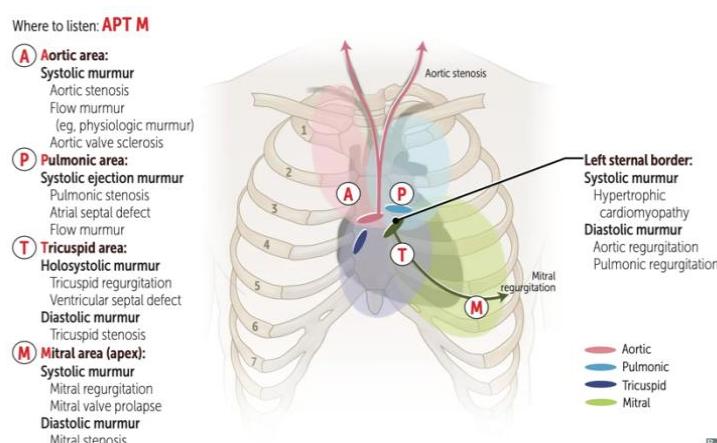
- Apex: whole hand → one finger at most evident point → count from angle of Louis → 5th ICS midclavicular
- Not found? move palm right (shift/dextrocardia) → still not found → say so
- Impalpable causes: obesity, COPD/emphysema, effusion, dextrocardia, under a rib; lean forward/left lateral may reveal it; shifted to axilla = dilatation/MR
- Character: heaving = pressure load (LVH/AS/HTN) · hyperdynamic/thrusting = volume load (MR/AR) · tapping = MS (palpable S1)
- Thrills at 4 areas · palpable S2 = pulmonary HTN · parasternal heave (ulnar side) = RVH · JVP high → palpate liver
Percuss (limited)
- Dullness → pericardial effusion/tamponade or cardiomegaly; not routine
Auscultate
- Finger on radial to time systole/diastole
- S1 mitral: apex — bell (light) then diaphragm (firm); tricuspid: left 4th ICS · opening snap = pliable valve (favours valvotomy) · Austin Flint = apical mid-diastolic in severe AR
- S2 pulmonary: left 2nd ICS; aortic: right 2nd ICS + left 3rd (AR) · Erb’s point = left 3rd ICS
- Pericardial rub: superficial, scratchy, triphasic, ↑ sitting forward/pressure, persists on breath-hold
- Murmur: radiation — AS carotids · PS back · MR axilla · TR xiphoid
- Respiratory phase: right-sided (TR/PS) ↑ inspiration; left-sided (MR/AS) ↑ expiration
- Name valve → lesion → timing: ejection systolic (AS/PS) · early diastolic (AR/PR) · pansystolic (MR/TR) · mid-diastolic (MS/TS) · continuous machinery (PDA/AV fistula)
- Grade 1–6: 1 barely audible · 4 + thrill · 6 audible off chest
- S2: loud P2 = PH · soft P2 = PS · wide fixed split = ASD
- Left lateral → MS · sit forward → AR · listen opposite side (dextrocardia)
- Sit up → posterior lung bases (fine crackles) · inspect back · legs: oedema, sacral · abdomen: liver, ascites, AAA bruit
- Mention: ECG, echo, CXR, bloods → Close
Findings → interpretation
- Displaced hyperdynamic apex → volume load (MR/AR) · heaving → pressure load (AS/HTN) · tapping → MS
- Collapsing pulse + early diastolic + wide pulse pressure → AR · pansystolic to axilla + S3 → MR · mid-diastolic rumble + loud S1 + malar flush → MS · palpable S2/loud P2 + heave → PH/RVH
- Pulsus paradoxus → tamponade, PE, asthma, COPD, constriction · bisferiens → AR ± AS, HOCM, digoxin toxicity
- Pulsatile liver = TR (with tender hepatomegaly/ascites = right HF) · Kussmaul’s sign (paradoxical ↑JVP on inspiration) = constriction/right HF
- Marfan/EDS: arachnodactyly, elastic skin, pectus, tall → AR/dissection
Valve disease — AS vs MR
- Murmur: AS harsh ejection systolic RUSB → carotids · MR pansystolic apex → axilla
- Pulse: AS parvus et tardus · MR —
- Other: AS narrow pulse pressure, S4, HF late · MR displaced apex, S3, AF common
- Ask: AS exertional syncope, weak/delayed pulse · MR palpitations, weight gain, swelling
- Ix: AS echo (area, gradient, LVH), ECG, CXR, catheter, stress · MR echo (regurgitant volume, LV), ECG (AF), CXR
- Rx: AS medical role limited, AVR, TAVI if high risk · MR diuretics, vasodilators, rate control, repair/replacement, MitraClip
IE — what to hunt
Fever · new/changed murmur · Janeway (painless, palms/soles) · Osler (painful, fingertips) · splinter haemorrhages · Roth spots · emboli (stroke, renal/splenic infarct) · clubbing.
Duke: major = typical/persistent cultures + echo evidence (vegetation, abscess, new regurgitation). Minor = predisposing heart disease/IVDU · fever ≥38 · vascular phenomena · immunological (Osler, Roth, GN, RF) · cultures not meeting major. 2 major / 1 major + 3 minor / 5 minor.
5. Respiratory
Run sheet: WIPER · sitting, chest exposed (or 45°) · look (general → chest) → trachea → expansion → fremitus → percuss → auscultate → legs. Unilateral disease: examine lying on the affected side.
Look — general
- Speech/distress, O₂ litres, temperature · cyanosis/plethora · clubbing (bronchiectasis, cancer, fibrosis, ILD, empyema, abscess) · tar
- Thenar/hypothenar wasting (T1/Pancoast) · tachycardia/β-agonist overuse; AF = lung-cancer sign · breathing pattern (tachypnoea, Kussmaul, Cheyne-Stokes, bradypnoea <12) · RR 12–20 (count holding pulse)
- Cheyne-Stokes: HF, cerebrovascular, head injury, CO poisoning; normal in sleep/high altitude
Look — chest
- Symmetry on deep breath (unilateral ↓ = effusion) · accessory muscles · nasal flaring · barrel chest · pectus excavatum/carinatum
- Scars (thoracotomy, drains, cautery, radiotherapy marks) · kyphoscoliosis (restrictive) · movement incl. lower costal margins
- Face/neck: Horner’s (ptosis, miosis, anhidrosis → Pancoast) · SVC obstruction (plethora, injected eyes, chest-wall veins) · goitre (tracheal obstruction) · polyps · central cyanosis · JVD · cervical nodes (sit forward, from behind)
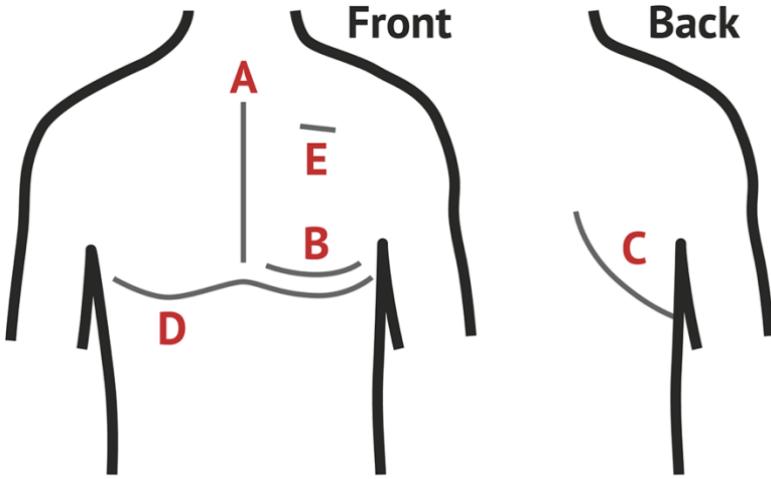
Chest scars: A sternotomy (CABG) · B anterior thoracotomy (lung biopsy, pericardium) · C posterolateral (most thoracic) · D clamshell (transplant) · E left subclavicular (pacemaker).
Feel
All anterior, then all posterior.
- Trachea: middle finger midline, index + ring on medial clavicles · tug (severe hyperinflation/COPD)
- Away = pneumothorax/massive effusion; toward = collapse
- Apex, parasternal heave, palpable S2
- Expansion 3 zones/side: anterior upper (above clavicles), lower (~6th ICS); posterior suprascapular, interscapular, lower (~10th ICS) · normal ≥5 cm
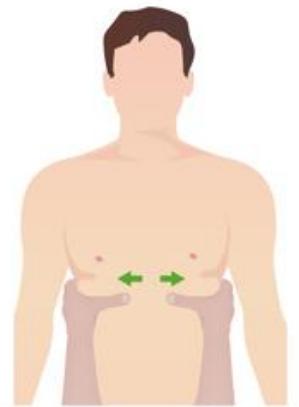
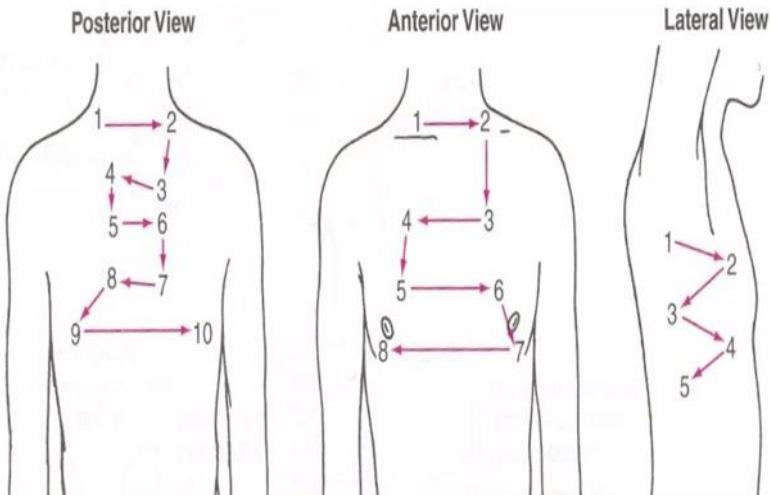
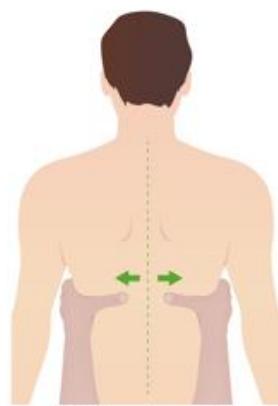
- Fremitus (“99 / أربعة وأربعين”): anterior upper lobes to 4th rib, below middle right/lower left; posterior hug self, to T4; ↑ consolidation, ↓ effusion/pneumothorax/obesity
Percuss
- Firm middle finger, two taps, lift fast; zig-zag, compare sides
- Positioning: hug self for scapulae, arms raised for axillae
- Anterior: supraclavicular apices · percuss clavicle directly (⅓ from sternum) · infraclavicular · chest wall ×3–4 · axilla
- Left 4th lateral (pericardium); right 4th/6th dull → deep breath + hold → still dull = consolidation, clears = liver
- Posterior: near vertebrae (avoid scapula), lateral below T4 · axillary line upper/middle/lower
- Notes: resonant · hyper-resonant (pneumothorax, emphysema) · tympanitic (cavity/pneumothorax) · dull (consolidation “woody”, effusion “stony”, mass)
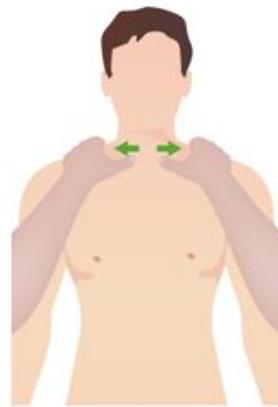
- Loss of liver dullness (upper edge 6th rib MCL, resonance below) = hyperinflation · loss of cardiac dullness likewise
Auscultate
- First comment on air entry (reduced in collapse, effusion, pneumothorax)
- Vesicular: inspiration longer than expiration (~3 s), no gap
- Bronchial: hollow/high-pitched, louder/longer on expiration with a gap — normal over trachea, elsewhere = consolidation; silent chest = ominous
- Bronchovesicular: medium pitch, continuous through inspiration and expiration, below clavicles; peripherally = pathology
- Diminished normally in obesity/pregnancy; also obstructed airway, collapse, chronic lung disease
- Wheeze: expiratory = asthma/COPD; inspiratory = severe
- Stridor · pleural rub (pleuritis, painful inspiration)
- Crackles: coarse = bronchial consolidation; fine = fibrosis, late inspiration; also oedema, COPD, bronchiectasis
- Vocal resonance: bronchophony = consolidation · pectoriloquy = massive consolidation · egophony (E→A) = consolidation/upper level of effusion
- Legs: sacral oedema, ankle oedema, squeeze calves (DVT/PE), hepatomegaly (right HF)
- Say: hands, SpO₂, CXR + gases → Close
Findings → interpretation
- Dull + crackles + ↑ fremitus + ↑ vocal resonance → consolidation/pneumonia (also herpes labialis, nasal flaring, rusty sputum, fever 39–40)
- Hyper-resonant + ↓ breath sounds → pneumothorax
- Dull bases + ↓ fremitus + ↓ sounds (widened intercostal spaces; bronchial breathing above fluid) → pleural effusion
- Equal wheeze + ↓ fremitus + hyper-resonance + rhonchi → asthma
- Unequal wheeze + barrel chest → COPD
- Velcro basal crackles + clubbing → ILD/fibrosis
- Loud P2 + RV heave + ↑JVP → pulmonary HTN
SOB — history frame
- SOB = anaemia (no cough + fatigue) / respiratory / cardiac
- Onset, pattern, progression, previous episodes · NYHA I strenuous · II daily · III mild · IV rest
- Orthopnoea (how many pillows?) · PND · syncope
- Character, severity, timing, position (worse lying, better sitting)
- Cardiac: chest pain, palpitations, swelling, severe MS → haemoptysis · Pulmonary: cough, sputum, haemoptysis, wheeze · Upper airway: stridor, coryza · unilateral leg swelling (PE)
- Constitutional · PMH (HF, CAD, asthma, COPD, ILD, anaemia, obesity, surgery) · family/social (smoking, dust, travel, workers in the house, pets/hobbies, passive smoking, occupational pattern) · drugs
- Cough causes to ask: ACE inhibitor, GERD
- Pathways: cardiac (pain, orthopnoea, PND, oedema) · pulmonary (cough, wheeze, sputum, infection); pain relieved lying on affected side = pleuritic
Effusion — Light’s
Exudate if any: pleural protein/serum >0.5 · pleural LDH/serum >0.6 · pleural LDH >⅔ serum ULN.
Pneumonia severity — CURB-65
Confusion · urea >7 mmol/L (>19 mg/dL) · RR ≥30 · SBP <90/DBP ≤60 · age ≥65. 0–1 outpatient · 2 short admission · 3–5 admit (ICU if severe). Admit regardless if hypoxic, unstable, can’t take oral meds, major comorbidity/social issue.
How to read a chest film
“PA/AP erect chest radiograph of… taken…”, then ABCDE: airway · breathing (lungs, pleura, pneumothorax) · circulation (heart, mediastinum) · diaphragm (free gas) · everything else (bones, lines).
CXR patterns
- Consolidation: opacity + air bronchograms; no volume loss
- Effusion: blunted costophrenic angle, meniscus; large → shift away
- Pneumothorax: pleural line, absent markings; tension → shift away + flat diaphragm + hypotension
- Collapse: opacity with volume loss, shift toward, raised hemidiaphragm
- Oedema: bat-wing shadowing, Kerley B, upper-lobe diversion, cardiomegaly
- Cardiomegaly: CTR >0.5 · COPD: hyperinflation, flat diaphragm, narrow mediastinum, bullae · TB: upper-zone cavitation/fibrosis
- Mass: opacity, hilar enlargement
- Lines/tubes: ET 2–4 cm above carina · NG below diaphragm · CVC at SVC/RA · drain
6. Abdomen
Indications: DKA, jaundice, ascites, UTI, CKD.
Run sheet: WIPER · supine, one pillow, nipples→mid-thigh (to pubic symphysis) · look (end of bed, then close) → hands/face → palpate (away from pain) → organs → percuss → auscultate → legs/back → completion.
End of bed — ABC₄DₛEV
- Appearance: ill/well, conscious, oriented · B build/BMI · C colour: jaundiced, pale, cyanosed, plethoric
- D distress, decubitus, deformity, dehydration (dry skin/mucosa, sunken eyes)
- E environment: stoma, cannula, NG, O₂, catheter, vomit bowl (“environmentally free”) · V vitals
Look — abdomen
- Shape/symmetry on deep breath · visible pulsation (AAA) · visible peristalsis (obstruction)
- Hernias: cough while watching umbilicus/inguinal; or hand on forehead, resist → bulge
- Skin: scars (name by site), striae, rash, pigmentation, hair · umbilicus central/downward (distension), inverted, everted (hernia/ascites; upward in pregnancy)
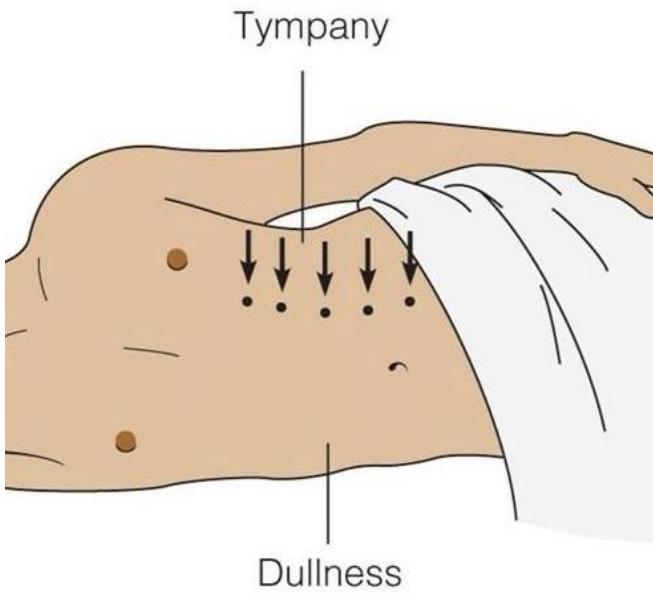
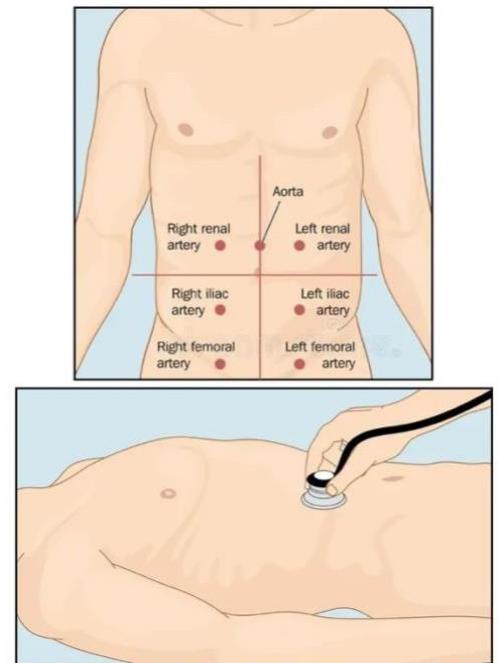
6 Sₛ: symmetrical movement (foot + side at eye level; thoraco-abdominal women, abdomino-thoracic men) · scars · skin lesions · swelling · striae · stoma (right ileostomy, left colostomy). 3 PVₛ: prominent veins (caput medusae = portal HTN) · visible pulsation (AAA) · visible peristalsis. A HUG: distension (6 F’s: fat, fluid, fetus, flatus, faeces, tumour) · hernia · umbilicus · gynaecomastia.
Hands & face (GI focus)
- Nails: clubbing (cirrhosis, IBD, coeliac) · splinter · leukonychia · koilonychia
- Palms: erythema · oedema · Dupuytren (alcohol)
- Arms: asterixis (hands up, wrists extended, hold 30 s; hepatic, uraemic, CO₂ retention) · fine/rest/intention tremor · scratch marks (cholestasis) · bruising/petechiae (thrombocytopenia + ↓factors except VIII/vWF) · deltoid wasting
- Sublingual jaundice · eyes: scleral icterus · conjunctival pallor · xanthelasma · arcus (young = hyperlipidaemia) · Kayser–Fleischer (copper; refer)
- Cheeks: parotid enlargement (alcohol) · submandibular gland enlargement → CLD
- Mouth: angular stomatitis · fetor hepaticus · glossitis · bleeding gums · ulcers (IBD) · buccal pigmentation (Peutz–Jeghers)
- Neck/chest: Virchow node / Troisier (left supraclavicular — gastric/pancreatic) · acanthosis nigricans (insulin resistance, GI cancer) · spider naevi (SVC areas; >5 → cirrhosis) · hair loss · gynaecomastia
- Legs: pitting oedema, bruising
Palpate
- Warm hands · 9 regions · ask pain, start away · palmar surface · watch face
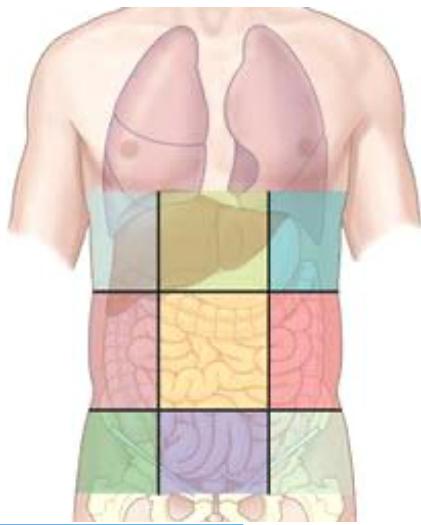
- Superficial (anticlockwise): tenderness · guarding (voluntary) · rigidity (involuntary + tender = peritonitis)
- Deep: masses (site, size, shape, consistency, mobility, pulsation, tenderness) · rebound · Rovsing · psoas · Murphy
- Organ technique: start RIF, lateral border of index, move in expiration, hold in inspiration
Liver
Courvoisier’s law: jaundice + enlarged non-tender gallbladder ⇒ malignant distal CBD obstruction (exceptions: double impaction, Mirizzi, choledochal cyst).
- Right lobe: RIF → costal margin; describe surface, consistency, edge, tenderness · left lobe: epigastrium below xiphoid
- Span: percuss down right MCL from 2nd ICS to upper dullness (~6th rib), then up from RIF to lower border. 6–12 cm / 12±2 male, 10±2 female
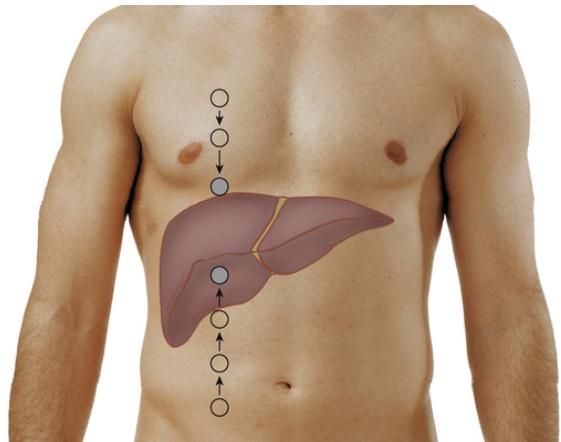
Spleen
- Diagonal RIF → left hypochondrium; palpable at costal margin ≈3× normal (any palpable spleen ≥2×); moves down and medially on inspiration
- Subclinical: percuss right 8th–10th ICS — dull = splenomegaly (fast ≥2 h)
Spleen vs left kidney
- Upper border: kidney palpable · spleen not · Notch: kidney no · spleen yes · Movement: kidney inferiorly · spleen inferomedially · Ballotable: kidney yes · spleen no · Percussion: kidney resonant · spleen dull · Rub: kidney no · spleen yes
Kidneys: right hand anterior, left posterior (don’t switch); push up, feel poles = ballottement. Palpable kidney causes: PCKD, hydronephrosis, RCC, amyloid, (Wilms), HTN. Aorta: gentle 2–3 cm above umbilicus · grade impulse: none / transmitted / expansile (AAA). Dipping in ascites · Murphy’s (fever + RUQ pain + jaundice: hand as kidney, deep breath + exhale as you reach subcostal margin → stops exhaling). Renal punch: fist over placed hand, gentle (pyelonephritis/transplant).
Percuss
- Midline xiphoid → down: resonant; dull = mass/massive ascites; hyper-resonant = distension · loss of liver dullness = free air/perforation · don’t percuss below umbilicus (bladder)
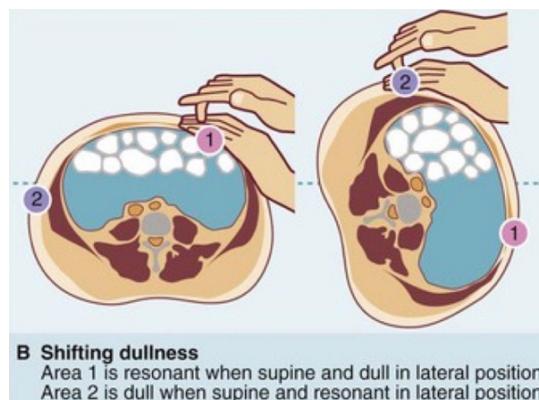
- Umbilicus → flank to dullness → roll toward you → wait 10–30 s → percuss back = shifting dullness (more sensitive, mild)
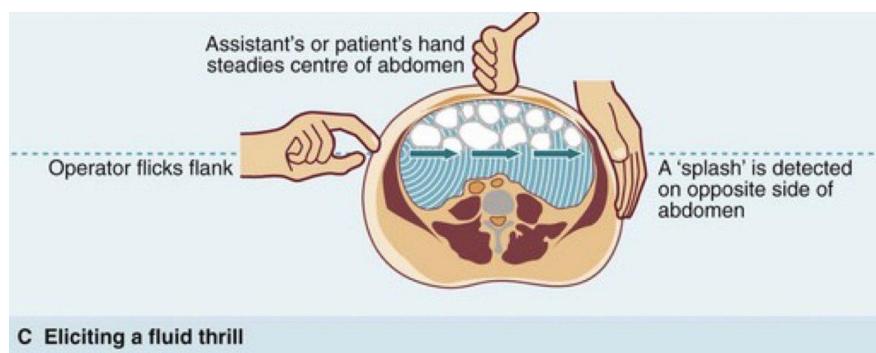
- Fluid thrill (more specific, massive): palm edge midline, left palm flat opposite, flick → wave
- Fixed dullness that doesn’t shift = mass/massive ascites
- Castell’s: dull 8th–9th ICS left anterior axillary line, or becomes dull on inspiration = splenomegaly (Traube’s)
- Kidney masses resonant
Auscultate
- Bowel sounds (diaphragm) — McBurney then 4 quadrants; 5–10 s/2–3 min · absent 2–4 min = ileus/obstruction · hyperactive = obstruction/gastroenteritis · splash = obstruction · succussion splash = retained gastric fluid (pyloric/gastric outlet obstruction)
- Friction rub: diaphragm liver, bell spleen = peritoneal inflammation
- Venous hum (bell): xiphisternum→umbilicus = portal HTN · hepatic bruit = HCC/vascular tumour
- Renal bruits (bell): either side above umbilicus = renal artery stenosis; also aortic/iliac
Abdomen — finish
- Legs: oedema, scratches, pigmentation, vasculitis · back: masses, scars, rash
- Say you’d do: nodes, genitalia, PR, dipstick, vitals, fundoscopy · β-hCG in any reproductive-age woman before imaging/surgery
- Examine hernial orifices → thank → cover → Close
Special tests
Murphy (cholecystitis) · Rovsing, psoas, obturator (appendicitis) · Cullen, Grey Turner (pancreatitis) · Fox’s sign = upper-thigh ecchymosis (retroperitoneal bleed) · Sister Mary Joseph nodule.
Scar map
A midline · B paramedian (kidney, adrenals, spleen) · C subcostal (biliary, spleen) · D chevron (gastrectomy, adrenalectomy, liver) · E loin · F McBurney · G Lanz · H Pfannenstiel (lower GIT, urinary, reproductive, caesarean) · liver transplant Mercedes-Benz · renal transplant RIF · McBurney injures iliohypogastric/ilioinguinal → conjoint tendon weakness → iatrogenic direct hernia.
7. Neuro
Run sheet: WIPER · general (consciousness, orientation, neck stiffness, Kernig) → higher function → CN I–XII → motor (look, tone, power, reflexes, coordination) → sensory → gait → cerebellum. In the limb start with the normal side.
GCS
What is the score?
- Eyes — spontaneous 4 · to speech 3 · to pain 2 · none 1
- Verbal — orientated 5 · confused 4 · words 3 · sounds 2 · none 1
- Motor — obeys 6 · localises 5 · withdraws 4 · abnormal flexion 3 · extension 2 · none 1
- Record total and components (e.g. 9/15 = E3 V2 M4)
3–8 severe · 9–12 moderate · 13–15 mild.
Higher function
- Orientation: name, age, address, place, time/day/date/month (acute = delirium, chronic = dementia)
- Handedness · MMSE (orientation, registration, attention, recall, language)
- Speech: free talk (room/job) · comprehension (commands) · repetition · naming (easy → rare) · reading · obey written command · writing (no motor deficit)
- Receptive (Wernicke): can’t understand, fluent but disorganised · Expressive (Broca): understands, non-fluent · Nominal: can’t name · Conductive: poor repetition, follows commands
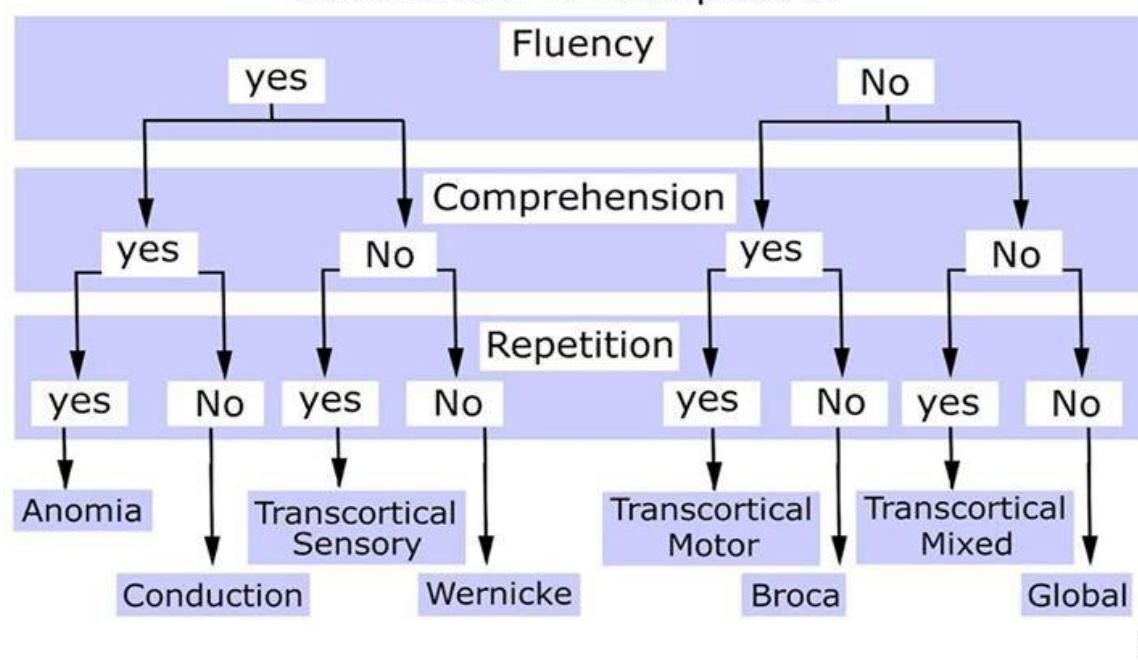
- Dysarthria: articulation only (UMN cranial nerves, cerebellum) — palate/tongue (ر)/lips (ب) → “بغداد عاصمة جميلة”
- Dysphonia: voice quality (laryngeal, RLN). Cough test: normal cough = cords intact; dysphonia + normal cough = local/hysteria; bovine cough = cord palsy; fatigues = myasthenia
- Bulbar (LMN IX–XII) = nasal, flaccid, fasciculation · pseudobulbar (UMN) = hot-potato/spastic
- Memory: immediate · short-term (5 min) · long-term (>5 y) · Thinking: proverbs · Calculation: serial 7s
- Faces: famous faces → failure = prosopagnosia · Body perception: neglect = hemi-neglect; doesn’t recognise hand = asomatognosia
- Cortical sensation: astereognosis · graphesthesia · tactile localisation · two-point 3 cm
Lobes
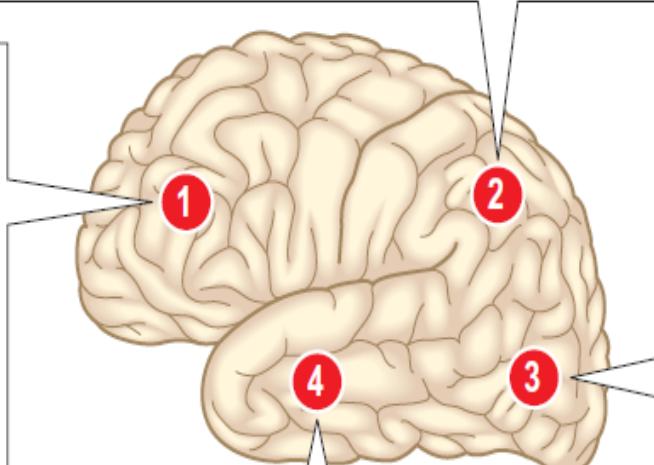
- Frontal — personality, emotion, social behaviour → disinhibition, apathy, antisocial, memory loss, incontinence, grasp reflex, anosmia
- Parietal (dominant) — calculation, language, planned movement, size/shape/texture → dyscalculia, dysphasia, dyslexia, apraxia, agnosia, hemianopia
- Parietal (non-dominant) — spatial, constructional → neglect, disorientation, constructional/dressing apraxia
- Occipital — vision → hemianopia, scotomas, visual agnosia, prosopagnosia, hallucinations
- Temporal (dominant) — hearing, language, verbal memory, smell → dysphasia, dyslexia, poor memory, hallucinations
- Temporal (non-dominant) — hearing, music, non-verbal memory, smell → poor non-verbal memory, lost musical skills
Meningeal irritation
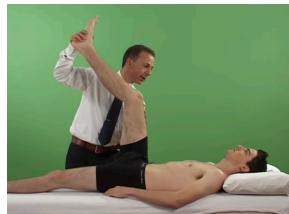
- Neck stiffness: active flexion, then passive · Kernig’s: flex hip, extend knee → pain/resistance · Brudzinski’s: flex neck → hips/knees flex + neck pain
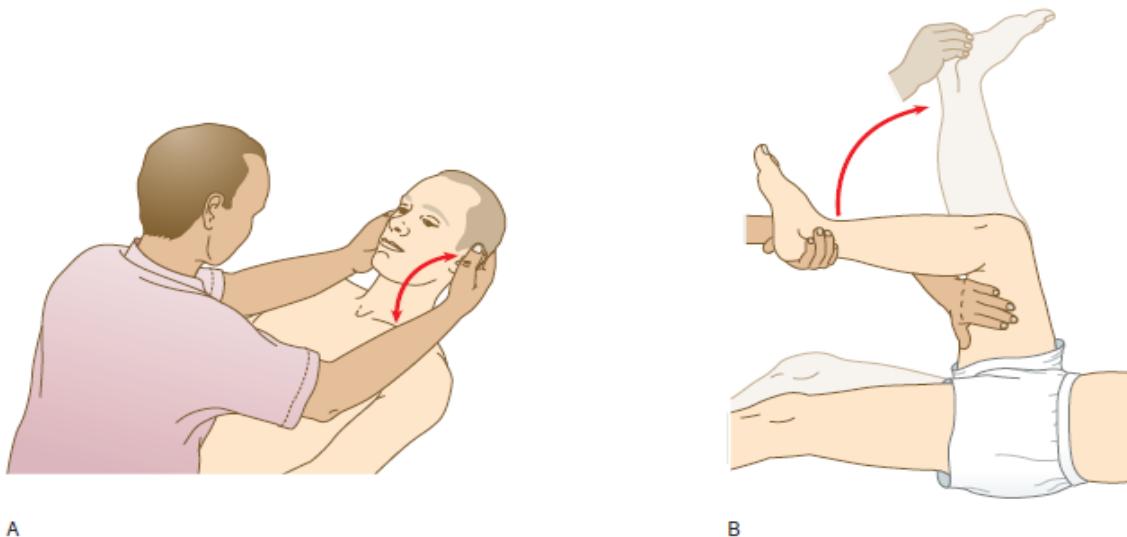
- Jolt test: head rotated ≥3/s → worsening headache (most sensitive for bacterial meningitis) · Kernig/Brudzinski positive in only ~half — absence doesn’t exclude
- Photophobia · headache worse lying down · LP only after CT + fundoscopy (exclude raised ICP/papilloedema)
Cranial nerves
Look first: facial asymmetry (nasal folds) · ptosis · squint · anisocoria · lip deviation to non-affected side + drooling · shoulder droop.
I — Olfactory: familiar odour each nostril (only if asked). Affected: infection, head trauma, frontal tumour, basal skull fracture; Kallman’s = congenital anosmia + hypogonadism (low FSH/LH).
II — Optic
- Acuity: ask about glasses/contacts, near (reading) + far (Snellen), each eye · if fails: count fingers → hand movement → light perception only (= blind)
- Colour: Ishihara — abnormal → congenital X-linked colour blindness, digoxin, ethambutol
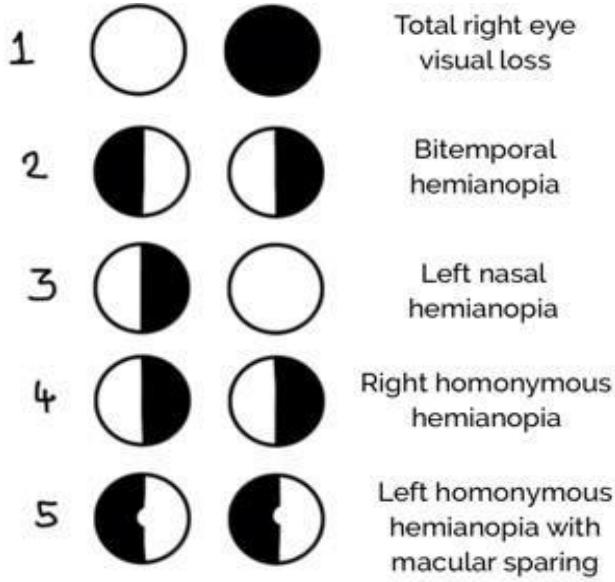
- Fields by confrontation: eye level, cover one eye each, 4 quadrants (“is it moving?“) → repeat · homonymous = tract/occipital · bitemporal = chiasm
- Pupils: direct + consensual (afferent II, efferent III) · accommodation far→near (30 cm) → convergence + constriction
- Marcus Gunn: swing torch pupil-to-pupil → abnormal pupil dilates paradoxically
- Fundoscopy: align your eye with pt’s right, left hand on their left shoulder, close your other eye; move in until yellow disc + vessels; papilloedema/retinal changes
- Affected: optic neuritis (MS), ischaemic optic neuropathy, pituitary compression
III, IV, VI
- Pupil size/shape/equality, ptosis · cover/uncover (squint: fix on your nose, cover then uncover → movement = squint)
- H pattern (6 fields) + X pattern (obliques); failure, diplopia, nystagmus · mnemonic: all oculomotor except SO4/LR6
- III down and out + ptosis + fixed dilated pupil (pupil involvement = surgical emergency, compressive aneurysm; pupil-sparing often diabetic/ischaemic) · IV can’t look down and in, vertical diplopia on stairs · VI can’t abduct, eye inward
- Causes: III PCA aneurysm, DM, brainstem stroke, trauma · IV head trauma, DM, brainstem · VI ↑ICP, DM, MS, basilar aneurysm
V — Trigeminal
- Sensory: cotton on sternum first, then V1 forehead, V2 cheek, V3 jaw, compare; repeat with pin
- Corneal reflex (afferent V, efferent VII) · Motor: clench → palpate masseter/temporalis · open mouth against resistance · jaw side to side (deviation = weak pterygoid)
- Jaw reflex: mouth slightly open, index on chin, tap down → exaggerated UMNL; absent V/VII damage
- Causes: UMNL corticobulbar · LMNL acoustic neuroma, MS, trauma · neuralgia
VII — Facial
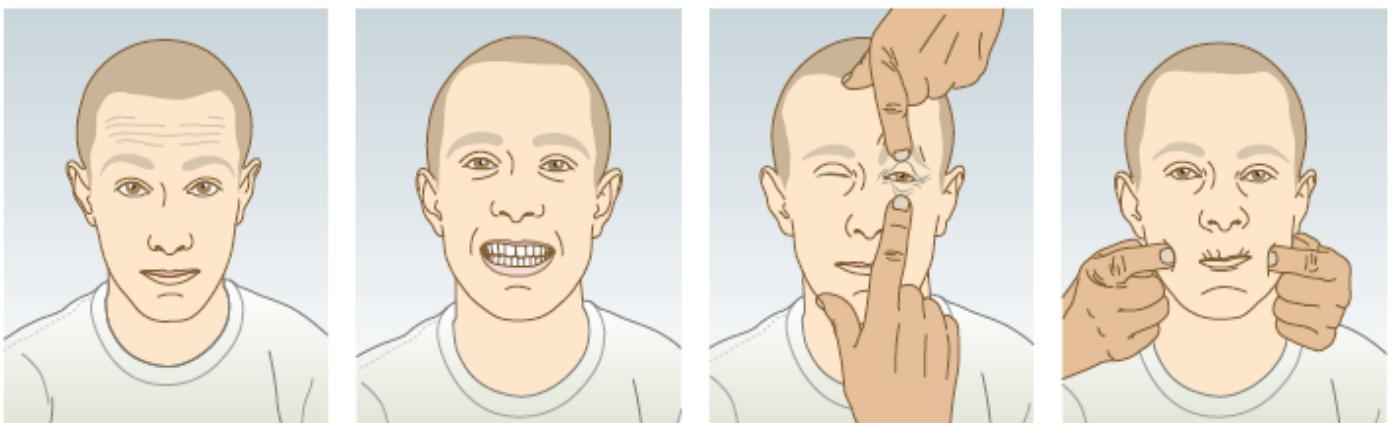
- Look: asymmetry, absent forehead wrinkles, smoothed nasolabial fold, lip deviation, drooling
- Motor: raise eyebrows · close eyes against your attempt · smile/show teeth · puff cheeks while you tap · whistle · clench teeth and watch platysma
- Taste anterior 2/3 (chorda tympani) · hyperacusis (stapedius) in LMN
- UMN (stroke) forehead spared; LMN (Bell’s) whole face; bilateral palsy may look symmetrical; also Ramsay Hunt, Lyme, parotid tumour · bilateral palsy → sarcoidosis, GBS, Lyme (not stroke/Bell’s)
VIII — Vestibulocochlear
- Whisper test · Rinne: mastoid then in front of ear — normal air > bone; conductive = bone > air (negative); sensorineural = same as normal (positive)
- Weber: mid-forehead — conductive lateralises affected ear; sensorineural unaffected
- Vestibular: arms out, eyes closed, march on the spot → drift/rotation = lesion
- Causes: sensorineural — acoustic neuroma, NF2, noise, aminoglycosides (gentamicin), Ménière’s, labyrinthitis, petrous fracture; conductive — wax/foreign body, otitis media, TM rupture, otosclerosis
IX & X
- Voice (hoarseness) · cough · sip of water (swallow) · “say ah” palate/uvula · gag + palatal reflex (mention)
- Causes: IX skull base tumour, neuralgia, jugular foramen · X UMNL (contralateral uvula deviation), LMNL tumour/trauma/endarterectomy
XI — Accessory
- Shrug against resistance (trapezius — ipsilateral drop) · head turn against hand (opposite SCM)
- Causes: UMNL stroke · LMNL trauma/surgery, tumour, compression
XII — Hypoglossal
- Inspect in mouth (size, wasting, fasciculation) · stick out (deviates to affected side) · push against tongue blade each side
- UMNL → contralateral deviation; LMNL → ipsilateral (neck trauma, medullary/skull base tumour, ALS)
Anatomy: III → SOF (PCA aneurysm); V → V1 SOF, V2 rotundum, V3 ovale; VII → IAM → stylomastoid; VIII → IAM.
Coordination
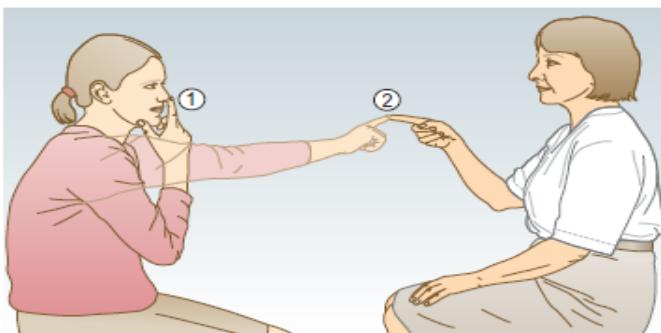
- Finger-nose: intention tremor, past-pointing (use chin if tremor) · repeat stationary with eyes closed — error then = posterior column, not cerebellar
- Dysdiadochokinesia: rapid pronation/supination, then faster — speed, rhythm, smoothness · Nystagmus: follow finger, no head movement
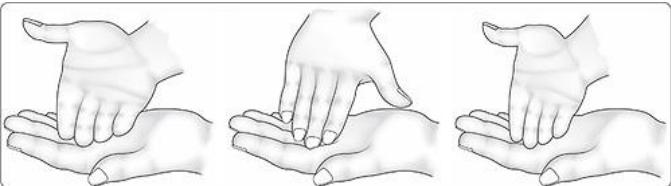
- Rebound: flex against resistance, release → rebound/hypertonia = UMNL; violent flexion = cerebellar hypotonia
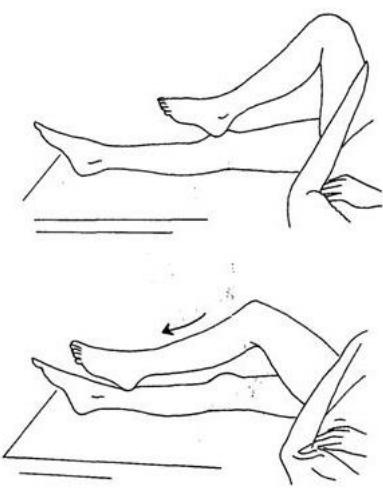
- Heel-shin: heel down opposite tibial border, then eyes closed — off-line = cerebellar/posterior column
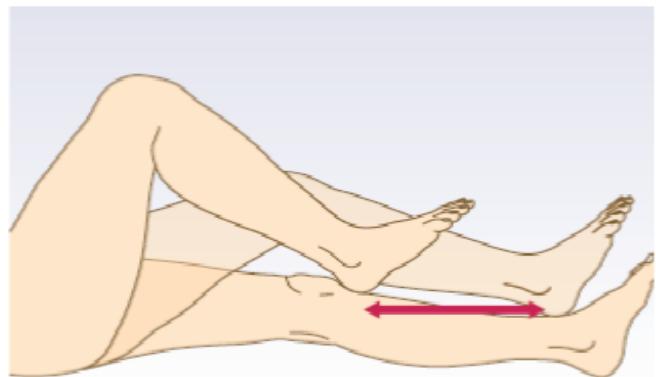
- Romberg: feet together, eyes open → close; positive in sensory ataxia, also cerebellar/vestibular
Motor
Look: wasting (denervation, myopathy, disuse) · fasciculations (at rest; tap and wait 30 s = LMNL) · position (hemiplegia, mask face, decerebration, decortication) · deformity (wrist/foot drop, claw hand) · tremor (rest Parkinson; postural/action essential, thyrotoxic, drugs, liver/renal, alcohol withdrawal; intention cerebellar; asterixis)
- Spine/back: deformity/scoliosis, scars, tenderness, hair tufts/skin tags; auscultate bruits; saddle sensation + anal reflex if sphincter symptoms · Adam’s forward flexion (rib hump = scoliosis)
Tone: big joints, relaxed, distal→proximal; normally slight resistance
- LL: leg roll + thigh-drop — lift heel and let it drop; flaccid = LMN, stiff = UMN; palpate bulk/tenderness
- Hypertonia (UMN): spasticity (worse with speed), clasp-knife; rigidity = lead-pipe, cogwheel (Parkinson) · Hypotonia: LMN, but also cerebellar disease and early cerebral/spinal shock (transient flaccid areflexia below a new cord lesion)
Power — MRC: 0 none · 1 flicker · 2 gravity-eliminated · 3 against gravity no resistance · 4 minimal resistance · 5 normal. ≥3 = against gravity.
- Shake hands at start (tone, tremor, asterixis, thenar bulk) · pronator drift (arms forward, palms up, eyes closed 10 s → drift/pronation = UMN)
- Arm drop test (deltoid/axillary): passively abduct 90°, release → drop · winged scapula (serratus/long thoracic): push wall, look at back
- Ulnar paradox: claw hand only in low ulnar lesions (high lesion paralyses ulnar ½ FDP → no claw); median → thenar wasting, ape hand, pointing index
| Upper limb | Root | Lower limb | Root |
|---|---|---|---|
| Shoulder abduction / adduction | C5,6 / C6,7,8 | Hip flex / ext / abd / add | L2,3 / L5,S1,2 / L4,5,S1 / L2,3,4 |
| Elbow flex / ext | C5,6 / C7,8 | Knee flex / ext | L5,S1 / L3,4 |
| Wrist flex / ext | C6,7 / C7,8 | Ankle plantar / dorsiflex | S1,2 / L4 |
| Finger flex/ext, abd/add | C7,8 / C8,T1 | Tarsal inversion/eversion | L5,S1 |
- EHL L5 · toe flexion S1 · quick: stand on toes (S1) · heels (L4,5) · squat/stand (L3,4)
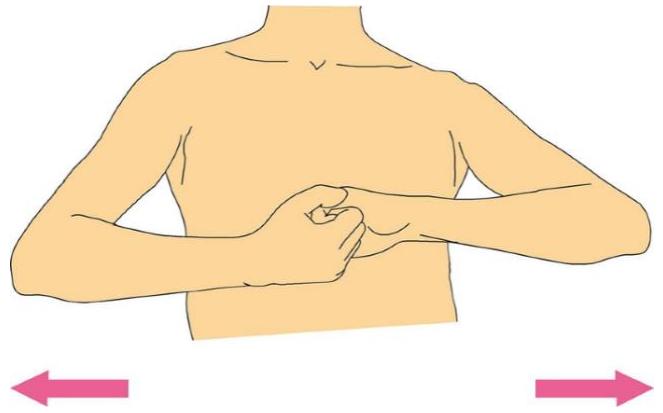
Reflexes 0 to +4. Reinforce: clench eyes / pull hands (Jendrassik) / clench teeth; poor ankle jerk → pre-dorsiflex foot; UL → move other wrist.
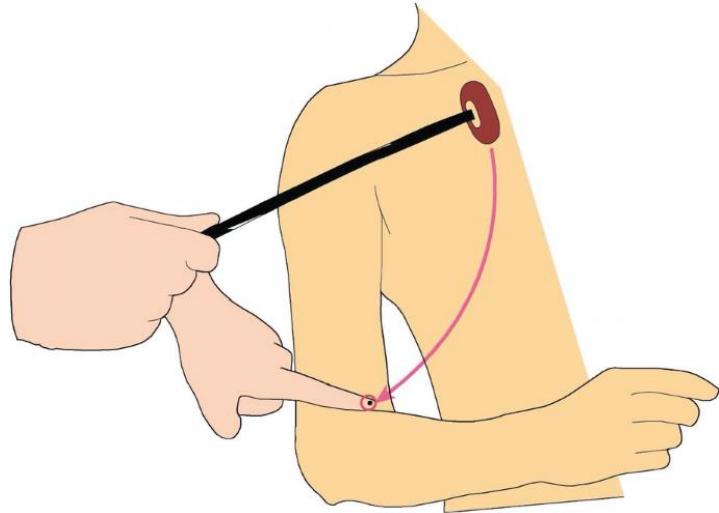
- Biceps C5,6 — elbow 120°, thumb on tendon, tap thumb · Triceps C7,8 — elbow 90°, tap tendon · Brachioradialis C5,6 — strike lower radius · Finger jerk C5
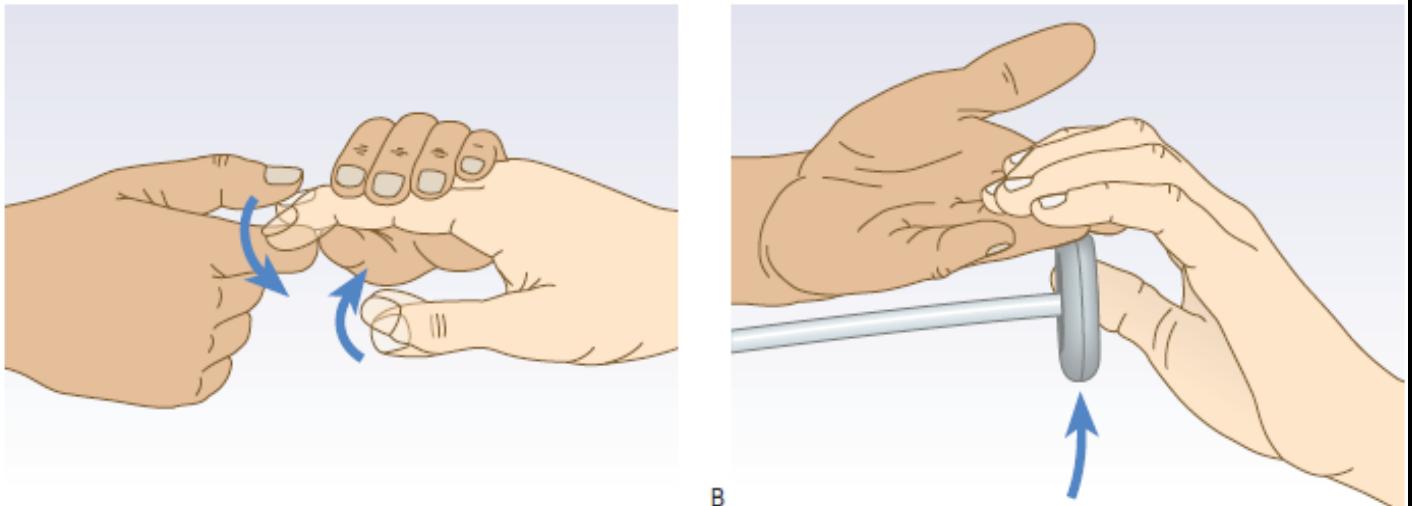
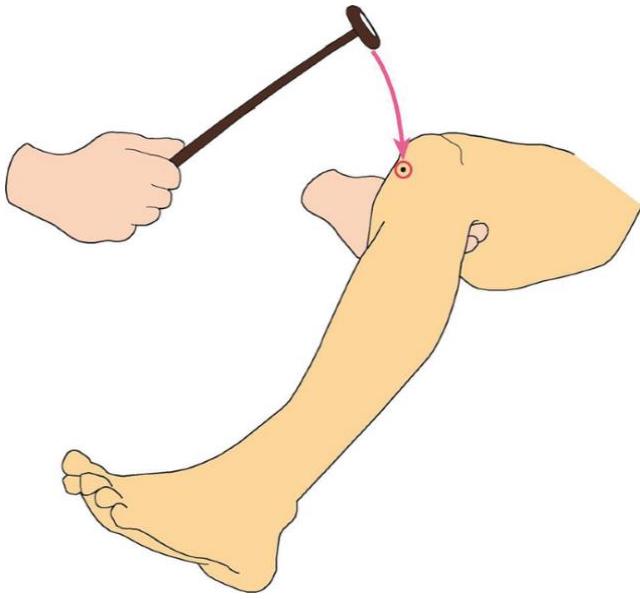
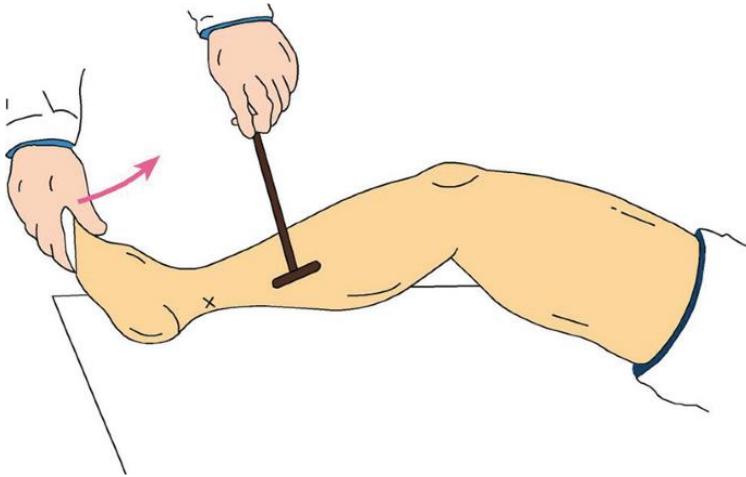
- Knee L3,4 — tap patellar ligament · Ankle S1,2 — knee+ankle 90°, tap Achilles · Plantar L5,S1,2 — stroke lateral sole with key, curve inward → plantarflexion normal
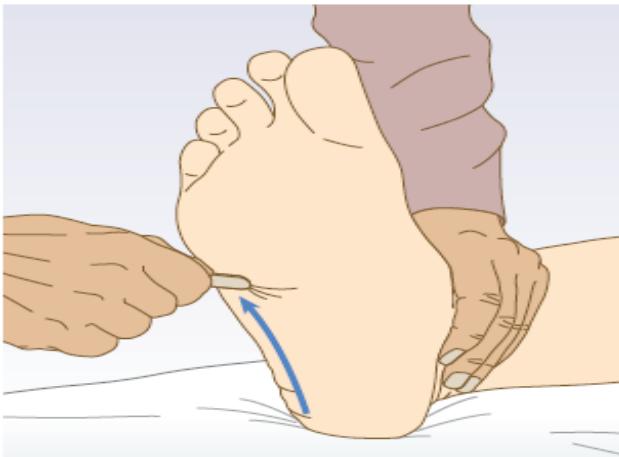
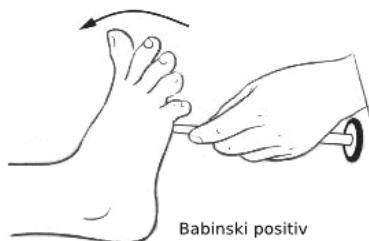
- Superficial: abdominal T6–T9/T9–T11/T11–L1 · cremasteric L1–L2 · anal S2–S4
- Babinski: upgoing big toe + fanning = UMN; also infants, after seizure, coma — say “extensor plantar response” · Hoffmann = UL Babinski (flick middle-finger tip, sitting)
- Spurling’s: cervical extension + rotation + axial compression → radicular arm pain
- Clonus (if hypertonia): sustain ankle dorsiflexion 5–10 s → oscillation; patellar clonus; demonstrate clasp-knife
UMNL vs LMNL — look: UMNL normal (late wasting), LMNL wasting/fasciculation · tone: UMNL ↑+clonus, LMNL normal/↓ · weakness: UMNL extensors arms/flexors legs, LMNL focal · reflexes: UMNL ↑, LMNL ↓/absent · plantar: UMNL extensor, LMNL flexor
Paresis partial · plegia complete · monoplegia one limb · hemiplegia one half · paraplegia legs · tetraplegia all four.

Sensory
- Pain (spinothalamic): needle, sharp vs dull · Temperature: hot/cold tubes (special cases)
- Light touch: cotton · Vibration (posterior column): tuning fork on bony prominence, when it stops — don’t go proximal until distal abnormal (lateral malleolus, distal phalanges)
- Proprioception: distal IP finger/toe, demonstrate, eyes closed, random
Dermatomes: C2 head · C3 neck · C4 shoulder · C5 lateral arm · C6 forearm/thumb · C7 middle finger · C8 medial forearm · T1 medial arm · T4 nipple · T10 umbilicus · L1 groin · L2 thigh · L3 medial knee · L4 medial calf · L5 big toe · S1 lateral foot · S3–5 perianal.
Light touch + vibration + proprioception = dorsal column · pain = spinothalamic.
Gait
- Walk ~10 m and back (power ≥3) · tiptoes (S1) · heels (L4,5) · tandem · Fog’s test (walk on outer edges → unmasks hemiparesis)
- Parkinsonian — stooped, shuffling, no arm swing, freezing → Parkinson’s
- Apraxia — small shuffling steps, hard to start, better cycling in bed → cerebrovascular, hydrocephalus
- Spastic paraparesis — stiff, scissors → cord
- Myopathic — waddling, Trendelenburg → dystrophy/myopathy · Gower’s sign (climbs up thighs = proximal myopathy)
- Antalgic — short stance painful side · Lurch — trunk shifts over stance leg (shortening/weak abductors) · Circumduction — stiff hip/spastic hemiplegic · High step — foot drop
- Central ataxia — wide-based, poor tandem → cerebellum · Sensory ataxia — wide-based, Romberg + → neuropathy/cord · Functional — bizarre, inconsistent
Cerebellar
- Order: gait (walk, tandem) → Romberg → speech (“British Constitution”, “baby hippopotamus”) → nystagmus → finger-nose → rebound → dysdiadochokinesia → knee reflexes (pendular) → heel-shin
- Signs: nystagmus · dysarthria · pendular knee reflex · loss of coordination · wide-based gait
- Causes: posterior fossa fracture, MS, tumour, abscess, PICA infarct, MSA, paraneoplastic, alcohol, phenytoin, coeliac, Friedreich’s
- vs basal ganglia: cerebellar = awkwardness of intended movement, intention tremor, ataxia; basal ganglia = involuntary/resting tremor, chorea, athetosis, hemiballismus
Weak limb — history
- Nature: weakness vs paralysis, unilateral/bilateral · timing acute/subacute/chronic · site proximal vs distal · cerebellar imbalance · CN involvement · cortical signs (convulsions)
- Circumstances of onset (activity, fall/injury) · first-ever vs previous + frequency
- Tone: stiff = UMN; floppy + twitching = LMN · Associated: numbness/tingling, convulsions, vision/speech change
- Red flags: ascending paralysis (GBS) · back pain/sphincter disturbance (cord) · SOL + fever (abscess → CT)
- Constitutional · PMH (stroke/TIA, SLE, CNS/peripheral infection — neurobrucellosis, TB, myopathy, myasthenia) · drugs (anticoagulants, steroids/immunosuppressants) · family/social (toxins, smoking, alcohol)
Stroke — exam
- UL flexed, LL extended (UMN pattern) · consciousness, orientation, speech · LL lateral rotation; wasting = old; fasciculations usually absent · tone flaccid early → hypertonic later · power hip flexion 0–5 · hyperreflexia + Babinski on affected side · gait asymmetry
DD: TIA · tumour/abscess · cerebral palsy · MS · Todd’s paralysis · hypoglycaemia.
Ix: non-contrast CT (blood white, infarct dark) · ECG (AF) · coagulation · glucose; then CT angio (LVO → thrombectomy), echo, carotid Doppler. Rx: ABC · tPA within 4.5 h (no recent surgery/bleeding) · outside window → anticoagulate if embolic · BP <185/110 before lysis, then judicious (penumbra) · haemorrhage → stop and reverse (vitamin K, FFP, PCC) · antiplatelet (if not AF) + statin · thrombectomy for LVO · risk factors + rehab.
Deficits by level
-
Brown-Séquard: ipsilateral dorsal-column loss + UMN signs, contralateral pain/temperature loss
-
Cerebellar/Romberg → cerebellar ataxia · Cord: thoracic → paraplegia, sphincter, sensory level; cervical → quadriplegia
-
Brainstem: crossed hemiplegia — IX–XII medulla · III,IV midbrain · VII,VIII pons
-
Cortical/subcortical: hemiplegia, monoplegia, slurred speech, convulsions · Spinal stroke: old → hypertonia (UMN); new → hypotonia (LMN)
-
Remember: ALS = UMNL + LMNL · Hoffmann = UL Babinski · acute paraplegia = demyelination, anterior spinal artery · intracranial causes = cavernous sinus thrombosis, parasagittal meningioma
8. Limb & joints
Run sheet: WIPER · expose both limbs · end-of-bed impression · UL: drift → tone → power → reflexes → sensation → coordination; LL/cerebellar: gait first · A swelling → DVT, lymphoedema, cellulitis, trauma · B weak/wasted → neuro · C deformity → rheumatology.
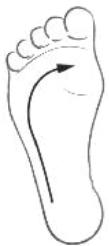
A — Swollen leg
- Look: compare size/shape/symmetry · discolouration · varicose veins · pitting vs non-pitting · shiny skin, ulcers · scars
- Feel — don’t compress (PE risk): temperature both sides · pitting over tibia/ankle · unilateral or bilateral
- Measure: fixed landmark (tibial tuberosity, or 10 cm below mid-patella / 25 cm above), same site both sides → calf + thigh; >3 cm = suggests DVT
- Pulses: dorsalis pedis + posterior tibial · full general exam, focus nodes · CNS screen if asked
- Ix: Wells high → Doppler US (DVT)/CTPA (PE); low → D-dimer
B — Neuro limb
- Look: position (weak leg externally rotated, foot drop; weak hand open, dropped wrist) · wasting · fasciculations · asymmetry, deformity, scars, hair
- Pronator drift · tone · power MRC all joints · reflexes + reinforcement + plantar
- Radicular pain: SLR (supine, knee straight, raise until pain → lower leg + passive dorsiflexion = Bragard, typical ~45°) · femoral stretch (lateral/prone, extend hip + flex knee → anterior thigh pain = upper lumbar/femoral) · PR if saddle anaesthesia/sphincter symptoms
- Sensation: light touch (thighs/forearm, lateral foot) → cotton, pin, compare, peripheral→ascending; vibration + proprioception
- Coordination (finger-nose, heel-shin, dysdiadochokinesia, Romberg) · gait if power ≥3
C — Rheumatology: DAF
Hand on pillow; shake hands unless painful.
D — Deformity
- Hand: swan-neck (hyperextend PIP + flex DIP) · Boutonnière (flex PIP + hyperextend DIP) · ulnar deviation · Z-thumb · dorsal guttering · radial wrist drift · volar MCP subluxation · Heberden = DIP, Bouchard = PIP (OA)
- Correctable = Jaccoud · palms: erythema · thenar atrophy (median) · CTS scar · nodules · psoriasis (elbow) · feet: hammer/claw toe
- Arms up → palpate forearm nodules
A — Activity (4 T’s + S)
- Temperature: forearm reference → PIP, MCP, wrist (return each time)
- Tenderness: ask only; note pain-free joint for swelling test · Tapping median nerve → shock (ask only)
- Tightness: pinch forearm — thick/tight = scleroderma; thin/elastic = steroids; stuck to muscle = MCTD
- Swelling: stabilise pain-free joint, press up/down → fluid peripherally; redness
F — Function
- Median: OK sign · opponens · close fist (pointing index) · sensation thenar
- Ulnar: abduct fingers · adduct against paper · paper between thumbs, resist (thumb flexed = Froment +) · sensation little finger/half ring
- Wrist flex/ext: palm-to-palm, dorsum-to-dorsum (Phalen) · coin grip (pincer — median; RA routine attributes to ulnar) · grip power · proximal myopathy: shoulders against resistance / press upper arm
Then general support
- Eyes: pallor (chronic disease, megaloblastic—MTX, iron deficiency—NSAIDs, autoimmune haemolytic) · jaundice (haemolytic indirect; autoimmune hepatitis mixed; MTX cirrhosis) · scleritis (painful) vs episcleritis (painless)
- Face: malar rash · mouth ulcers/candidiasis · angular stomatitis
- Behind patient: cervical fat pad (steroids) · cervical surgery scar/atlantoaxial subluxation · rash behind ears (psoriasis)
- Chest: basal fine crepitations (fibrosis/ILD — RA or MTX) · lateral nodules (Caplan) · heart: pulmonary S2 (PH)
- Abdomen: liver span · spleen (Felty = splenomegaly + recurrent infection, portal HTN) · kidneys (amyloid)
- Legs/knee: deformity, redness, scars; knee tests — valgus (MCL), varus (LCL) at ~30° flexion, anterior drawer (ACL), Lachman (30° flexed, femur stabilised, tibia drawn forward — most sensitive for ACL), pivot shift, posterior drawer (PCL), posterior sag, patellar apprehension, patellar tracking + grind, McMurray/Apley + joint-line tenderness, effusion grading (minimal: medial depression present, milking shows fluid; moderate: depression obliterated, patellar tap), Baker’s cyst; ankle stability; oedema
- Hip: Patrick/FABER (figure-of-four → SI/hip pain) · Gaenslen/SI stress · ROM (stabilise pelvis/palpate ASIS, abduction/adduction both hips together; abd 45°, add 15°, flex 30–90°, ext 30°; fixed flexion may look full range via ↑lordosis) · Trendelenburg (pelvis drops on non-weight-bearing side + trunk tilts to stance = weak abductors) · Thomas (fixed flexion) · true (ASIS→medial malleolus) vs apparent (midpoint→medial malleolus) leg length
- Knee ROM 0–140°; locking = mechanical block (loose body/bucket-handle); “lacks X° of extension”
- Shoulder: painful arc (60–120° = subacromial/rotator cuff; initiators supraspinatus/mid cuff/>90° ACJ) · apprehension (abduct 90°, elbow 90°, external rotation) · Neer (thumb-down, flex+abduct) · Hawkins (90° forward flex + forced IR) · Yergason (resisted supination + elbow flex = biceps) · Empty Can/Jobe (supraspinatus), external rotation at 90° (teres minor), Lift-off (subscapularis), cross-body adduction (ACJ), Speed’s (biceps) · drop arm · supraspinatus power · axillary nerve (deltoid + upper lateral arm sensation)
- Ix: RF, anti-CCP (most specific), ANA, CBC, ESR/CRP, X-ray (periarticular osteopenia, narrowing, erosions)
- Rx: MTX first-line (SE lung fibrosis, cirrhosis), sulfasalazine, leflunomide, hydroxychloroquine; NSAIDs; steroids bridging; biologics (TNF-α — infliximab [screen TB], adalimumab, etanercept; rituximab CD20; anakinra IL-1); physio; surgery
- Rule: 2 DMARDs incl. MTX ≥6 months; no response = failed → biologics · ask about their job → Close
Anaemia in RA — 4 causes
Felty (splenomegaly) · autoimmune haemolytic · anaemia of chronic disease · MTX → megaloblastic.
9. Vascular & diabetic foot
Sequence follows peripheral vascular + diabetic foot checklists.
PAD — run sheet
WIPER · 45° upper body, flat legs · expose limbs + abdomen · look → upper limbs → carotid → abdomen → lower limbs → sensation → Buerger → completion
Look
- End of bed: missing limbs/digits, scars (amputation, bypass, vein harvest), ulcers, gangrene, xanthomas
- Arterial ulcer: toes/pressure points, punched-out, pale base, shiny hairless skin, cold, pulses reduced/absent, severe pain worse on elevation/night, relieved by hanging leg down
- Venous ulcer: gaiter/medial malleolus, sloping edge, granulating, oedema + haemosiderin + lipodermatosclerosis, warm, pulses usually present, aching worse on dependency
Upper limbs
- Inspect/compare colour, wasting, trophic change, nails · temperature (dorsum) + CRT · radial pulse · radio-radial delay · brachial · BP both arms
Carotid & abdomen
- Carotid: auscultate first, then palpate one at a time · abdomen: visible pulsation, palpate aorta, auscultate aorta + renal arteries
Lower limbs
- Inspect: colour, hair loss, shiny/atrophic skin, nails, ulcers, gangrene (wet = boggy/purulent/crepitus = emergency; dry = shrivelled), oedema, varicose veins, trash foot/blue-toe microemboli
- Temperature by segment · CRT · femoral (mid-inguinal point) → radio-femoral delay → auscultate femoral bruit · popliteal (knee 30–45° flexed, thumbs on tibial tuberosity) · posterior tibial (behind medial malleolus) · dorsalis pedis (lateral to EHL) · not palpable → Doppler
- Gross sensation: cotton distally, move proximally until felt, note level
Buerger’s test
- Supine, raise both feet 45° 2–3 min → pallor = Buerger’s angle (note; <20° severe)
- Sit up, legs dependent → blue then red (reactive hyperaemia) = arterial insufficiency · dependency venous refill (normal <10–15 s; >15–30 s = severe)
ABPI
- Ankle systolic (DP or PT) ÷ brachial · 0.90–1.30 normal · 0.70–0.89 mild · 0.40–0.69 moderate (claudication) · <0.40 severe/CLI · >1.3 falsely high (calcified, DM) → toe-brachial index
Completion
- Cardiovascular exam · Doppler/ABPI · duplex · ECG (AF) · lipids, HbA1c, renal · fundoscopy (diabetic/hypertensive retinopathy) · carotid auscultation (>70% stenosis = stroke risk; bruit = >50%) · urine microalbumin · vascular referral
- Acute limb ischaemia 6 Ps: pain · pallor · pulseless · paraesthesia · paralysis · perishing cold → limb-threatening · Rx: IV heparin 5000 IU bolus + Fogarty embolectomy <6 h
- Chronic: claudication (calf/thigh/buttock, fixed distance, relieved by rest) · rest pain (night, relieved hanging leg down) · tissue loss · Leriche = buttock/thigh claudication + impotence + absent femoral pulses
- Claudication level: calf = SFA/popliteal · thigh = common femoral/external iliac · buttock/hip = common iliac/distal aorta; progression 1 km → 500 m → 100 m → rest pain → gangrene.
- Fontaine: I asymptomatic · IIa >200 m · IIb <200 m · III rest pain · IV ulcer/gangrene · CLI: rest pain >2 weeks or tissue loss + ankle <50 mmHg or toe <30 mmHg
- Buerger’s disease (TAO): young male heavy smoker, instep claudication, migratory thrombophlebitis, Raynaud; corkscrew collaterals; Rx = permanent smoking cessation
Diabetic foot — run sheet
WIPER · supine, both feet · look → temperature + pulses → monofilament → vibration → proprioception → ankle reflex → gait → footwear → completion
Look
- Skin colour, hair, nails (fungal, ingrowing), callus, fissures
- Ulcer: site, size, edge, base, discharge, surrounding cellulitis · edge: punched-out = neuropathic/ischaemic · sloping = venous/healing · undermined = TB/syphilis/pressure · rolled = BCC · everted = SCC
- Charcot: warm erythematous swollen foot + loss of medial arch (rocker-bottom) + subluxation/fracture on X-ray → immobilise, urgent
- Swelling, footwear wear · autonomic neuropathy → anhidrosis + AV shunting → deceptively warm pink foot (warmth doesn’t exclude PAD) · “ulcer LAST” + hidden sites (between toes, behind heels, soles, under pannus)
Feel
- Temperature (dorsum, compare) · CRT · pulses femoral→popliteal→PT→DP; absent → Doppler
- Milk surrounding skin distal→proximal to express occult pus · palpate ulcer base with gloved thumb: bone crumbles like dry biscuit = osteomyelitis
Sensation
- Positive = ≥4 of 10 plantar sites missed (loss of protective sensation)
- 10 g monofilament — 5 sites/foot: pulp hallux · pulp 3rd toe · MTP 1, 3, 5; demonstrate on arm/sternum; eyes closed; press until bends (10 g), hold 1–2 s; avoid callus/scars
- Vibration: 128 Hz fork on 1st MTP/distal phalanx, compare proximally · Proprioception: big toe up/down · Ankle jerk (S1) — leg abducted over bed edge
Gait & footwear
- Watch walking · inspect inside shoes for foreign bodies/wear
Completion
- Probe-to-bone (sterile probe → gritty bone; PPV >85–90 % osteomyelitis) · deep tissue/bone biopsy C&S before antibiotics (avoid superficial swabs)
- ABPI/Doppler · glucose + HbA1c · lipids, renal · podiatry · vascular referral · X-ray if Charcot/osteomyelitis · MDT: vascular, endocrine, podiatry, ID, orthotist, physio · foot-care advice (daily inspection, footwear, no barefoot, moisturise, nails straight) · compression contraindicated if ABPI <0.8
- Wagner: 0 intact · 1 superficial · 2 deep to tendon/bone · 3 deep + abscess/osteomyelitis · 4 localised gangrene · 5 whole-foot gangrene
10. Histories
Use the 11-step spine (§1) for every history; below are only the complaint-specific questions, discriminators and theory. Always: intro/consent → personal data → CC + duration → HPI (SOCRATES/OPERATES) → systems → PMH/PSH → drugs/allergy → family → social (2nd consent) → ROS → thank → summarise.
Chest pain
-
Site: IHD retrosternal/precordial (rarely only left shoulder) · pericarditis precordial · PE/MSK anywhere · pleuritis over affected pleura · herpes zoster (dermatomal, doesn’t cross midline, pain before rash)
-
Onset: IHD sudden after exertion (or rest if unstable) · pericarditis gradual, not exertional · PE sudden · MSK after trauma/lifting · pleuritis with infection
-
Character: IHD pressure/squeeze · pericarditis pricking/sharp · PE sharp/stabbing · MSK dull · pleuritis sharp
-
Radiation: IHD neck, jaw, left shoulder, interscapular (may be absent) · others none
-
Associated: IHD nausea, sweating, dizziness, palpitations, dyspnoea · pericarditis fever (preceding URTI) · PE palpitations, dizziness, dyspnoea, syncope · pleuritis fever
-
Duration: angina 2–20 min · MI ~30 min constant (settling pain may mean completed infarct) · pericarditis continuous · MSK persistent
-
Worse/relieved: IHD worse exertion, better rest, nitrates help angina not MI · pericarditis worse supine, better leaning forward, ↑ deep breath/cough, NSAIDs · PE worse inspiration · MSK worse movement/lifting · pleuritis worse inspiration/cough
-
Also: reproducible chest wall (costochondritis) · after meals/lying flat, antacids help (GERD) · oesophageal spasm mimics angina, responds to GTN · severity 1–10
-
Hypoperfusion: dizziness, fatigue, syncope, cold sweats, low urine output · constitutional: fever, night sweats, weight loss
-
PMH: HTN, dyslipidaemia, DM, prior IHD/similar pain, rheumatic fever/murmur, stroke/TIA, autoimmunity (SLE, RA), anaemia, DVT/PE, MI/stenting/angiogram, recent surgery, malignancy, radiotherapy, recent viral illness; pregnancy; premenopausal oestrogen lowers ACS probability
-
Drugs: anticoagulants/antiplatelets (compliance), INH, pyrazinamide, hydralazine (drug pericarditis), OCPs
-
Family: early CAD/sudden death · HTN/DM/connective tissue disease (Marfan → dissection) · TB (pericardial calcification) · familial hypercholesterolaemia
-
Social: job · long-distance travel (DVT/PE) · smoking/alcohol · cocaine/amphetamines (MI, dissection)
-
Stop → ABCD if massive pain with shock
-
Not chest-pain causes: pleural effusion, endocarditis, heart failure, arrhythmias, CKD
-
Theory: ACS, dissection, pericarditis, pneumonia and other causes → §14.
Jaundice
- Causes: pre-hepatic — haemolytic anaemia (sickle cell, G6PD, hereditary spherocytosis), Gilbert · hepatic — hepatitis A/B/C, autoimmune, drug-induced, liver abscess, HCC, cirrhosis · post-hepatic — CBD stone, pancreatic head carcinoma
- Onset: self-noticed or pointed out? sudden/gradual · duration long/insidious in chronic liver disease, acute in hepatitis/stone
- Progression: deeper/constant → malignancy/severe obstruction; fluctuating → Gilbert or migrating gallstone
- Severity: sclera >3 mg/dL · face >5 · whole body ~22
- Triggers: fasting, dehydration, illness, stress (Gilbert resolves with IV fluids)
- Urine dark/tea/cola (conjugated) · stool pale/clay (obstruction) · haemolytic = normal urine and stool (acholuric, unconjugated) · pruritus severe (bile salts)
- Pain: severe colicky RUQ (gallstones) vs dull, constant, diffuse (malignancy/parenchyma)
- GI: nausea, vomiting, distension, early satiety, diarrhoea, bowel change · haemolytic jaundice lacks nausea/vomiting/anorexia/fever/pain/weight loss
- Neuro/psych (Wilson’s): tremor, clumsiness, involuntary movements, mood/behaviour change
- Fever: low grade (hepatic/malignancy) vs high spiking with chills = Charcot’s triad (ascending cholangitis); + hypotension + confusion = Reynolds’ pentad → urgent ERCP
- Pseudo-jaundice: carotenaemia (yellow palms/soles, sclera spared, no bilirubinuria)
- Weight loss: intentional? (on Mounjaro/tirzepatide, expected or disproportionate with fatigue?) · significant → liver/pancreatic carcinoma, cirrhosis
- PMH: gallstones, cirrhosis, HBV/HCV, autoimmunity, previous anaemia/haemolysis, transfusions, previous jaundice, cholecystectomy/gastric/pancreatic surgery, malignancy, radiotherapy, pregnancy (fatty liver, intrahepatic cholestasis)
- Drugs: GLP-1, paracetamol, statins, amoxicillin-clavulanate, flucloxacillin, rifampicin, anabolic steroids, herbals (DILI)
- Family: fluctuating jaundice (Gilbert), early liver/neuro disease (Wilson), liver disease/haemolytic anaemia (G6PD, thalassaemia), viral hepatitis at home, autoimmune, haemochromatosis, α1-antitrypsin deficiency
- Social: job/chemicals · travel to endemic areas, contaminated food/water, mosquitoes · smoking/alcohol · sexual history, IVDU, unsterile injections, tattoos, jaundice in spouse/partner
- ROS: SOB/palpitations (haemolysis) · urine output/colour · joint pain/rash (autoimmune hepatitis, SLE)
- Patterns: pre-hepatic — fluctuating, resolves with fluids, worse morning → Gilbert; fava beans/drugs → G6PD · hepatic — acute, RUQ pain, dark urine, travel, rash → hepatitis A/autoimmune/DILI · post-hepatic — progressive, cachexia, weight loss → pancreatic CA/cholangiocarcinoma; colicky RUQ, itch, pale stool → choledocholithiasis · metabolic — tremor/dystonia/psychiatric → Wilson’s
- Exam: scleral icterus, hepatomegaly/splenomegaly, ascites/oedema, spider naevi, palmar erythema, gynaecomastia
- Ix: LFTs (post-hepatic: direct bilirubin >50 % total, ALP/GGT >3–5× ULN, mild AST/ALT; hepatocellular: AST/ALT >500–1000), viral serologies, US/MRCP, coagulation · total bilirubin >3–4 mg/dL ⇒ suspect choledocholithiasis or Mirizzi (stone in Hartmann’s pouch compressing CHD)
- Rx: treat cause (antivirals, ERCP for obstruction), supportive, transplant if end-stage · obstructive: fat-soluble vitamin (A/D/E/K) deficiency → ↓II/VII/IX/X and prolonged PT; give vitamin K 10 mg IV/SC before procedures
GI bleeding
- Bleeding: amount, colour, frequency; clots? food? · haematemesis vs haemoptysis (cough/vomiting, acid/alkaline) · coffee-ground = acidified · bruising elsewhere 2 months → bleeding disorder/leukaemia
- Onset: haematemesis usually acute; melena appears 2–3 days later · progression, triggers, anything that slowed it
- PR: dark tarry offensive sticky (melena) vs fresh · pain on defecation (fissure) vs painless (haemorrhoids unless thrombosed) · blood covering or mixed with stool
- Retching before vomiting → Mallory-Weiss (alcohol + heavy meal, repetitive projectile vomiting, tear in lower oesophagus, endoscopy, may need transfusion)
- Upper GI: dyspepsia, nausea, vomiting, dysphagia, mouth ulcers, GERD (burning, night cough, metallic taste) · Lower GI: diarrhoea, alternating habit (cancer), tenesmus, food history (dysentery)
- Anaemia/dehydration: SOB (elderly), fatigue, dizziness, low urine output · constitutional: fever, night sweats, weight loss
- PMH: liver disease/portal HTN/oesophagitis · bleeding, transfusions + reactions · previous episodes · surgery, cancer · radiotherapy (radiation colitis) · menstrual cycle, pregnancy
- Drugs: NSAIDs (OTC or prescribed → erosive gastritis), steroids, anticoagulants (INR), bisphosphonates
- Family: similar presentation, chronic disease, TB, polyps/colorectal cancer · Social: education/job, travel (dysentery, giardia), smoking/alcohol + willingness to quit, sexual history, support
- Definitions: haematemesis (fresh red, upper) · coffee-ground · melena (black tarry offensive, upper/proximal) · haematochezia (fresh PR; massive upper bleed can present this way)
- Above ligament of Treitz = upper; below = lower · black stool also from iron (ferrous sulphate)
- Epigastric pain DDs: peptic ulcer, duodenal ulcer, gastritis, gastric erosion, gastric cancer · DU vs GU: DU — hunger pain 2–3 h post-prandial, nocturnal 1–2 am, relieved by food · GU — pain worsened by food → food avoidance, weight loss
- Varices: dilated veins, painless; portal HTN (bilharziasis, cirrhosis), alcoholic liver disease (HBV, HCV), transfusion (HBV, HCV)
- DD: upper — PUD, varices, erosive gastritis (NSAIDs), Mallory-Weiss, aortoenteric fistula, angiodysplasia, haemobilia · lower — haemorrhoids/fissures, diverticular disease, colorectal cancer, infectious colitis/dysentery, rectal varices, angiodysplasia
- Ix: CBC, coagulation PT/INR, LFT, BUN/creatinine (BUN rises disproportionately in upper bleed); EGD (upper), colonoscopy (lower), CT angio if massive/unclear, NG lavage · marrow biopsy if bruising/systemic symptoms suggest leukaemia
- Exam: pallor + scattered bruises/scabs (elbow, wrist, feet, mouth), cachexia alongside chronic liver disease signs
- Rx: ABC → IV fluids, type & crossmatch if unstable, IV PPI, octreotide ± antibiotics if variceal, endoscopic haemostasis, correct coagulopathy, surgical consult
- ER: 2 wide-bore needles, Ringer’s, NG decompression, Foley, labs (CBC, LFT, crossmatch) → saline then blood · varices → vasopressin/octreotide (chest pain → nitrate) · ulcer → IV PPI
- Endoscopy: varices → band/sclerotherapy (ethanolamine); ulcer → adrenaline, clips, thermal
- Unstable: Sengstaken-Blakemore tube → perforation, ulceration, asphyxiation (cut the tube)
Hernia
- History: age/sex · site · onset · duration · does it disappear on lying/coughing/pressure? · pain (dull ache vs sharp/tender = strangulation) · cough impulse · change in size · effect of standing/straining
- Obstruction: vomiting, distension, absolute constipation, no flatus · urinary symptoms (prostatism), chronic cough, constipation, heavy lifting
- Risk: ascites, previous surgery (incisional), smoking, connective tissue disease, family history, comorbidities (chronic cough, constipation, prostatism) · PMH/PSH, drugs, occupation
- Red flags: irreducible + tender + vomiting = strangulated
- Exam: WIPER · examine standing first (inspect + cough impulse), then supine 45° · expose abdomen + both groins · ask about pain
- Cough test from behind the patient so both groins stay visible — never let the patient cough towards you
- General inspection: distension, scars, stoma, visible lump — ask to cough
- Palpation: cough impulse (fingers over the region) · get above the lump · reducibility (supine + pressure; reappears on standing/coughing) · tenderness · consistency · transillumination if hydrocele · auscultate bowel sounds
- Contents: percussion tympanic = bowel, dull = omentum; smooth/slippery/resonant + gurgle = bowel (enterocele); doughy/granular/hard to reduce = omentum (omentocele)
- Pubic tubercle: inguinal = above and medial · femoral = below and lateral (medial to femoral pulse)
- Direct vs indirect: deep inguinal ring = 1.5–2 cm above the midinguinal point (ASIS → pubic symphysis; the midinguinal point is the femoral artery landmark) → reduce hernia → press over deep ring → cough: reappears = direct, does not = indirect (unreliable — imaging)
- Zieman 3-finger test: index at deep ring → fingertip impulse = indirect; middle over superficial ring/Hesselbach → pulp = direct; ring finger over saphenous opening → femoral; scrotal invagination if needed
- Subtypes: inguinal · femoral (narrow canal, highest strangulation risk ~40 %) · umbilical/paraumbilical · incisional · epigastric · obturator (elderly emaciated female, SBO + Howship–Romberg sign) · Richter’s, sliding
- Sac eponyms: Littré (Meckel’s) · Maydl (“W” loop — middle strangulates, herniated loops look viable) · Amyand (appendix) · pantaloon (direct + indirect)
- Strangulation: tender, irreducible, loss of cough impulse, obstruction · never forcibly reduce (reduction en masse/intraperitoneal rupture)
- Scrotal exam if descends: palpate testis; a scrotal mass lets you get above it · traction test (downward traction on ipsilateral testis separates hernia from encysted hydrocele/undescended testis)
- Hernia vs other lump: for hernia — single, cough impulse, soft, reducible, cannot get above, painless (unless incarcerated), bowel sounds · against — multiple (nodes), hard/nodular (malignancy), can get above (scrotal), transilluminates (hydrocele), bruit (AVM) · also saphena varix, femoral aneurysm, encysted hydrocele of cord, undescended/ectopic testis
- Completion: all orifices + scars · abdomen · scrotal/PR · US/CT if complicated → Close
Limb ischaemia
- Chronic: claudication — site (calf/thigh/buttock), fixed distance, relieved by rest, progression · rest pain (night, relieved hanging leg down) · tissue loss/ulcer
- Risk: smoking, DM, HTN, dyslipidaemia, CKD, prior CAD/CVD
- Acute 6 Ps: pain · pallor · pulseless · paraesthesia · paralysis · perishing cold; onset, AF/anticoagulation, recent MI, previous vascular surgery
- Function/occupation, walking ability, drugs (statins, antiplatelets) · examine as §9
Diabetic foot
- DM duration, control/HbA1c, treatment, complications, fundoscopy
- Neuropathy: numbness, tingling, burning, painless injuries, falls · Ischaemia: claudication, rest pain
- Ulcer history: site, duration, discharge, previous ulcer/amputation · footwear, barefoot walking, self-care, vision, renal function, smoking
- Red flags: spreading cellulitis, discolouration, crepitus, systemic symptoms → urgent
11. BP & hypertension
Run sheet: WIPER · relaxed, sitting/supine, back supported, arm bare and at heart level (over clothes ≈ 10 mmHg error) · no smoking/coffee/fever/exertion · correct cuff (small for children) · postural symptoms → repeat after 1–3 min standing.
- Valve: roll toward you = open, away = locked · cuff tubes down, Velcro forward, 2 fingers above cubital fossa
- Palpatory first (avoid auscultatory gap): radial 3 fingers → inflate until pulse disappears → note (rough systolic) → deflate
- Auscultatory: diaphragm over brachial → inflate 10 mmHg above estimate → deflate 2–3 mmHg/s → Korotkoff K1 systolic, K5 diastolic · hyperdynamic (pregnancy, AR) → last muffled sound
- Both arms ideally (aortic continuation) · auscultatory gap = temporary disappearance (elderly, HTN) → underestimate systolic/overestimate diastolic
Definitions: A — systolic >130 or diastolic >80; 120–130 “accelerated”; ≤120/≤80 normal (80–90 stage 1, >90 stage 2) · B — normal <120/<80, elevated 120–129/<80, stage 1 130–139/80–89, stage 2 ≥140/≥90 · confirm: repeat, average ≥2–3 readings, ABPM/HBPM.
Secondary HTN: suspect if age <40, resistant, sudden/worsening, hypokalaemia, abdominal bruit · causes renal disease/renal artery stenosis, hyperaldosteronism, phaeochromocytoma, thyroid, OSA, drugs (NSAIDs, OCP, steroids) · workup renin/aldosterone, TSH, metanephrines, renal US, CT/MR angio, sleep study.
Crisis: emergency = severe BP + target-organ damage; urgency = no damage · features chest pain (MI), neuro deficit (stroke), pulmonary oedema, AKI, papilloedema · ICU + IV labetalol/nitroglycerin/nicardipine + controlled reduction · if >220/110 lower gradually to ~180/100.
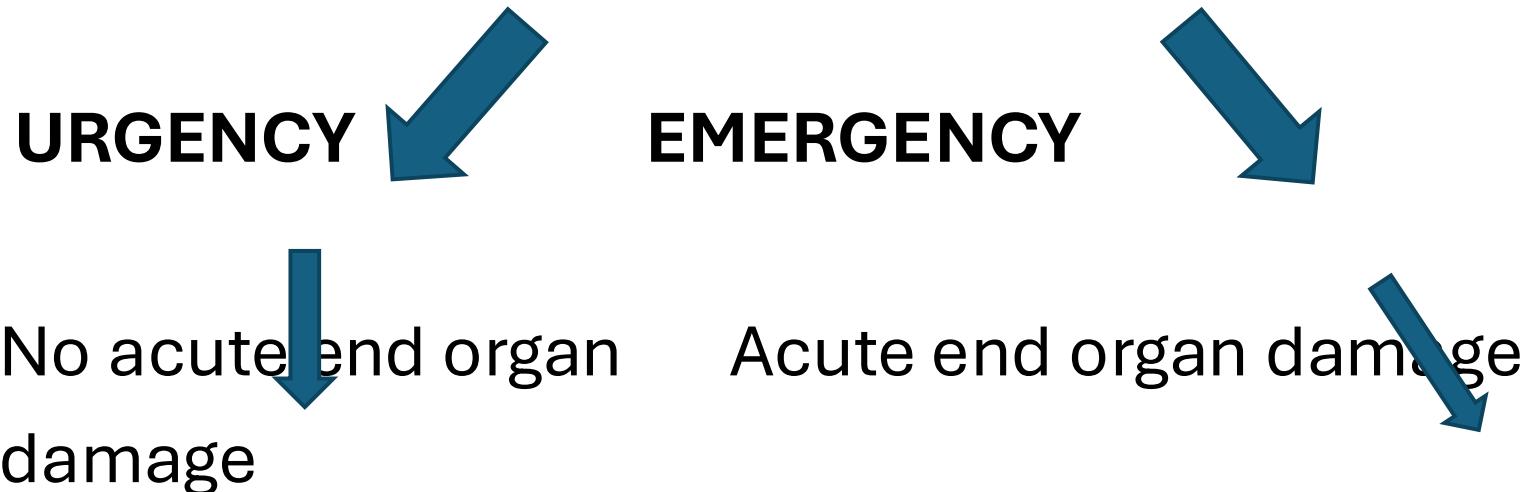

Chronic complications: stroke · retinopathy · LVH & HF · CAD · nephropathy · PVD (thick wall → pulseless).
Fundoscopy: early arteriolar narrowing/AV nicking · moderate flame haemorrhages, cotton wool, hard exudates · severe papilloedema, macular star, disc swelling · grades I–IV.
Target organs: heart LVH/HF/MI/AF/dissection · brain stroke/TIA/cognitive decline · kidney proteinuria/CKD/nephrosclerosis · eyes retinopathy/papilloedema · vessels PAD/atherosclerosis/aneurysm.
Exam: BMI · LV heave · S4 · crackles · renal bruit · neuro deficit. Ix: U&E (creatinine, K), fasting glucose/HbA1c, lipids, urinalysis, ECG (LVH) ± echo; basics CBC, electrolytes, urine, ECG, lipids, CXR.
Drugs: lifestyle first (weight, salt, DASH, exercise, stop smoking, limit alcohol).
-
A ACEi/ARB — first line; renal protection, ↓proteinuria; monitor creatinine + K
-
B β-blocker (labetalol, metoprolol) — safe in pregnancy; CI asthma, heart block, decompensated HF
-
C CCB (amlodipine, nifedipine) — elderly; SE ankle oedema, gingival hyperplasia
-
D thiazide (HCTZ, chlorthalidone) — SE hypokalaemia, hyperuricaemia, hyponatraemia
-
Start if ≥140/90 (all) or ≥130/80 with DM/CKD/CVD/high risk · stepwise 1 drug mild → 2 most patients → 3 (A+C+D) → resistant: add spironolactone
-
DM/CKD: ACEi/ARB first, monitor creatinine + K · pregnancy: labetalol, nifedipine, methyldopa; avoid ACEi/ARB/renin inhibitors · asthma: avoid non-selective β-blockers · HFrEF: ACEi/ARB + β-blocker + diuretic; avoid verapamil/diltiazem · elderly/isolated systolic: CCB or thiazide · gout: losartan; avoid thiazides · AF: β-blocker
-
Review BP 2–4 weeks, check U&E · counselling: stop smoking, healthy lifestyle, avoid salt, medicines regularly forever, control prevents complications
12. ECG
Systematic read (12-lead)
- Confirm: name, date/time, calibration 25 mm/s + 10 mm/mV; compare old trace
- Rate: 300 ÷ large squares R-R (300→150→100→75→60→50); or 6-second strip ×10
- Rhythm: regular · regularly irregular · irregularly irregular; P before every QRS?
- Axis: I and II positive = normal; RAD = I negative, III positive; LAD = I positive, II/III negative
- P: present? each followed by QRS? shape/duration; absent → sawtooth = flutter, chaotic = fibrillation, flat = no atrial activity
- PR 120–200 ms (3–5 small squares); >200 = first-degree; progressive + dropped QRS = Mobitz I; fixed + dropped = Mobitz II
- QRS <120 ms (3 small squares); wide = BBB/ventricular
- ST: elevation/depression (measure ~2 mm after J point); reciprocal change
- T: inversion, hyperacute, peaked (hyperkalaemia) · QT roughly < half R-R · U waves hypokalaemia, digoxin/antiarrhythmics
- Territories: II, III, aVF inferior · V1–V4 anterior · I, aVL, V5–V6 lateral
- Document: rate, rhythm, axis, intervals, hypertrophy, ischaemia/infarct, comparison
Pattern recognition
- How to present: “This is a 12-lead ECG of… taken…”; then rate/rhythm/axis/intervals/hypertrophy/ischaemia → summary + plan
- STEMI: ST elevation ≥1 mm in 2 contiguous limb leads (≥2 mm V2–V3); reciprocal depression; territory as above
- Posterior MI: V1–V3 ST depression + tall R + upright T · RV infarct: ST elevation V1 and V4R; hypotension after nitrates
- NSTEMI/ischaemia: ST depression, T inversion
- AF: irregularly irregular, no P, fibrillatory baseline · Atrial flutter: sawtooth, atrial ~300, often 2:1 → 150
- SVT: narrow regular 150–250, P hidden · VT: broad regular 100–250, fusion/capture, concordance · VF: chaotic
- Blocks: 1st PR >200 · Mobitz I progressive + dropped · Mobitz II fixed + dropped · 3rd complete dissociation
- Hyperkalaemia: peaked T → wide QRS → sine wave · hypokalaemia: flat T, U waves
- PE: sinus tachycardia (commonest), S1Q3T3, RAD, RBBB, T inversion V1–V4
- Pericarditis: diffuse saddle ST + PR depression, no reciprocal change
- LVH: S V1 + R V5/6 >35 mm · RVH: dominant R V1, RAD · WPW: short PR, delta, wide QRS · long QT: QTc >440 (M)/>460 (F)
AF — criteria
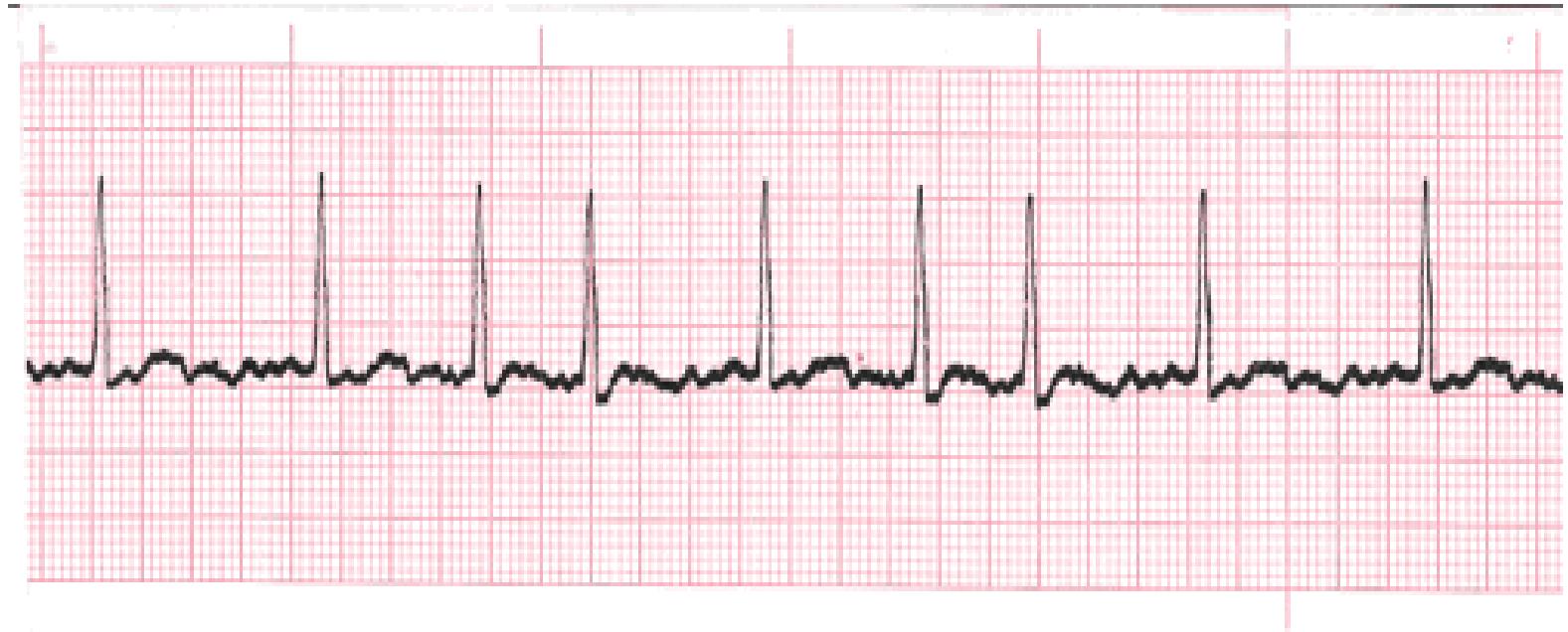
- Irregularly irregular rate · no P waves (lead II) · fibrillatory baseline · common, >60 years (>90 %)
-
Rate: controlled 60–100 · slow <60 · fast >100 (most dangerous) · pulse irregularly irregular with no compensatory pause · pulse deficit = apical − radial · AF unaffected by exercise; extrasystole disappears
-
Once found, look for cause: electrolytes · TFTs · echo · toxicology (cocaine, amphetamine) · angiogram/CXR
-
Causes: cardiac — IHD, valvular (rheumatic, mitral stenosis), cardiomyopathy, HF · non-cardiac — hyperthyroidism, caffeine, HTN, pneumonia, electrolyte imbalance, stimulants, idiopathic ~15 %
-
Mechanism: chaotic atrial contraction → stasis → clot; irregular AV conduction → irregular rate; ↓cardiac output; paroxysmal more dangerous than persistent
-
Symptoms: often asymptomatic/incidental; palpitations, chest pain, dizziness, dyspnoea
-
Complications: acute LV failure/pulmonary oedema · intracardiac thrombus → stroke/TIA, renal/splenic/intestinal infarct · VT if rate very fast · ↓cardiac output
-
Rx: unstable (low BP, syncope, chest pain, TIA) → immediate DC cardioversion; stable → rate control then rhythm control
- Rate: 1st β-blocker or CCB (diltiazem, verapamil — not amlodipine) · 2nd digoxin 0.125–0.25 mg (1st in valvular) · last amiodarone; they slow AV conduction, don’t restore sinus — often enough alone
- Rhythm: chemical (ibutilide, amiodarone) or DC; decide by age/comorbidity
- Asymptomatic/minimally symptomatic → rate control + warfarin; symptoms persist → antiarrhythmics
-
Anticoagulate if CHA₂DS₂-VASc ≥2 (male)/≥3 (female): DOAC or warfarin INR 2–3
ACS — ECG
- ST elevation → STEMI (transmural) · ST depression → ischaemia/NSTEMI · T inversion → ischaemia/evolving infarct · Q waves → old MI · new LBBB → may be acute MI
- Territories as above
PE — ECG
Sinus tachycardia (commonest) · S1Q3T3 · right axis deviation · RBBB · T inversion V1–V4 · P pulmonale · atrial arrhythmias.
Pericarditis — ECG
Diffuse saddle ST elevation + PR depression, no reciprocal changes.
13. Labs & instruments
Instruments
- Sphygmomanometer + stethoscope — cuff, palpatory then auscultatory
- Stethoscope — bell light (MS), diaphragm firm
- Tendon hammer — biceps, triceps, brachioradialis, finger, knee, ankle, jaw; plantar with a key
- Tuning fork — vibration (lateral malleolus, distal phalanges) + Rinne/Weber
- Pen torch — pupils, accommodation, Marcus Gunn, icterus, scleritis
- Cotton — light touch, corneal reflex, sensation · Sterile pin — pain/pinprick
- Tongue depressor — gag reflex · Snellen/Ishihara — acuity, colour
- Tape measure — liver span, leg circumference (>3 cm = DVT)
- Paper/coin/pillow — tremor, grip, support
- Peak flow: zero, full inspiration, seal lips, one blow, 3 attempts, best; <80 % predicted → step up
Labs by problem
- Anaemia: CBC (microcytic hypochromic = iron deficiency/thalassaemia) · reticulocytes · smear (sickle cells, Howell-Jolly; target cells; smudge cells) · Hb electrophoresis · ferritin low in IDA, iron/transferrin saturation · LDH + bilirubin (haemolysis) · occult blood
- Coagulation: PT/INR (warfarin target 2–3) · PTT (1.5× ULN = coagulopathy) · platelets
- Renal: creatinine/eGFR with CKD stages G1 ≥90 · G2 60–89 · G3a 45–59 · G3b 30–44 · G4 15–29 · G5 <15 · K⁺ (hyperkalaemia in CKD/DKA; in DKA total body K depleted) · Na⁺ · bicarbonate/pH · urea (CURB-65 >7 mmol/L; BUN rises disproportionately in upper GI bleed) · urinalysis (protein, blood, pyuria, bacteriuria, nitrites, leukocyte esterase, casts)
- ABG: metabolic acidosis (DKA, CKD) · hypoxaemia/hypercapnia (COPD, pneumonia, PE)
- Liver: bilirubin (jaundice thresholds §10) · ALT/AST · ALP/GGT (cholestasis) · albumin · INR (synthetic) · viral serology · AFP (HCC) · autoimmune panel
- Ascitic fluid: cell count, Gram, RBC, protein, amylase, triglycerides, cytology, culture, SAAG · SAAG = serum albumin − ascitic albumin: ≥1.1 portal HTN (cirrhosis, CHF, Budd-Chiari, portal vein thrombosis); <1.1 no portal HTN (carcinomatosis, TB peritonitis, pancreatitis, nephrotic)
- Pleural fluid: cell count, protein, LDH, glucose, pH, cytology → Light’s (§5)
- Cardiac: troponin (most sensitive/specific) · CK-MB (earlier rise, faster fall) · BNP/NT-proBNP
- Endocrine: glucose/HbA1c · ketones · TFTs · renin/aldosterone · metanephrines · cortisol workup (24-h urinary free cortisol, low-dose DST, late-night salivary cortisol, ACTH, high-dose DST, imaging) · adrenal insufficiency (cortisol low, ACTH high primary/low secondary, Na low/K high in primary, ACTH stimulation)
- Immunology: ANA (almost all SLE) · anti-dsDNA, anti-Sm · antiphospholipid (lupus anticoagulant, anticardiolipin, anti-β2GPI — positive twice, 12 weeks apart) · C3/C4 low in active SLE · ESR ↑/CRP less so unless infection · RF + anti-CCP (anti-CCP more specific)
- Micro: blood cultures ×3 (IE) · sputum Gram/culture/cytology · urinary antigens — Legionella, pneumococcus · catheter-site + peritoneal fluid cultures · blood cultures if febrile (SCD, UTI) · cold agglutinins + Coombs (Mycoplasma)
ABG in 5 steps
- Reference: pH 7.35–7.45 · PaCO₂ 35–45 mmHg (4.7–6.0 kPa) · PaO₂ 82.5–97.5 mmHg (11–13 kPa) · HCO₃⁻ 22–26 mmol/L · BE −2 to +2
- Context first (oxygen, work of breathing, sepsis, drugs)
- 1 Oxygenation: low PaO₂ = hypoxaemia; type 1 = low O₂ + normal/low CO₂, type 2 = low O₂ + high CO₂
- 2 pH: <7.35 acidosis · >7.45 alkalosis
- 3 PaCO₂: high = respiratory acidosis · low = respiratory alkalosis
- 4 HCO₃⁻/BE: low = metabolic acidosis · high = metabolic alkalosis
- 5 Compensation: opposite system moves same direction; normal pH with abnormal CO₂/HCO₃⁻ = compensated · fully (pH normal) · partially (all three abnormal) · uncompensated (PaCO₂ or HCO₃⁻ normal)
- Winter’s formula: expected PaCO₂ = 1.5 × HCO₃⁻ + 8 ± 2; actual > expected = added respiratory acidosis, < = added respiratory alkalosis
- Anion gap: Na⁺ − (Cl⁻ + HCO₃⁻), normal 8–12 (with K⁺: 10–16); ↑AG = acid gain, normal AG = HCO₃⁻ loss
- ↑AG MUDPILES (methanol, uraemia, DKA, propylene glycol, INH, lactic, ethylene glycol, salicylates) · normal AG HARD-UP (hyperalimentation, acetazolamide, RTA, diarrhoea/diuretics, ureteroenterostomy, pancreatic fistula)
- Mixed: ↓pH + ↑CO₂ + ↓HCO₃⁻ = mixed acidosis · ↑pH + ↓CO₂ + ↑HCO₃⁻ = mixed alkalosis
- Corrected Na in hyperglycaemia: add 1.6–2.0 mmol/L per 100 mg/dL glucose above normal
- Ranges: Na 135–145 · K 3.5–5.0 · urea 2.5–7.8 · creatinine 60–110 · glucose 3.9–5.5 · HbA1c <42
Anticoagulant dosing by organ function
- Liver: Child-Pugh A clear · B caution · C no DOACs · Renal: GFR >50 anything · 25–50 monitor · <25 admit + IV unfractionated heparin
14. Disease bank + management
Adult doses; check formulary; ABC + IV.
DKA — polyuria/polydipsia, N/V/abdo pain, confusion; missed insulin, infection, MI, stress. tachy, hypotension, dehydration, Kussmaul, acetone breath, coma, pseudo-peritonitis. HHS, alcoholic/lactic acidosis, sepsis. glucose, ABG, ketones, K (high with total-body depletion), urinalysis, ECG. ABC → 0.9 % saline 1 L/h → insulin 0.1 u/kg/h → K 40 mmol/L if <5.5 → 10 % glucose when <14 → treat precipitant; bicarb only pH <6.9.
SCD — crises/triggers, infection, dactylitis, ACS, dehydration/hypoxia, family. pallor, jaundice, dactylitis (children), hepatosplenomegaly (young), ACS (tachypnoea, wheeze, crackles). ACS, osteomyelitis, aplastic crisis (parvovirus), other haemolysis, appendicitis. CBC + retics, smear (sickle cells, Howell-Jolly), Hb electrophoresis, cultures, CXR, LDH/bili. O₂/fluids, opioids, antibiotics, transfusion, hydroxyurea, vaccines, folate. Transfusion: simple (acute anaemia, sequestration, ACS + anaemia, pregnancy) vs exchange (severe ACS, stroke, multiorgan failure; chronic stroke prevention). Indications: severe ACS SpO₂ <90 %, stroke, hepatic sequestration, multiorgan failure, aplastic/splenic crisis, moderate ACS (Hb ≥1 g/dL below baseline), pregnancy; chronic — abnormal TCD, prior stroke; peri-op Hb <9. No splenomegaly — infarction shrinks it.
Thalassaemia — family/ethnicity, transfusions, anaemia, jaundice, bone pain, growth delay, iron overload. pallor, jaundice, bronze skin, frontal bossing/maxillary overgrowth, hepatosplenomegaly, HF, short stature. IDA, SCD, chronic disease, lead. CBC (microcytic, normal/high RBC), smear (target cells), Hb electrophoresis (HbF, HbA2), iron studies (normal/high), genetics, LFT, MRI/T2* iron. transfusions, chelation (deferoxamine, deferasirox, deferiprone), folate, splenectomy for hypersplenism, HSCT curative.
IDA — fatigue, blood loss (menorrhagia, GI), diet, pica, NSAIDs. pallor, glossitis/angular stomatitis, koilonychia, tachy. chronic disease, thalassaemia, B12/folate, haemolytic. CBC microcytic hypochromic, ferritin low, iron/transferrin, occult blood, endoscopy/colonoscopy. oral iron (ferrous sulfate), treat cause, diet, transfusion if severe.
Lymphadenopathy — persistent/growing nodes, B symptoms, infections/bruising, bone pain, family. firm/tender, localised/generalised; describe fixed/mobile, tender, smooth/irregular, fluctuant, transilluminates, single/multiple, other organs. Red flags supraclavicular, hard/fixed, ≥2 cm, >4–6 weeks, B symptoms, hepatosplenomegaly, matting. infective (EBV + rash/sore throat, CMV, HIV, TB matted cervical, cat scratch, histoplasmosis) · malignant (Hodgkin, NHL, leukaemia, metastasis hard/irregular/fixed/supraclavicular) · autoimmune (SLE, sarcoid). CBC, biopsy, CT/MRI staging, marrow. Leukaemias: AML adult, acute, gum hypertrophy, Auer rods (7+3); ALL child, bone pain, mediastinal, CNS/testis; CML high WBC, massive spleen, Philadelphia (imatinib); CLL elderly, smudge cells, AIHA. Lymphomas: Hodgkin young, painless, B symptoms, Reed-Sternberg, contiguous (ABVD ± RT); NHL older, extranodal, non-contiguous (R-CHOP).
Pneumonia — cough, fever/rigors, pleuritic pain, sputum, contacts, risk (smoking, alcohol, immunosuppression, COPD, hospital), vaccines. §5 (dullness, ↑ fremitus, crackles, egophony, herpes labialis, rusty sputum). bronchitis, PE, abscess, CHF, TB. Types: CAP/HAP/aspiration/VAP · typical (acute, high fever, purulent, lobar — pneumococcus commonest, H. influenzae, S. aureus post-influenza, Klebsiella, Moraxella) · atypical (gradual, dry cough, signs << symptoms — Mycoplasma, Chlamydophila, Legionella, Coxiella, viral; psittacosis birds, toxoplasma cats). CXR, CBC, sputum, cultures, ABG, procalcitonin. ABC → amoxicillin 500 mg–1 g TDS ± clarithromycin 500 mg BD, severe co-amoxiclav + macrolide; O₂, fluids, 5–7 days.
HF — exertional dyspnoea, orthopnoea, PND, swelling, fatigue, IHD/HTN/valve, weight change. §5 (JVD, oedema, crackles, hepatomegaly, displaced apex, S3). JVP vs carotid: JV reducible, ↓ inspiration, two waves, rises with liver pressure; carotid one wave. COPD + cor pulmonale, ACS, PE, pneumonia, CKD overload. ECG, BNP, echo, CXR, E’/renal/liver. ABC → furosemide 20–40 mg, ramipril 2.5 mg, bisoprolol 1.25–2.5 mg, spironolactone 25 mg, dapagliflozin 10 mg, salt/fluid restriction, treat cause. NYHA I none · II ordinary · III less than ordinary · IV rest.
Asthma — SOB/wheeze/cough (night), triggers, atopy, exacerbations, family, inhaler technique, steroid courses. §5 (wheeze, hyperinflation, accessory muscles). COPD, vocal cord dysfunction, HF, foreign body. PEFR/spirometry with reversibility, CXR, allergy, gases. acute: O₂ (SpO₂ <92 %), salbutamol 5 mg neb ± ipratropium 0.5 mg, prednisolone 40–50 mg 5 days, MgSO₄ 2 g/20 min, BiPAP/ventilation. Long-term GINA: 1 as-needed ICS-formoterol · 2–4 ICS + LABA · 5 biologics (omalizumab, mepolizumab); SABA reliever, action plan, inhaler technique, trigger avoidance, flu/pneumococcal vaccines; pregnancy prefer inhaled; review symptoms/reliever, rehab.
COPD — chronic cough/sputum, progressive SOB, pack-years, infections, occupational. §5 (barrel chest, pursed lips, ↓sounds, cyanosis; blue bloater vs pink puffer). FEV1/FVC <0.7 post-bronchodilator, CXR (hyperinflation, flat diaphragm), CT, ABG. stop smoking, LABA/LAMA, ICS for exacerbations, prednisolone 30 mg 5 days, antibiotics if purulent (amoxicillin/doxycycline), O₂ 88–92 %, NIV if pH <7.35 + hypercapnia, rehab, vaccines. Definitions: chronic bronchitis = productive cough ≥3 months ×2 years; emphysema = permanent airspace enlargement + wall destruction.
Pleural effusion — SOB/pleuritic pain, cough/fever, HF/cirrhosis/kidney, weight loss/night sweats, trauma. §5 (dullness, ↓ fremitus, ↓sounds, widened spaces). unilateral: parapneumonic (E), PE (E), malignancy (E), TB (E); bilateral: CHF (T), nephrotic (T), cirrhosis (T), hypoalbuminaemia (T). CXR, US-guided thoracentesis + Light’s, CT, bloods. cause: HF diuretics; infection antibiotics + drainage; malignancy pleurodesis/catheter; large → tap.
Pulmonary HTN — progressive exertional dyspnoea, fatigue/chest pain/syncope, leg swelling, connective tissue/heart/lung disease, amphetamines, OSA. §5 (↑JVP, oedema, loud P2, RV heave). CHF, CTEPH, ILD, mitral stenosis. echo, right heart catheterisation (gold standard), V/Q, CT/CTPA. cause, vasodilators (endothelin antagonists, PDE-5 inhibitors), diuretics, transplant.
ILD — exertional/lying SOB, dry cough, occupation (coal, silica, asbestos, farming), smoking, CTD (RA, scleroderma, SLE), birds/mould, radiotherapy, drugs (amiodarone, MTX). §5 (Velcro crackles, clubbing, cyanosis, PH signs). COPD, HF, PE, TB/fungal, cancer. PFTs (restrictive, ↓DLCO), HRCT (fibrosis, honeycombing, ground glass), CXR, BAL, biopsy, autoimmune panel. antifibrotics (pirfenidone, nintedanib) for IPF, immunosuppression for autoimmune ILD, O₂, rehab, transplant; monitor PFTs/HRCT/SpO₂/PH.
DVT & PE — unilateral swelling/pain/warmth, SOB/chest pain/haemoptysis/syncope, risk (surgery, immobility, malignancy, pregnancy, OCP), prior VTE, SLE/APS, B symptoms. unilateral swelling/warmth/tenderness; PE tachy, tachypnoea, distress, right heart strain/JVD. cellulitis, lymphoedema, trauma, Baker’s; ACS/HF/pneumonia. Wells → Doppler/CTPA or D-dimer; ECG + ABG. (ABC): provoked → 3–6 months full dose; stable discharge, unstable admit. Unprovoked → investigate thrombophilia (life-long), autoimmune, malignancy (CT CAP); autoimmune/malignancy → 3–6 months then prophylactic until remission. Apixaban 10 mg BD ×7 d → 5 mg BD (or rivaroxaban 15 BD ×21 d → 20 OD); warfarin INR 2–3 with LMWH overlap; massive PE → alteplase 100 mg/2 h (CI → thrombectomy; also massive DVT with ischaemic changes); IVC filter if anticoagulation impossible; compression stockings. VTE causes: protein C/S, factor V Leiden, SLE, malignancy, immobility/surgery, APS — arterial + venous thrombosis + pregnancy loss (recurrent DVT/PE or stroke, miscarriage <10 weeks, fetal death >10 weeks, preterm <34 weeks); labs lupus anticoagulant, anticardiolipin, anti-β2GPI positive twice 12 weeks apart; warfarin INR 2–3, LMWH in pregnancy.
GI bleed — see §10 · Exam pallor, tachy, hypotension, epigastric tenderness, PR melena, chronic liver signs. CBC, E’/BUN/Cr, coagulation, EGD, colonoscopy, CT angio, NG lavage. omeprazole 80 mg IV + 8 mg/h (ulcer); terlipressin 2 mg QDS (or octreotide 50 µg bolus + 50 µg/h) + ceftriaxone 1 g OD (variceal); transfuse Hb 70–80; endoscopy <24 h; reverse anticoagulation.
UTI — dysuria/frequency/urgency/suprapubic (lower), fever/chills/flank (upper), haematuria (smell not important), sexual history, spermicides, catheter, recurrent, antibiotics. suprapubic tenderness, CVA tenderness, fever, sepsis. urethritis, vaginitis (recurrent candidiasis → screen DM, immunosuppression, pregnancy, recent antibiotics) (candida thick white + itch, BV fishy, trichomonas), chlamydia, gonorrhoea, pyelonephritis, stones. urinalysis (pyuria, nitrites, leukocyte esterase), culture, blood cultures if febrile, US/KUB/CT if complicated. ABCD if ill → nitrofurantoin 100 mg BD 3 d or TMP-SMX 960 mg BD 3 d or fosfomycin; pyelonephritis cefalexin/co-amoxiclav, IV if septic; phenazopyridine; fluids. Treat asymptomatic bacteriuria only: pregnancy, before urological procedures, renal transplant <3 months.
CKD — fatigue, swelling, urine change, DM/HTN/PCKD, nephrotoxins, uraemia, family. pallor, HTN, oedema, pericardial rub, overload, palpable kidneys, scratch marks, neuropathy. AKI, nephrotic, renovascular, glomerular. creatinine/eGFR, urinalysis, electrolytes, renal US, biopsy. control HTN/DM, avoid NSAIDs/aminoglycosides/contrast, ACEi for proteinuria, diuretics + salt/water, iron + ESA, diet, pericarditis/neuro → dialysis only, NaHCO₃, vitamin D/calcium ± cinacalcet, SGLT2, dialysis/transplant. Dialysis: HD (AV fistula, 3×/w); peritoneal (CAPD). AEIOU: Acidosis, Electrolytes (severe hyperK), Intoxication, Overload, Uraemia.
ESRD complications — 1 overload (SOB, ↑JVP, crackles; ↑dialysis, restrict, diuretics) · 2 hyperK (arrhythmias; calcium gluconate, insulin+glucose, dialysis) · 3 infection (catheter/peritonitis; cultures → antibiotics ± removal) · 4 severe HTN · 5 anaemia/bleeding (uraemic platelets; iron/ESA, DDAVP) · 6 disequilibrium (cerebral oedema; slow dialysis, mannitol) · 7 acidosis (NaHCO₃/↑dialysis).
IHD/ACS — pain nature/onset/duration/radiation/relief, associated, risk, prior angina/MI/revascularisation. may be normal; HF signs, hypotension/shock, arrhythmia. ACS, dissection, PE, pericarditis. ECG, troponin/CK-MB, stress, angiography, echo. ABC + monitoring + IV + ECG + troponin · MONA-B: morphine, O₂ only if hypoxic, nitrates (no hypotension/RV infarct), aspirin 300 mg chewed + ticagrelor 180 mg or clopidogrel 300–600 mg, β-blocker; heparin; atorvastatin 80 mg; STEMI → PCI 90–120 min (no PCI → thrombolysis <12 h (tenecteplase)); NSTEMI/UA → no thrombolysis, DAPT + anticoagulation + risk stratification → early invasive if high risk; long term aspirin, β-blocker, statin, ACEi if LV dysfunction.
Pericarditis — positional pain better leaning forward; idiopathic 60 %, post-surgery, bacterial, uraemia, pregnancy, autoimmune, anaemia; drugs INH/pyrazinamide/hydralazine; ECG diffuse saddle ST + PR depression; echo excludes effusion; CXR TB → calcification; NSAIDs + colchicine, steroids if refractory; uraemic → dialysis.
Ascites — distension, liver disease, alcohol, weight, jaundice, leg swelling, HF/nephrotic. shifting dullness, fluid thrill, jaundice, spider naevi, oedema, ↑JVP. cirrhosis (commonest), HF, nephrotic, carcinomatosis, Meigs, SBP, protein-losing enteropathy. US, paracentesis + SAAG, LFT/albumin/renal, ECG/echo. salt restriction, spironolactone 100 mg + furosemide 40 mg, large-volume tap + albumin 8 g/L, treat cause, TIPS if refractory. 6 F’s: fat, fluid, fetus, flatus, faeces, tumour.
Cirrhosis — fatigue, jaundice/dark urine/pale stool/itch, distension, haematemesis/melena, confusion, alcohol/HBV/HCV/drugs. jaundice, spider naevi, palmar erythema, gynaecomastia/testicular atrophy, ascites, splenomegaly, asterixis. LFT (↑bili, ↓albumin, variable transaminases), prolonged INR, US, endoscopy, AFP, ascitic fluid. stop alcohol, treat cause (HBV antivirals, HCV DAAs), vaccinate HAV/HBV, salt restriction + high protein unless encephalopathy. Complications: portal HTN (ascites, splenomegaly, varices) · liver failure · encephalopathy (lactulose 15–30 mL BD–TDS, rifaximin 550 mg BD if recurrent, treat trigger) · SBP (fever + abdo pain → tap + cefotaxime 2 g Q8H 5 d + albumin 1.5 g/kg day 1, 1 g/kg day 3) · hepatorenal · hepatopulmonary · HCC · variceal bleed (ABC, blood, octreotide/terlipressin, antibiotics, band ligation) · refractory → TIPS, transplant definitive.
Joint pain — SOCRATES: site, number, symmetry, migration, onset, character, radiation, swelling/redness/stiffness/↓ROM, timing (gout episodic vs RA/OA chronic), mechanical vs inflammatory, function. Systemic: SLE (rash/photosensitivity, periorbital swelling, hair loss, serositis), psoriatic (salmon rash extensor/scalp), scleroderma (tight skin, mouth opening, finger ulcers, colour change), polymyositis (proximal weakness), ankylosing spondylitis (young/middle-aged, back pain better with exercise, SI), relapsing polychondritis (painful ear/nose), adult Still’s (fever + evanescent rash), FMF (abdo pain + fever), IBD, endocarditis (dental/IVDU), Lyme (travel, expanding rash), rheumatic fever (after sore throat), reactive (after diarrhoea/urinary, ± skin). Pathways: inflammatory (morning stiffness >30 min, symmetrical; RA, SLE, psoriatic) · mechanical/OA (worse movement, better rest, weight-bearing, older) · infectious · reactive.
SLE — joint pain/rash/fatigue/fever/weight loss, photosensitivity, malar rash, oral/nasal ulcers, hair loss, Raynaud’s, serositis, neuro, family, miscarriage/clotting (APS). malar rash sparing nasolabial folds, discoid, ulcers, synovitis, alopecia, serositis rubs. RA, MCTD, Sjögren, dermatomyositis, drug-induced lupus. ANA, anti-dsDNA/anti-Sm, antiphospholipid, C3/C4, FBC, renal + urinalysis, ESR/CRP. mild — NSAIDs, hydroxychloroquine for all, low-dose steroids; moderate-severe — high-dose steroids, MTX/azathioprine (joints/skin), mycophenolate/cyclophosphamide (organs), belimumab/rituximab; APS — anticoagulation; sun protection, CV risk, osteoporosis prevention, nephritis monitoring, ophthalmology screening for hydroxychloroquine.
Cushing — central weight gain, bruising, purple striae, acne, proximal weakness, HTN/DM, menstrual/libido change, steroids (commonest), mood. rounded face/plethora, dorsocervical fat pad, central obesity thin limbs, striae, proximal weakness, acanthosis. metabolic syndrome, PCOS, obesity, alcoholic pseudo-Cushing, depression. 24-h urinary free cortisol, low-dose DST, late-night salivary cortisol → ACTH → high-dose DST → MRI pituitary/CT adrenals/ectopic. exogenous → taper; Cushing’s disease → transsphenoidal surgery; adrenal tumour → adrenalectomy; ectopic → remove source.
Adrenal insufficiency — fatigue/weakness, weight loss/anorexia, N/V/abdo pain, salt craving/postural dizziness, hyperpigmentation, steroids, family autoimmunity. hyperpigmentation (sun-exposed, palmar creases, mucosa), postural hypotension, wasting, dehydration, shock. chronic fatigue, hypothyroidism, depression, hypercalcaemia, anorexia. cortisol low, ACTH high primary/low secondary, Na low/K high primary, ACTH stimulation, renin/aldosterone, imaging. crisis hydrocortisone 100 mg IV → 50 mg Q6H + saline 1 L/h + dextrose; chronic primary glucocorticoid + fludrocortisone, secondary glucocorticoid only; stress dosing, alert card/kit.
RA — joint pain/swelling/stiffness (morning/rest), symmetry, fatigue/weight loss/fever, family, deformity/function. swollen tender small joints hands/feet, morning stiffness >30 min, symmetry, deformities, rheumatoid nodules. psoriatic, IBD arthritis, SLE, Jaccoud, reactive, OA. RF, anti-CCP (more specific), ESR/CRP, CBC, X-ray/US (narrowing, erosion, osteopenia), MRI early. MTX first-line + second DMARD, NSAIDs, steroids (flare/bridge), biologics, physio, surgery.
IE — fever/chills/night sweats, fatigue/weight loss, dental work/surgery/IVDU, valve disease/prosthetic/congenital, previous IE/RHD, SOB/pain/palpitations. §4. blood cultures ×3, TTE then TEE, CBC, ESR/CRP, urinalysis, CXR/CT. IV vancomycin + ceftriaxone empirically → targeted 4–6 weeks; surgery for severe damage/HF/recurrent emboli; prophylaxis before dental/high-risk procedures; repeat cultures, echo.
WAQAR — Hepatomegaly: hepatitis, abscess, HCC, lymphoma, leukaemia, CHF, malaria, mets, fatty liver · Splenomegaly: cirrhosis/portal HTN, portal thrombosis, malaria, Hodgkin, thalassaemia, leukaemia, mets, leptospirosis, Nodes: lymphadenitis, drained infection, Hodgkin, leukaemia, brucellosis, mets · Headache in an admitted patient: hypertensive crisis, meningitis/encephalitis, tumour, SAH, subdural, venous thrombosis.
Scenarios: CXR → Hampton hump/PE (S1Q3T3, Wells, heparin) · CT hyperdense cisterns → SAH/berry aneurysm (nimodipine + coiling).


Counselling — DM — insulin deficiency/resistance (type 1/2), family often; avoid simple sugars/juices/dates/sweets, fruit by sugar level, dietitian; same meal times/amounts; control improves survival (eyes, kidneys, stroke, MI, nerves); medicines ± insulin; stop smoking, BP, exercise, annual eye exam, follow-up, home glucose, hypoglycaemia → hospital.
Counselling — SLE — autoimmune, not infection, cause unknown; any organ; fever/fatigue/body pain; not curable but controllable; untreated can kill (heart attack, kidney, brain); fertility normal but flares/fetal loss in pregnancy; steroids safe; avoid sun, sunscreen, rest, follow-up.
Counselling — warfarin — indication + target INR; explore ideas/concerns; reversible; INR 1 normal, target 2–3; monitoring 3–4 days until two in range → twice weekly → 12 weeks; same time daily; tablet colours 0.5 white/1 brown/3 blue/5 pink; missed dose → when remembered, skip if next day, never double; tell doctor/pharmacist before new drugs; continue until told; not safe in pregnancy — contraception. Minor bleeding (heavier periods, longer cuts, nosebleed <10 min, gums, bruising) — keep taking, tell doctor if persistent. Serious (red/black urine/stool, large/spontaneous bruises, nosebleed >10 min, blood in vomit/cough, severe headache, fits, visual change, numbness, extreme weakness = brain bleed, bleeding that won’t stop) → stop and urgent care. Other: rash, hair loss; jaundice, skin necrosis → urgent. Lifestyle: vitamin K foods (broccoli, kale, spinach) — tell clinic; avoid cranberry juice; alcohol ≤1–2/day never binge; soft toothbrush/electric razor; tell dentist. Two yellow booklets, INR book, alert card.
Paracentesis — contraindications: cellulitis, high INR/low platelets (FFP), refusal, no skilled operator, adhesions, atonic bladder, dilated viscus, pregnancy · absolute: acute abdomen, infected entry, uncooperative, DIC · relative: distension, prior surgery, pregnancy, INR >5 (>2.5 warfarin), PTT 1.5× ULN, platelets <25 k, DOAC. Fluid: cell count, Gram, RBC, protein, amylase, triglycerides, cytology, culture, SAAG; mode B US. Complications: bleeding, infection, bladder/bowel injury, abortion, failure, hypotension if drained fast (5–9 h delayed), ↓GFR → ADH ↑ → dilutional hyponatraemia. Too much fluid in cirrhosis → hepatorenal syndrome — drain in stages (2 mL, wait, 2 mL).
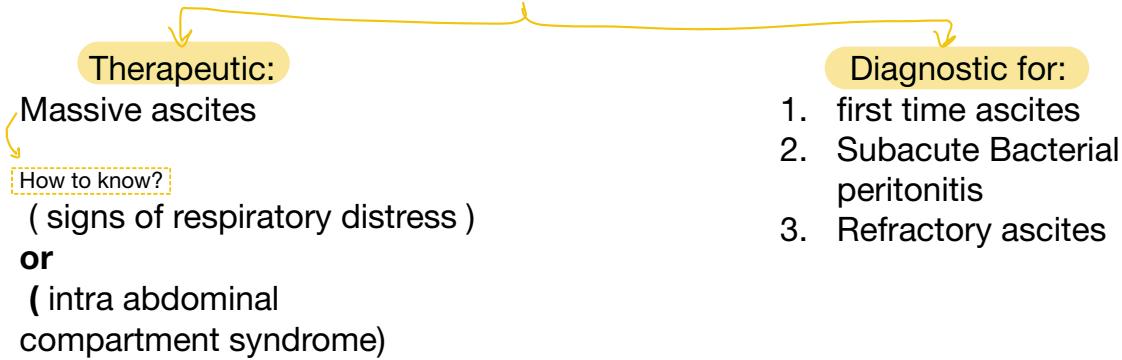
HTN >130/80 · JVP 6–8 cm · apex 5th ICS MCL · liver 6–12 (12±2 M/10±2 F) · spleen 8th–10th ICS · ascites shift 10–30 s · bowel sounds 5–10 s, absent 2–4 min · RR 12–20 · CURB-65 urea >7, RR ≥30, SBP <90, age ≥65 · Light’s 0.5/0.6/⅔ · SAAG ≥1.1 · bilirubin 3/5/22 · paracentesis INR >5, platelets <25 k.
16. Breast
Run sheet: WIPER · chaperone · sitting inspection, supine arm above head for palpation · look → palpate → nipple → axillary tail → nodes → completion.
Look (sitting): arms by sides → hands on hips → hands behind head, elbows back → arms raised → lean forward · symmetry, contour · skin dimpling, peau d’orange, erythema, ulceration, scars · nipple inversion/retraction, discharge (watery/bloody → DCIS), eczema/Paget · elevate breast to inspect underneath.
Palpate (supine, arm above head, pillow under shoulder): flats of middle three fingers, compress against chest wall; all quadrants, then axillary tail (upper outer — most cancers), nipple/areola · lump: site/quadrant, size, shape, consistency, mobility/fixity (skin/chest wall), tethering, tenderness, overlying skin · express nipple (colour, spontaneous/expressed, single duct?) · tense pectoral muscles during palpation.
Nodes: support relaxed arm (same-side hand holds forearm), palpate opposite hand — pectoral (anterior), central, subscapular (posterior), humeral (lateral), apical · supra/infraclavicular · hard, irregular, enlarged = metastasis.
Completion: contralateral breast · chest/abdomen if indicated · mammography ± US ± biopsy · sentinel node biopsy (blue dye/isotope + gamma probe when axillary imaging negative) · refer breast clinic
History: site, duration, size change, pain (cyclical vs constant), relation to cycle · discharge (colour: yellow/green fibrocystic/duct ectasia; milky galactorrhoea → prolactinoma; purulent → mastitis; watery/bloody → DCIS), spontaneous, single duct · new nipple inversion, skin change/dimpling · axillary lump, arm swelling · risk factors · systemic (weight loss, bone pain, breathlessness).