Case interpretation
Lina Serhan
Case 001
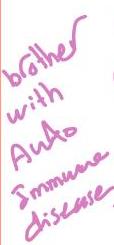
A 35 year old woman is admitted confused, pyrexial and vomiting.
Her flat mate reports that she has been unwell for the last three months and has lost weight. Three days previously she was bedbound with a severe cold. Her brother who was called urgently by the flat mate, collapsed in casualty, and was found to be hypoglycemic. He responded that he missed his evening meal in his rush to visit his sister. He has been insulin dependent for 5 years.
On examination the sister is disoriented in time and place, temperature 39°C, pulse 110 irregularly irregular with a blood pressure of 100/60.
There is no neck stiffness and no focal neurological signs. The duty SHO has performed a lumbar puncture.
Investigations 001
- Hb 14 g/dl
- WBC 9x10 Neutrophils 70%
- Sodium 140 mmol/l
- Potassium 4 mmol/l
- Urea 13 mmol/l
- Albumin 35 g/l
- Calcium 2.6 mmol/l
- Phosphate 1.2 mmol/l
- Glucose 5.2 mmol/l
- CSF Opening pressure 9 cm water
- Protein 0.6 g/l
- Glucose 4 mmol/l
- Cell count 3 lymphocytes/mm
Question 001
- What is the likely diagnosis? thyrotoxicosis
Case 002
- A 39 year old publican presents with a 6-month history of headache and malaise. He smokes 20 cigarettes a day, drinks regularly throughout the day and is on a thiazide diuretic for the treatment mild hypertension.
On examination plethoric and hypertensive, blood pressure 190/115 mm Hg. He has 3 cm hepatomegaly and 4 cm splenomegaly.
heavy drinker → vertigo → headach
Investigation 002
| Hb | 20.9 g/dl | Polycythemia |
|---|---|---|
| WBC | 14.9 X 10 | Erythropoilen |
| (ing to be high to confirm that from smoking) | ||
| PLT | 517 X10 | |
| Sodium | 143 mmol/l | if it was normal or low |
| (bone marrow abnormality) | ||
| true Polycythemia | ||
| Potassium | 4.0 mmol/l | |
| Urea | 4.3 mmol/l | |
| Bilirubin | 24 micromol/l | |
| AST | 63 iu/l | |
| ALP | 163 iu/l | |
| Uric acid | 0.6 mmol/l | |
| Po2 | 92 | |
| Pco2 | 50 | |
| pH. | 7.32 |
Question 002
- What is the likely diagnosis?
Case 003
- A 27 year old woman presents with a two day history of bleeding gums. On examination there are subconjuntival hemorrhages and patches of purpura.
Don’t happen in IPP
Investigations 003
- Hb 6.4 g/dl
- WBC 32.5 x 10
- PLT 32 X10
- Prothrombin time 20 s
- APTT 50 s
- Thrombin time 38 s
- Fibrinogen 0.5 g/l
Question 003
- What is the most likely diagnosis?
Leukemia
Case 004
-
An anxious 20 year old woman presented with. Mild shortness of breath on exertion, which had come on gradually over several months. The symptoms were intermittent but seemed to be worse in the evening. Her husband observed that during the episodes she appeared depressed and her speech was slurred. She had been treated for depression in the past and recently had been started on lorazepam by her GP for anxiety.
-
On examination the patient looks well. There was no anemia, cyanosis, clubbing, jaundice or edema. Examination of her cardiovascular and respiratory systems was normal. The cranial nerves, muscle tone, power and reflexes were normal.
-
Sensation was intact.
Investigations 004
- CBC normal
- ESR normal
- Electrolytes and liver function tests normal
- CXR normal
- PFT normal
Question 004
- What is the most likely diagnosis?
Tests 004
- Demonstrate fatiguability
- Tension test
- Antibodies against acetylcholine receptors
- Xray thoracic inlet
- CT neck and chest
- Thyroid function test
- Autoantibody profile
Case 005
- A. 59 year old woman presents to the outpatients with increasing tiredness and thirst. She has frequent epigastric pain and has woken on three occasions in the night with such pain in the last week.
Investigations 005
| HB | 11.3 g/dl |
|---|---|
| WBC | 6.4 |
| PLT | 264 |
| ESR | 9 |
| SODIUM | 136 mmol/l |
| POTASSIUM | 4.3 mmol/l |
| Urea | 11.5 mmol/l |
| Creatinine | 140 micromol/l |
| Calcium | 3.25 mmol/l |
| Phosphate | 0.72 mmol/l |
| Chloride | 117 mmol/l |
| Bicarbonate | 12 mmol/l |
| Alkaline phosphatase | 170iu/1 |
| Albumin | 40 g/l |
Question 005
- What is the likely diagnosis?