Motor Neuron Disease (MND)
DR FAROOQ SATTAR DHEDHI
- Motor neuron disease (MND) is a progressive neurodegenerative disorder.
- Characterised by selective loss of motor neurons in brain and spinal cord.
- Leads to muscle weakness, wasting, and fasciculations.
- Most common form: Amyotrophic Lateral Sclerosis (ALS).
Motor neuron disease
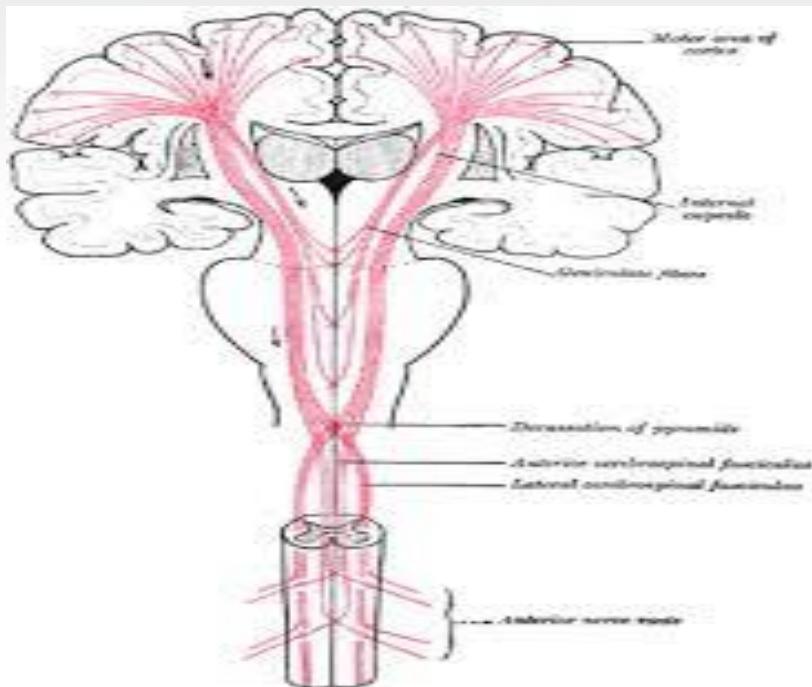
- Motor neuron disease is degenerative disease which selectively affect motor tract fibers
- (corticospinal tract+ anterior horn cell)
- ↓
- ↓
- UMN signs LMN signs
Motor pathway
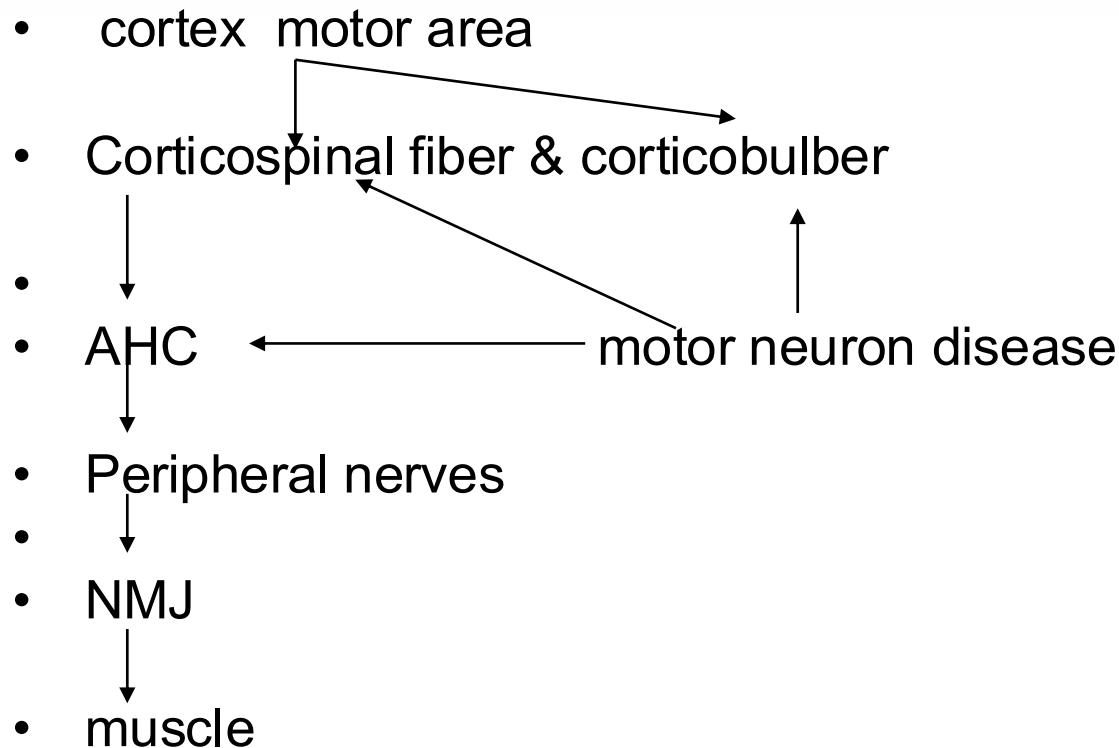
A flowchart illustrating the motor pathway from the cortex motor area to muscle, and the feedback loops involving motor neuron disease.
Epidemiology
- Incidence: ~2 per 100,000 per year.
- Peak onset: 50–70 years.
- More common in males (ratio 1.5:1).
- 5–10% familial, rest sporadic.
- Degeneration of upper and lower motor neurons.
- Upper motor neuron (UMN): corticospinal tract degeneration.
- Lower motor neuron (LMN): anterior horn cell and cranial motor nuclei loss.
- Excitotoxicity (glutamate), oxidative stress, genetic mutations implicated.
- Sporadic:90% unclear
- Inherited:10% familial ALS,25% mutation in gene encoding copper zinc super oxide dismutase (SOD1)
- Is progressive : median survival is approximately 3y
Clinical Features – UMN Signs
- Spasticity.
- Hyperreflexia.
- Extensor plantar response (Babinski sign).
- Stiffness and clumsy movements.
Clinical Features – LMN Signs
- Muscle weakness (asymmetrical, distal > proximal).
- Muscle wasting.
- Fasciculations.
- Cramps.
Clinical Features – Bulbar Involvement
- Dysarthria (slurred speech).
- Dysphagia (difficulty swallowing).
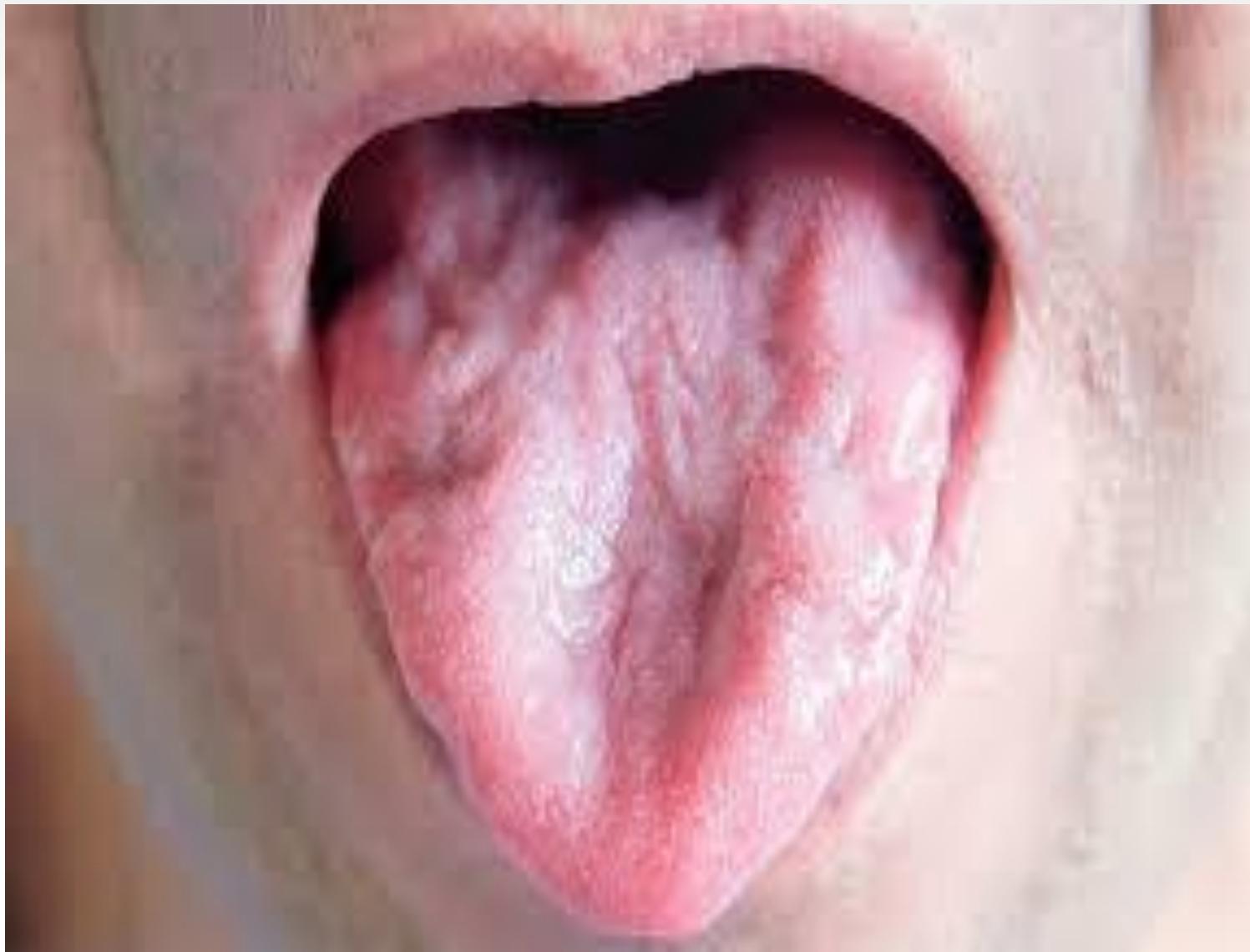
- Tongue wasting and fasciculations.
- Spastic tongue
- Emotional lability (pseudobulbar affect).
A Amyotrophic lateral sclerosis
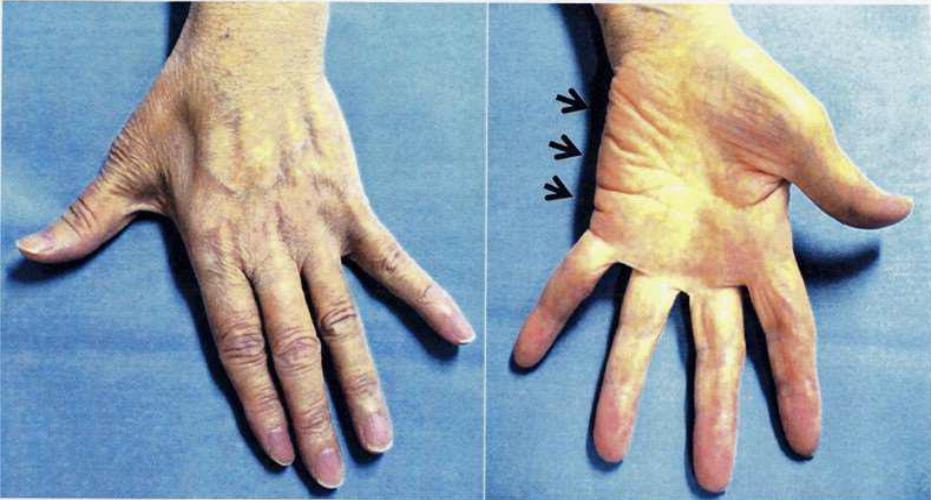
B C8 radiculopathy
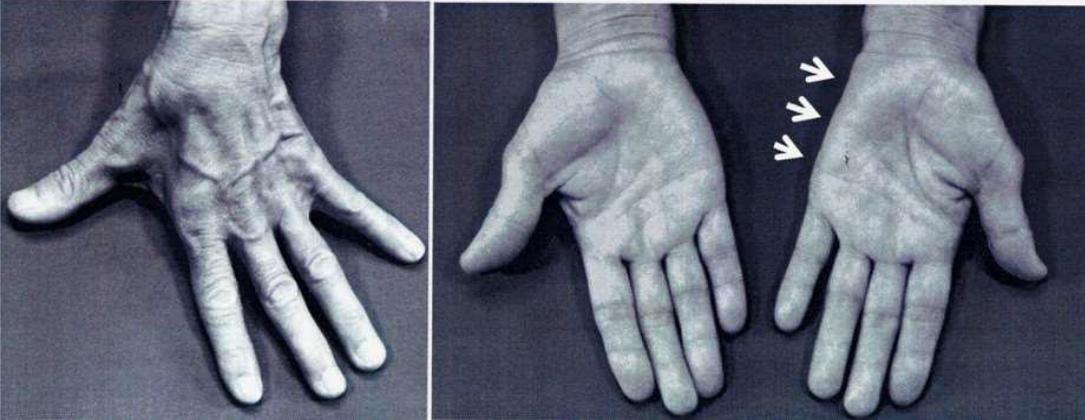
-
Classic ALS (amyotrophic lateral sclerosis)..UMN+LMN signs
-
others
- Progressive muscular atrophy
- Primary lateral sclerosis
- Progressive bulbar palsy
- Progressive pseudo bulbar palsy
-
Mixed lower motor neuron + upper motor neuron signs
-
Early patient may exhibit only LMN signs or upper LMN signs
-
Weakness begin a symmetrical and distally then spread to involve contiguous group of motor neurons
-
Bulbar & pesudobulber palsy involvement ..dysphagea & dysarthria
-
Nooooooooooooo
-
Cognitive
-
Sensory
-
Ocular muscles
-
Autonomic Sphincter dysfunction
Diagnosis
-
El Escorial criteria for dx
-
Definitive
-
Probable
-
possible
-
Electromyography (EMG): denervation and fasciculations.
-
Nerve conduction studies (NCV): normal sensory, reduced motor.
-
MRI brain/spinal cord: to exclude other causes.
-
Genetic testing in familial cases.
-
NCS: sensory..N
motor:normal or decreased amplitude -
EMG: denervation
-
MRI normal
-
No specific diagnostic test – clinical diagnosis.
Differential Diagnosis
- Multifocal motor neuropathy.
- Cervical myelopathy.
- Multiple sclerosis.
- Myasthenia gravis.
- Inclusion body myositis.
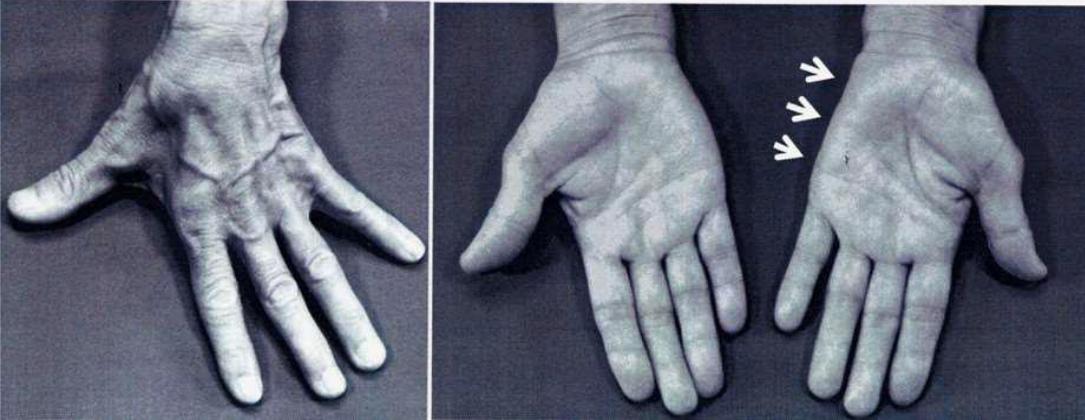
Split hand sign: Amyotrophic lateral sclerosis (1st clinical sign)
Atrophy of
- 1st Dorsal interossei
- Abductor pollicis brevis
(wasting of thenar eminence, but sparing of hypothenar eminence)
Differentiated from C8 radiculopathy by
- Sensory involvement
- Hypothenar wasting
A Amyotrophic lateral sclerosis
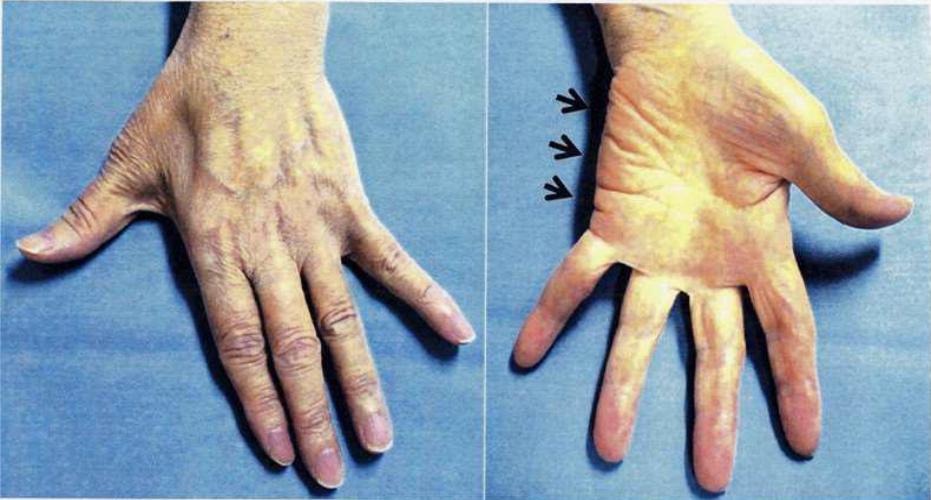
B C8 radiculopathy
- No cure, treatment is supportive and symptomatic.
- Riluzole: prolongs survival by few months (ALS).
- Edaravone: slows progression (in some cases).
- Non-invasive ventilation for respiratory failure.
- Multidisciplinary care: physiotherapy, speech therapy, nutrition support.
Prognosis
- Progressive and ultimately fatal disease.
- Median survival: 3–5 years from symptom onset.
- Respiratory failure is the commonest cause of death.
- Better prognosis in younger onset and slowly progressive variants.
Summary
- MND is a progressive neurodegenerative disorder of motor neurons.
- ALS is the most common type with both UMN and LMN features.
- Clinical diagnosis supported by EMG, MRI to exclude mimics.
- No cure – Riluzole and supportive care improve survival and quality of life for only few months.
- Prognosis poor, with respiratory failure leading to death.