جامعة المعرفة
Almazaratta University
Introduction to Minimally Invasive Surgery (Laparoscopic Surgery)
Moneer Almadani MD, FACS, F.MAS
Assistant Professor of surgery
Chairman, clinical medical sciences
Consultant surgeon upper GI, obesity, & gastric oncology
2/4/2019
Dr. M. Almadani
1
Introduction
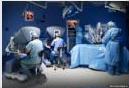
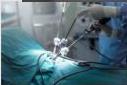
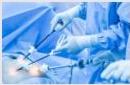
- Surgical procedures performed through small incisions allowing endoscopic access to peritoneal cavity after insufflation of gas to create space between the anterior abdominal wall & viscera using specialized instruments and visualization tools
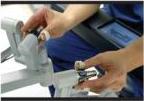
Laparoscopic
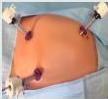
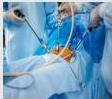
Robotic
2/4/2019
Dr. M. Almadani
2
Introduction
- Types:
Laparoscopic:
- Intraperitoneal
- Extraperitoneal
- Abdominal wall retraction (gasless laparoscopy)
- Hand assisted
- Stomach, biliary, transverse colon
- In ascending + descending is retro but if dissection
- Hernia can use both
- Extend the incision to retrieve the big organ as kidney
Robotic
Can be in the same room or in other continents
Must have a surgeon
Operating surgeon And assistants
Drawback is network connection, and another surgeon must be onsite
2/4/2019
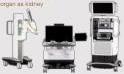
Screen called consoles
Dr. M. Almadani
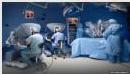
One is learning + one is a surgeon
To exchange arms
3
Why laparoscopic surgery?!
-
FOR THE PATIENT:
-
Post operative pain related to size of incision- smaller incisions = less pain.
-
Less handling of intestines results in little or no disturbance of normal function.
-
Avoidance of the trauma of abdominal wall injury by the incision allows rapid return to normal activity
Normal orifices procedure
Taking the gallbladder from the mouth as incising through stomach
- No/ less incision allows early return to more strenuous activities: driving, lifting, sport etc.
Shorter hospital stay
Inguinal hernia first time = laparotomy Recurrence = bilateral = laparoscopic
2/4/2019
Dr. M. Almadani
4
Why laparoscopic surgery?!
• FOR THE HOSPITAL:
- Initial capital costs to establish laparoscopic surgery in the order of 250,000
- Reduced overall costs by shortening of hospital stay e.g. cholecystectomy reduced from 5 to 1 day, hiatus hernia repair reduced from 7 to 3 days.
2/4/2016
Dr. M. Almadani
5
Why laparoscopic surgery?!
• FOR THE SURGEON:
- Magnified view often better than obtained via an incisional area precise dissection.
- Larger operative field, to check more organs
- Diagnostic ability and save organs
- Operating time
Handling by hands will disturb physiology
Open appendectomy incision if opened and found normal we still remove it why? So later on if came with pain she won’t think of appendicitis as they will think it is removed
Gold standard for appendectomy, cholecystectomy, bariatric But if past laparoscopic was hard, frozen abdomen, adhesions
2/4/2016
Dr. M. Almadani
6
Why laparoscopic surgery?!
• Advantages:
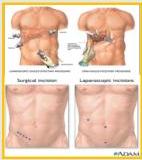
- Less post operative pain
- Faster recovery time/ return to work
- Shorter hospital stay
- Cosmesis/ Smaller scars
- Less internal scarring
- Less risk of wound infection and incisional hernia
- Better visualization
2/4/2016
Dr. M. Almadani
7
Common laparoscopic procedures
-
Cholecystectomy
-
Appendectomy
-
Hernia repair
-
Division of adhesions
-
Closure of perforation
-
Bowel resection
-
Repair of Prolapse
-
Nephrectomy
-
Bypass
-
Splenectomy
-
Anterior resection/ APR
-
Right Hemicolectomy
-
Left/Sigmoid Colectomy
-
Gastrectomy
-
Oesophagogastrectomy
-
Hiatus hernia repair
2/4/2016
Dr. M. Almadani
8
Laparoscopic surgery
- Contraindications:
Absolute:
• Inadequate experience of surgeon • Uncorrected coagulopathy DIC
- Shock
Relative
Severe COPD As infating with co2 will worsen acidosis
- Recent MI • Ventriculoperitoneal shunts • Extensive organomegaly
- CHF
Trauma pre
Internal bleeding
Acidosis
2/4/2026
Dr. M. Almadani
9
Laparoscopic surgery
- Disadvantages
- Technical:
- Need to develop entirely different operating technique The need to learn
- Two different small (flat screen) view Pidonic + RD, excellent for narrow spaces as pelvic (urology + gynaecology), good for surgeons w tremors (will delete effect)
- Limited tactile response (altered but not absent)
- Insertion Related:
• Major vascular injury
- GI Injury
- Bladder injury
- CO2 embolism • Abdominal wall haemorrhage
2/4/2026
Dr. M. Almadani
10
Laparoscopic surgery
- Disadvantages
- Post Insertional :
- GI perforations • Laceration & bleeding from solid organs • Abdominal wall hernia
• Pneumoperitoneal related:
- CO2 embolism
- Hypercarbia • Respiratory acidosis • Subcutaneous emphysema
- Renal failure
- Venous thrombosis • Pneumothorax The gun incision might perforate thorax
Intraabdominal pressure shouldn’t exceed 15 Very dangerous if above 20
2/4/2026
Dr. M. Almadani
11
Laparoscopic surgery
Open usually supine

Inflating the abdomen and pt became hypotensive, first thing? Deflate
Increased intraabdominal pressure causes vasovagal attack
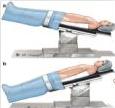
Physiological changes
Cholecystectomy
Pneumoperitoneum
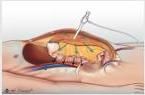
The organ operated on needs to be higher
Dr. M. Almadani
12
Physiological changes
- CO2 causes hypercarbia, respiratory acidosis and hypoxia
- Pneumoperitoneum exerts pressure on the IVC, decreases the venous return then the cardiac output
- Vasovagal episode
- Increase the arterial pressure
- Compromises the respiratory function by compressing over the diaphragm impairing the pulmonary compliance
2/4/2016
Dr. M. Almadani
13
Instruments used
-
Zero degree laparoscope, other angles are used
-
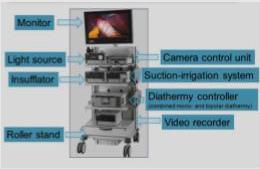
Cold light source (Halogen and Xenon lamp)
-
Camera ( 3chip camera commonly used with high resolution
-
Video monitor to display images
-
CO2 insufflator
-
Long fine dissectors
-
Hooks and spatulas with cautery for dissections
-
Clip applicators
-
Needle holders
-
Veress needle
-
Trocars of different sizes – 10mm, 5mm
-
Suction irrigation apparatus
-
Reducers to negotiate smaller instruments through larger ports
2/4/2016
Dr. M. Almadani
14
Laparoscopic tower
2/4/2016
Dr. M. Almadani
15
Telescopes
-
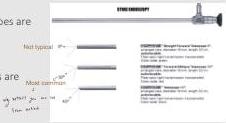
There are three important structural differences in telescope available
-
6 to 18 rod lens system telescopes are available
-
0 to 120 degree telescopes are available
-
1.5 mm to 15 mm of telescopes are available
-
3D images
2/4/2016
Dr. M. Almadani
16
Optic cables
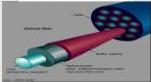
- Made up of a bundle of optical fibers glass thread swaged at both ends.
- The fiber size used is usually between 10 to 25 mm in diameter.
- Very high quality of optical transmission, but are fragile.
LED light so it doesn’t burn the inside No shadows
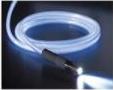
How coiled and still conducting light? Fibres
2/4/2016
Dr. M. Almadaei
17
Trocars
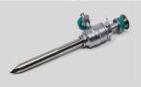
- Made up of blade with a shaft and body.
- The body includes a pointed tip which makes the initial incision in the abdominal wall of the patient.
- Diameters range from 2mm-30 mm
- Most common trocar is 5mm & 10mm
For gallbladder as smaller won’t retrieve it
Two parts: Obturator + guard Valves to connect the gas Then remove the inside + introduce the lapotoscope
Reusable
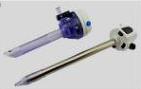
General Instruments
- Reusable three-piece design
- Disposable are commonly used
- Available in 2 mm, 3 mm, 3.5mm, 5 mm and 10 mm sizes, with lengths of 20 cm, 30 cm, 36 cm and 43 cm.
- Choice of handle styles.
- Fully rotating 360° sheath.
- No hidden spaces that can trap operative blood and tissue debris.
2/4/2016
Dr. M. Almadaei
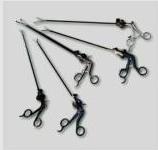
19
Dissecting & Grasping Forceps
- Atraumatic
- KELLY atraumatic
- Atraumatic, with hollow jaws
- MANGESHIKAR Grasping Forceps, serrated
2/4/2016
Dr. M. Almadaei
20
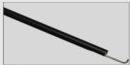
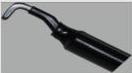
Laparoscopic hook
-
Uses:
-
Separate adhesions
-
Diathermy purpose
-
Traction to any organ
Catarize a small area of bleed
Not near the bowel as might give dithermal injury
2/4/2016
Dr. M. Almadani
21
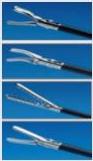
Laparoscopic Scissors
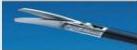
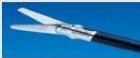
- HOOK SCISSORS, single action jaws
- METZENBAUM SCISSORS, curved, length of blades 12-17 mm, widely used as an instrument for mechanical dissection in laparoscopic surgery.
- STRAIGHT SCISSOR can give controlled depth of cutting because it has only one moving jaw.
2/4/2016
Dr. M. Almadani

22
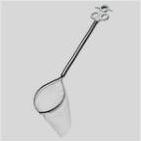
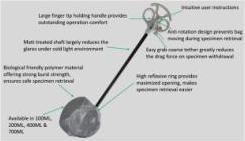
Endocatch Bags
Ideal way is to bag organs + specimen
2/4/2016
Dr. M. Almadani
23
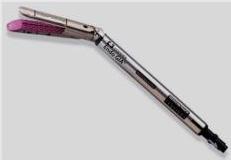
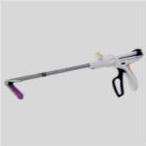
EndoGIA
To cut around safely
2/4/2016
Dr. M. Almadani
24
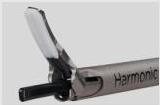
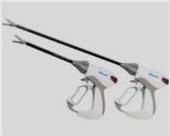
Lap Electro surgery instruments
Coagulation + then cut w a knife inside
2/4/2016
Dr. M. Almadani
25
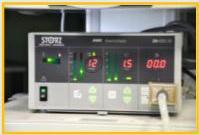
Gas Insufflators
-
Pneumoperitoneum is created up to 15mmHg which distends the abdominal cavity for proper visualization • CO2 is most commonly used:
-
Readily available
-
Cheaper
-
Easily absorbed by tissues
-
Quickly released via respiration
2/4/2016
Dr. M. Almadani
26
Abdominal access
• Examine the abdomen for:
-
Scars Expect adhesion so avoid the area
-
Organomegaly
-
Intra-abdominal masses
-
Safe spots:
-
Lower fold umbilicus • Lateral border rectus (in any of 4 quadrants)
Needle + left upper an spleen is short
2/4/2016
Dr. M. Almadani
27
Abdominal access
-
Techniques to create pneumoperitoneum:
-
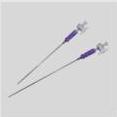
Open: Hasson technique Incisw every layer / Ideal for people who got previous surgeries
-
Close:
-
Veress needle w NS
-
Optical trocar port
Obese people + people w no previous surgery

2/4/2016
Dr. M. Almadani
28
Laparoscopic ports position
-
Location (Trocars):
-
Depends on:
- Surgery being performed
- Surgeon preference
- Anatomy (scars, masses, habitus…)
2/4/2016
Dr. M. Almadani
29
Laparoscopic ports position
-
PRIMARY PORT POSITION The first introduce
-
Attractive primary port is the umbilicus because of
- Central location at the midpoint of the abdomen’s greatest diameter
- Ability to hide scars
- Weak area due to absence of all the layers
-
SECONDARY PORT POSITION After the first you want to add more
-
Should be done under direct vision
-
Skin incision
-
Drilling motion to insert
2/4/2016
Dr. M. Almadani
30
Basic Diamond Concept
- 3 Ports Typical
- Mainly two port 5mm and 10mm port
- Laparoscope is inserted through the umbilical port (10mm port)
- Clip applicator 10mm port is essential
- Additional ports ( 3-4) through trocars are placed depending on the procedures may be 5mm or 10mm port
In diagnostic purposes: 2 ports Now we want it therapeutic ? Add a third port
2/4/2016
Dr. M. Almadani
31
The future of MIS
- AI and augmented reality in surgery
- Advancements in robotic systems
- Single-incision and scarless techniques
- Personalized and precision surgery
2/4/2016
Dr. M. Almadani
32
Thanks
2/4/2015
Dr. M. Almaden
33