Case Scenarios - Neck Swelling
Dr. S. Ahmed Khan
midline neck swelling
- Thyroid mass
- Thyroglossal cyst
- Dermoid cyst
Ant. triangle
Thyroid
- salivary glands
- LN
- Branchial cyst
Post. Triangle
-
cystic Hygroma
- transillumination test
-
LN most common
-
Phanangean Poor
Case Scenarios - Neck Swelling
Dr. S. Ahmed Khan
MBBS, FCPS
Assoc.Prof of Surgery
Case Scenario 1
- A 60- year old female presented with neck swelling for 4 months, dyspnea and hoarseness of voice for 1 month.
Involvement at Recurrent Laryngeal Nerve so think about Cancer
- She is in your clinic.
- What to do?
always start with History
- History of neck swelling:
- How noticed? Often noticed by others
- Duration? Acute or chronic
- Painful- acute lymphadenitis, thyroiditis, bleeding in goitre, submandibular salivary gland stone.
- Painless- chronic lymphadenopathy, goitre, branchial cyst. TB
- Change in size: Rapid increase- infection, bleeding, malignant change. Slow increase- in neoplasms
- Single or multiple? Multiple- lymph nodes
Other assoc: Symptoms
specially in anterior triangle masses
- Voice change (malignant invasion)
- Dysphagia (pressure on esophagus)
- Dyspnea (pressure on trachea)
- Eye symptoms
- Throat pain, Oral ulcer
- Nasal symptoms, Scalp lesion
gaiter not moving with swallowing
Systemic Symptoms
most Common Cause of neck Swelling:
Lymphadenopathy: Fever, night sweating, contact
L FNA is best investigation for lymph with infectious disease, weight loss, change in appetite, respiratory/ gastrointestinal symptoms.
Goitre: Nervousness, tremor, weight loss/ gain,
only enlargement can be hypo or hyper
palpitation, preference to cold/ warm weather, muscle
fatigue, sweating.
Systemic Inquiry
- GI – appetite, wt. change, bowel habit (thyroid, LN)
- RS- dyspnea on exertion, (retrosternal extension)
- CVS- palpitation, ankle swelling
- GU- amenorrhea
- CNS- nervousness, irritability, insomnia (thyrotoxicosis)
- Endocrines- preference to warm or cold weather
This Patient
- Neck swelling
- Painless
- Slow increase Neoplasm
- Dyspnea
- Voice change
- PMH- Nil significant, no neck radiation
- FH of neck /thyroid malignancies- NAD
- Medication/allergies- nil
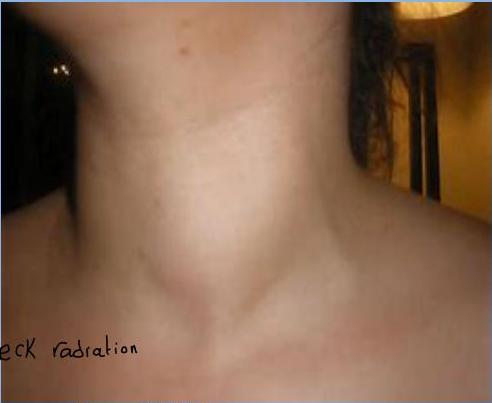
General Examination
no endocrine symptoms
- Appearance- NAD
- Eye- NAD
- Hand tremors- NAD
- Tachycardia- NAD
Local Examination
- Inspection- solitary mass, left anterior triangle, moving up on deglutition → thyroid
- Palpation:
- Left lobe- 3x3 cm hard mass,
- non-tender.
- Rt. Lobe- normal
- Multiple ipsilateral LAP, enlarged cervical lymph node → Papillary
- Trachea shifted to right side
Percussion - NAD
significant in Retrosternal goiter
Auscultation- NAD for Brue
Differential Diagnosis
- Clinical: Goitre, Thyroid mass
- Functional- Hyper, hypo, Normothyroid?
- Pathological- Diff. diagnosis?
- MNG, Thyroiditis, Cyst
- Thyroid neoplasms
- Which type? most likely papillary because of association of lymph nodes
Thyroid Malignancy
- most common thyroid tumor • Papillary
- Follicular → Hemogenous spread
- Hurthle cell
- MTC (sporadic / familial
MEN 2 A (Sipple syndrome- MTC, pheo, HPT, lichen planus amyloidosis, Hirschsprung’s dis.)
MEN2B (MTC, pheo, marfanoid, mucosal neuromas, ganglioneuroma of GIT)
- Anaplastic
- Lymphoma
Differential Diagnosis
- Papillary carcinoma
- Anaplastic carcinoma
- MTC
- Lymphoma
Investigations
-
US
-
FNA- PC (malignant, non-diagnostic, benign)
-
TFT
Best investigation
Can’t differentiate between Follicular adenoma and Carcinoma
-
CXR
-
CT
-
Indirect laryngoscopy: Lt RL nerve palsy
-
Surgery
Inconclusive FNA
-
Non-diagnostic/ cellular – repeat
-
Repeat FNA- inconclusive if still
so we will depend on other investigation
- TSH level- normal/high- surgery
means that nodule is hypoactive
- TSH low- nuclear scan
Hyperfunctioning nodule
Low uptake- surgery, cold nodule ⇒ more malignancy
High uptake- Follow up or therapy
Thyroidectomy for Thyroid Nodule
Surgery
(Indications)
- Malignant nodule even if it’s small
- Progressively enlarging nodule
- Pressure symptoms
- Suspicious nodule (FNA failed to establish a benign nature)
- Thyrotoxic nodule
Total Thyroidectomy
Lobectomy in younger age
Subtotal → in benign
Total thyroidectomy → malignant.
-
Malignant tumours
-
Neck lymph node dissection? in lymphadenopathy Papillary
-
RIA (Radio iodine ablation)- large tumour, metastasis, local tumor extension.
primary secondary
- Complications: Bleeding, hypoparathyroidism, recurrent laryngeal nerve injury.
if there’s hematoma after surgery this is an emergency case often the wound in the ward and relife the bruiser then call surgeon
Case 2:
12-year old boy presented with a neck swelling
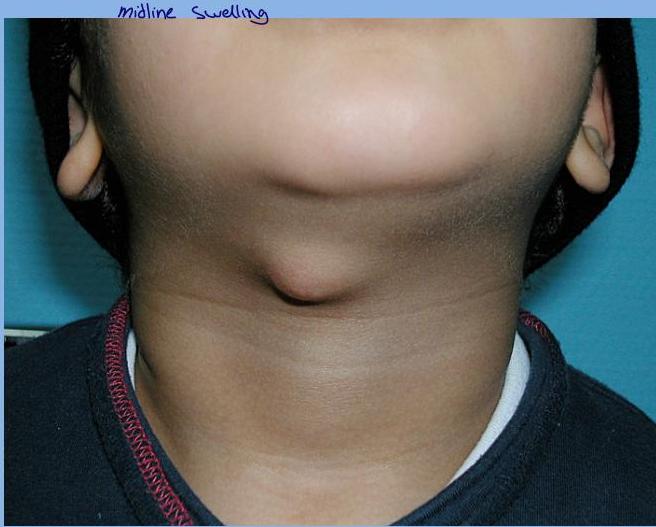
Thyroglossal Cyst
- Midline swelling
- Moves upwards with protrusion of the tongue
- Aetiology- persistence of part of thyroglossal duct
- Treatment: Excision with a central wedge of hyoid bone ( tract run either superficial of deep to hyoid)
found in Infrathyoid more common than supra
Case 3
A 35-year old female presented with multiple neck swellings for 3 months
Posterior triangle
- History?
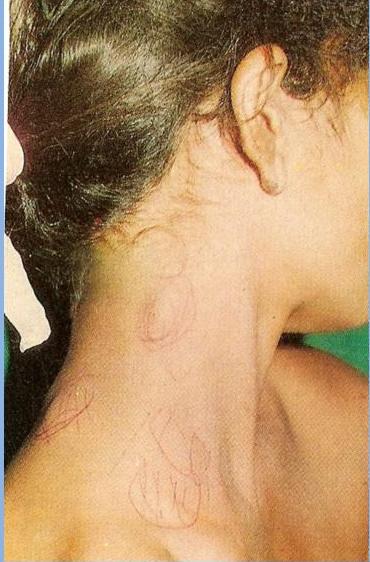
The Patient
- History of lump: multiple, painless
- Systemic inquiry: Fever, loss of weight, night sweat, no cough.
Examination: multiple, some discrete, some matted, firm swellings. typical TB
-
ENT, chest, abdomen- NAD
-
Diagnosis / DD : ? lymphadenitis most probably Cystic hygroma Pharyngeal Pouch
-
Investigation
TB → (firm - painless mattable matted together)
TB Lymphadenitis
? Painless, initially firm swelling
? later may become soft (cold abscess)
because no clawed symptoms at acute inflammation
in deep facia
? Matted, discharging sinus
may lead to fistula formation
? Evening fever, night sweats, wt. loss, anorexia
? Diagnosis: FNA, aspirate for AFB, culture, PCR, biopsy
CT in malignancy suspicion
take one nose and send it
? Treatment: Anti-tuberculous drugs
if not treated will cause fistula.
Case 4
Presented with a painful swelling
Tender Swelling Fever
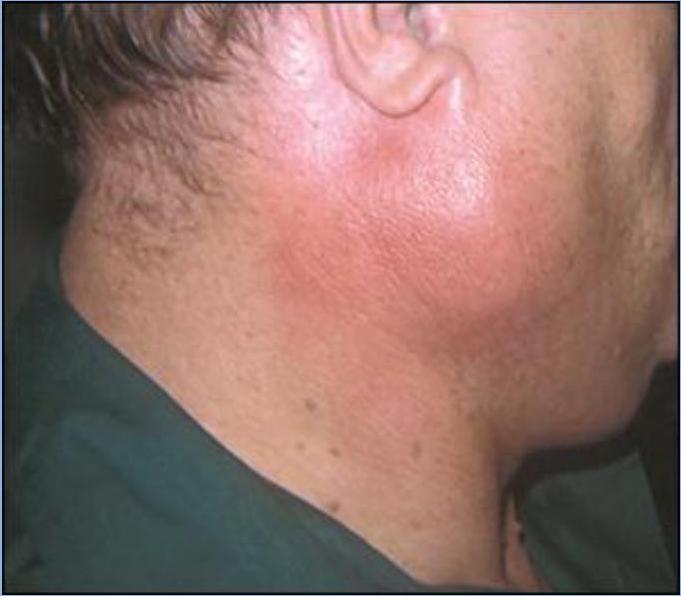
Parotid Abscess
- Tender parotid swelling with fever and malaise
- Pus exuding from duct papilla
- Staph. aureus, Strep. viridans
- Early cases: antibiotics, oral hygiene before pus formation (-ve fluctuating test)
- Late cases: abscess drainage (I/D) and Antibiotic according to result.
Case 5
Painless swelling for 1 year
slow growing
most Common benign
Pleomorphic adenoma
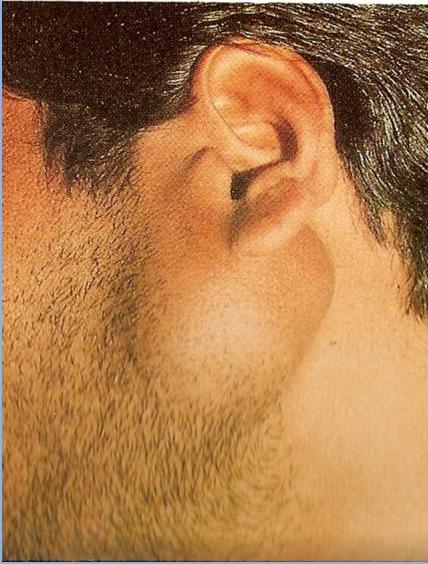
Salivary Gland Neoplasms
BENIGN:
Pleomorphic adenoma
more common in superficial lobe of parietal gland
Warthin’s tumour
Oncocytoma,
Basal cell adenoma,
Intraductal papilloma
MALIGNANT:
Mucoepidermoid carcinoma*
Acinic cell carcinoma
Adenoid cystic carcinoma
Basal cell carcinoma
Low grade adenocarcinoma
Mucinous adenocarcinoma
Malignant pleomorphic tumour
Lymphoma
Pleomorphic Adenoma
- Most common neoplasm, parotid most common site
- F=M 2:1, 3-5 decade
✓ Slow growing, painless mass/ mild discomfort not attached to skin
-
Risk of malignant change- 1.5% in 5 years
-
FNA- most helpful in all glands
-
CT, MRI rarely needed
-
Treatment: Superficial parotidectomy / Total parotidectomy Enucleation- not recommended Submandibular: Total gland excision
Case pain after eating: Best option for treatment is surgery
if stone is no gland best option is excision ⇒ most common in Submandibular gland
Common Neck Swellings
1
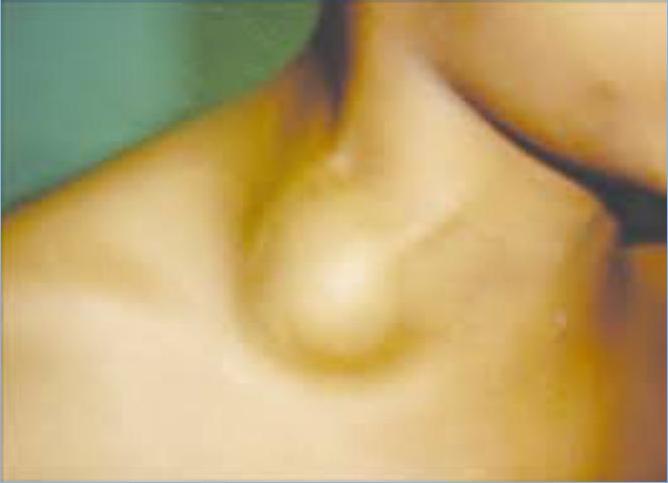
Jugular Venous Aneurysm
Neck swelling lateral to the right sternomastoid muscle made prominent on breath holding ,straining, coughing, crying, valsalva maouvre Compressible
- Investigations: best in any vascular disease color doppler u/s, venography, CT angiography. MRI
- Treatment: Surgery (cosmetic reason) not have any complication
2
Anterior triangle
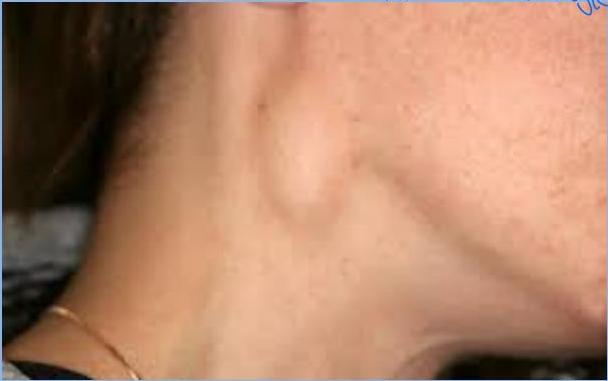
Cervical L.N
3
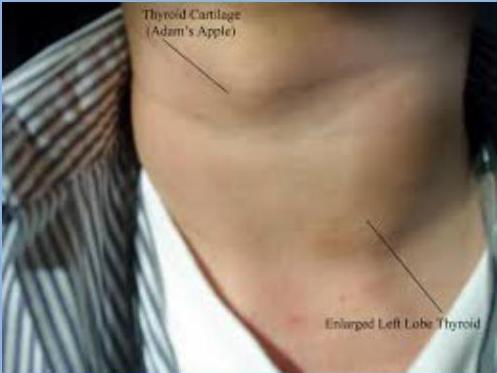
Goiter Could be diffused or Loaize L. Graves is most common thyroid disease in female
Thyroid Mass
4
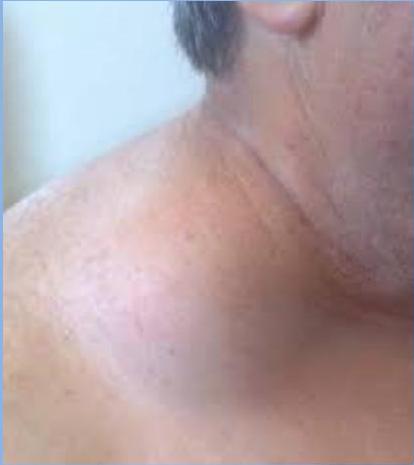
Excision
Lipoma Soft, globular
Ht: excision
5
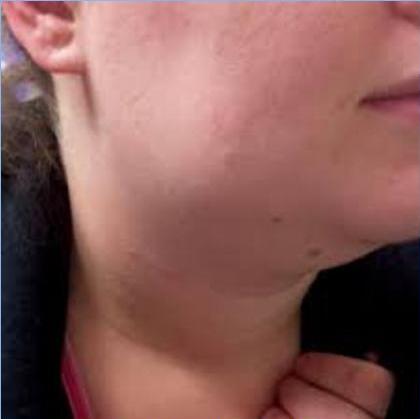
. sever pain . reful after eating
in submandibular triangle
xiii: Antibiotic, Excision
Acute Submandibular Sialoadenitis
salivary gland
6
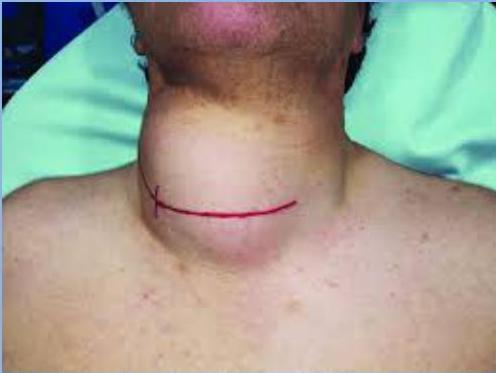
Goiter
Hyper → use anti thyroid drugs
hypo → use thyroxin
***: near total or total thyroidectomy
7
midline
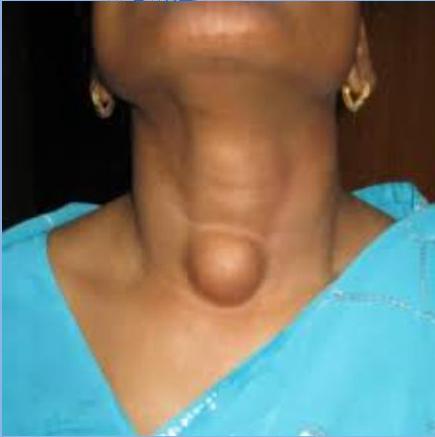
Exhibition
Dermoid Cyst
Congenital at any midline Cerebral Corhead sublingual
if not moves with Dysputation
H.T.: excision
8
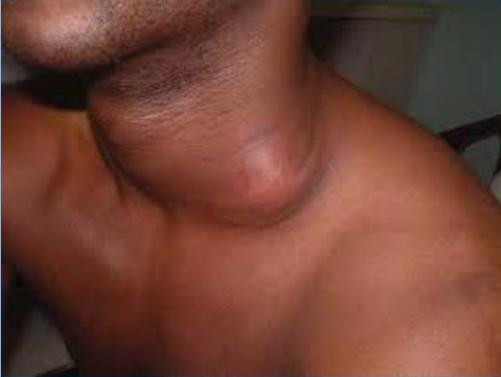
Shiny Cold Pos. triangle
T.B Lymphadenitis
H4: Anti tB
don’t open the wound may lead
to fistula if you want to drain pus
open it from independent area
9
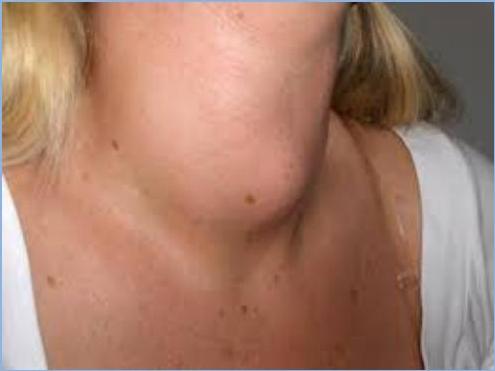
Central
Swallowing and protracting test, are negative
Thyroid Adenoma
Solitary nodule
Could be hypo or hyper
Functioning
-
most of them benign
-
15% malignant
we have to do FNA to make
Sure not malignant it
not we can leave it
10
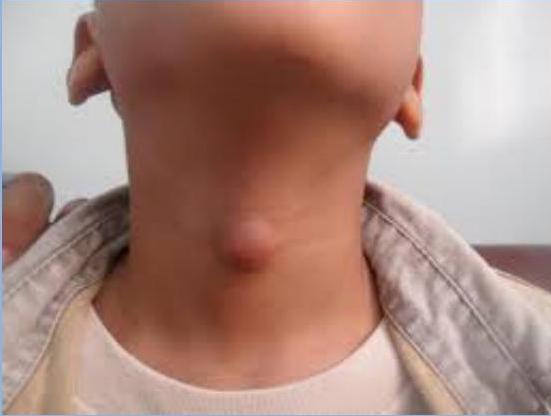
- globule
- Swallowing
- Professional tongs
- Ht: castrack
Thyroglossal Cyst
11
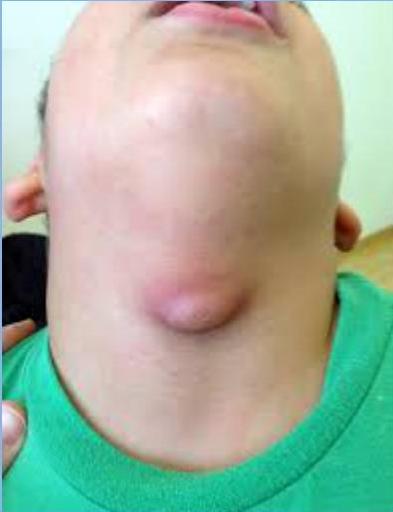
Inflamed Thyroglossal Cyst
txt: Antibatic the do cistrunk
12
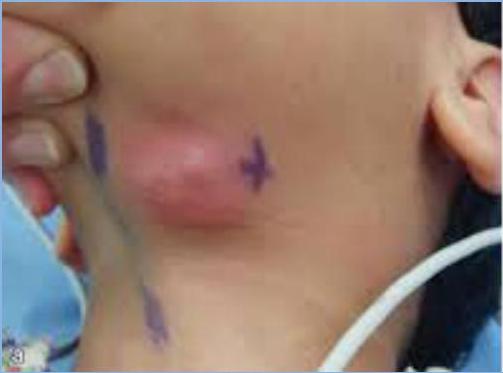
A
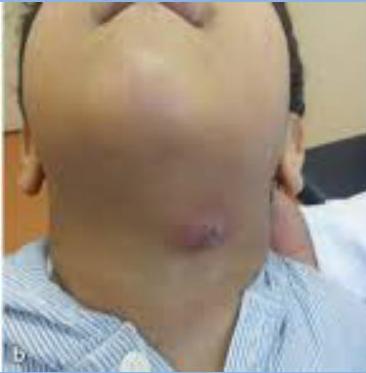
B
A) Thyroglossal Abscess
B) Fistula
13
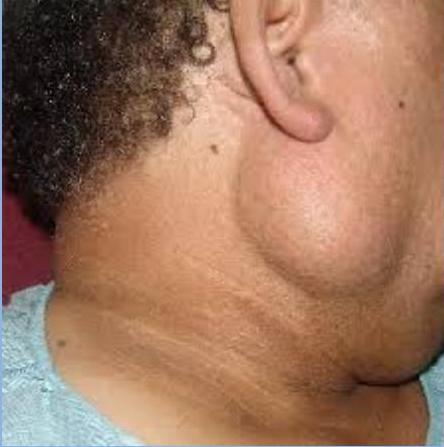
- Slow growing
- Painless
- below ear lobe
Parotid Adenoma
14
Pain, Fever & the Hunting
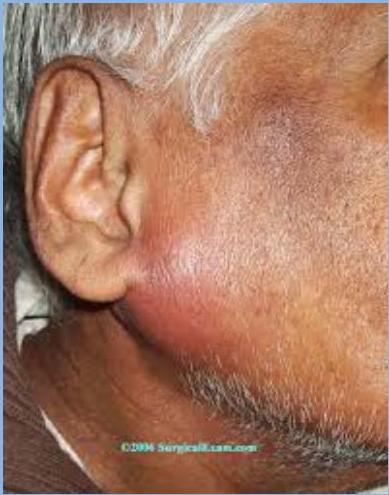
incision as draige
Antibiotic according to culture
Parotid Abscess
Thank You!