Multiple Sclerosis
By Isra
https://next.amboss.com/us/article/WR0PNf?q=multiple+sclerosis
A. General Characteristics
- Selective demyelination of CNS—multifocal zones of demyelination (plaques) are scattered throughout the white matter. Classic location of plaques is at the angles of the lateral ventricles.
- Demyelination primarily involves white matter of the brain and spinal cord; previously thought that it spare the gray matter/axons and the peripheral nervous system. However, improved imaging techniques are showing that grey matter neuron involvement may be more prevalent than previously appreciated.
Commonly involved tracts: pyramidal and cerebellar pathways, medial longitudinal fasciculus, optic nerve, posterior columns.
- Women are two to three times more likely than men to have MS.
- Etiology is unknown, but is probably secondary to the interplay of environmental, immunologic, and genetic factors.
- Infection with HHV6, and EB may lead to molecular mimicry? Explain Z
Spinal Cord Anatomy
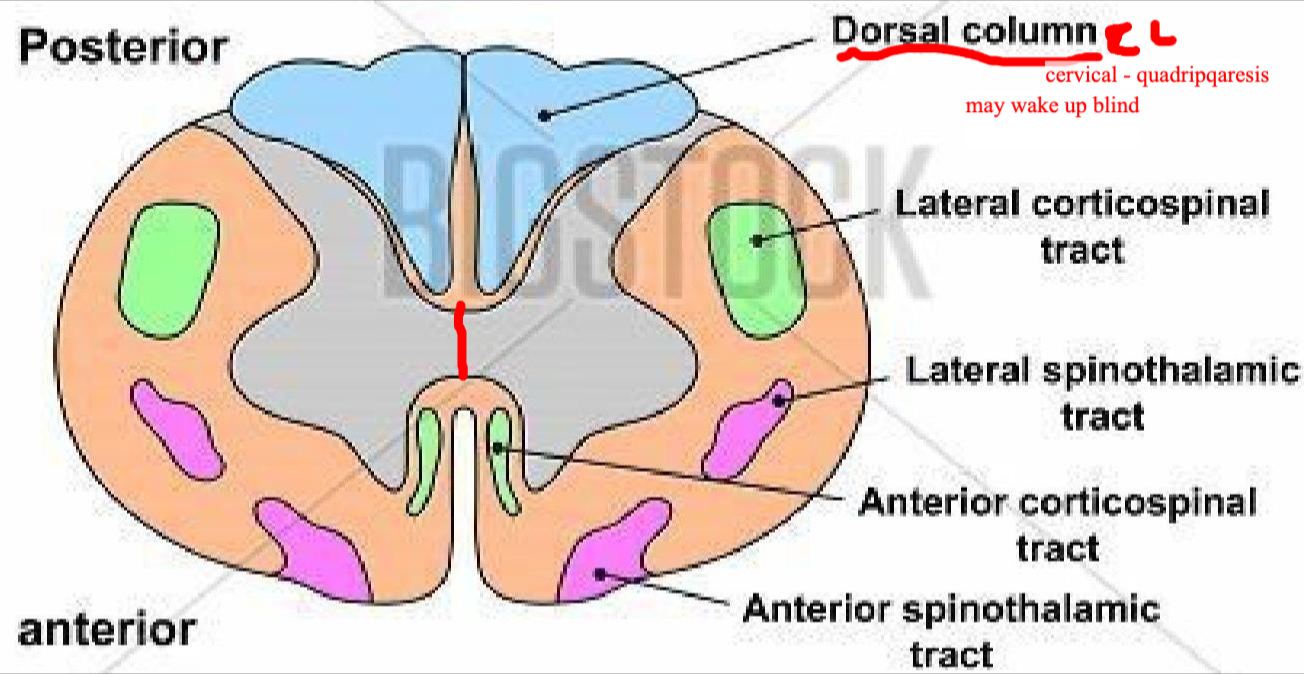
B. Clinical Features
1. Transient sensory deficits
- Most common initial presentation, decreased sensation or paresthesia in upper or lower limbs.
- N.B. peripheral neuropathy never occur with MS why???
2. Fatigue
- One of the most common complaints
3. Motor symptoms
- Mainly weakness or spasticity due to demyelination of the descending corticospinal tracts in the upper part of the spinal cord.
- May appear insidiously or acutely.
- Caused by pyramidal tract involvement (upper motor neuron involvement).
4. Visual disturbances
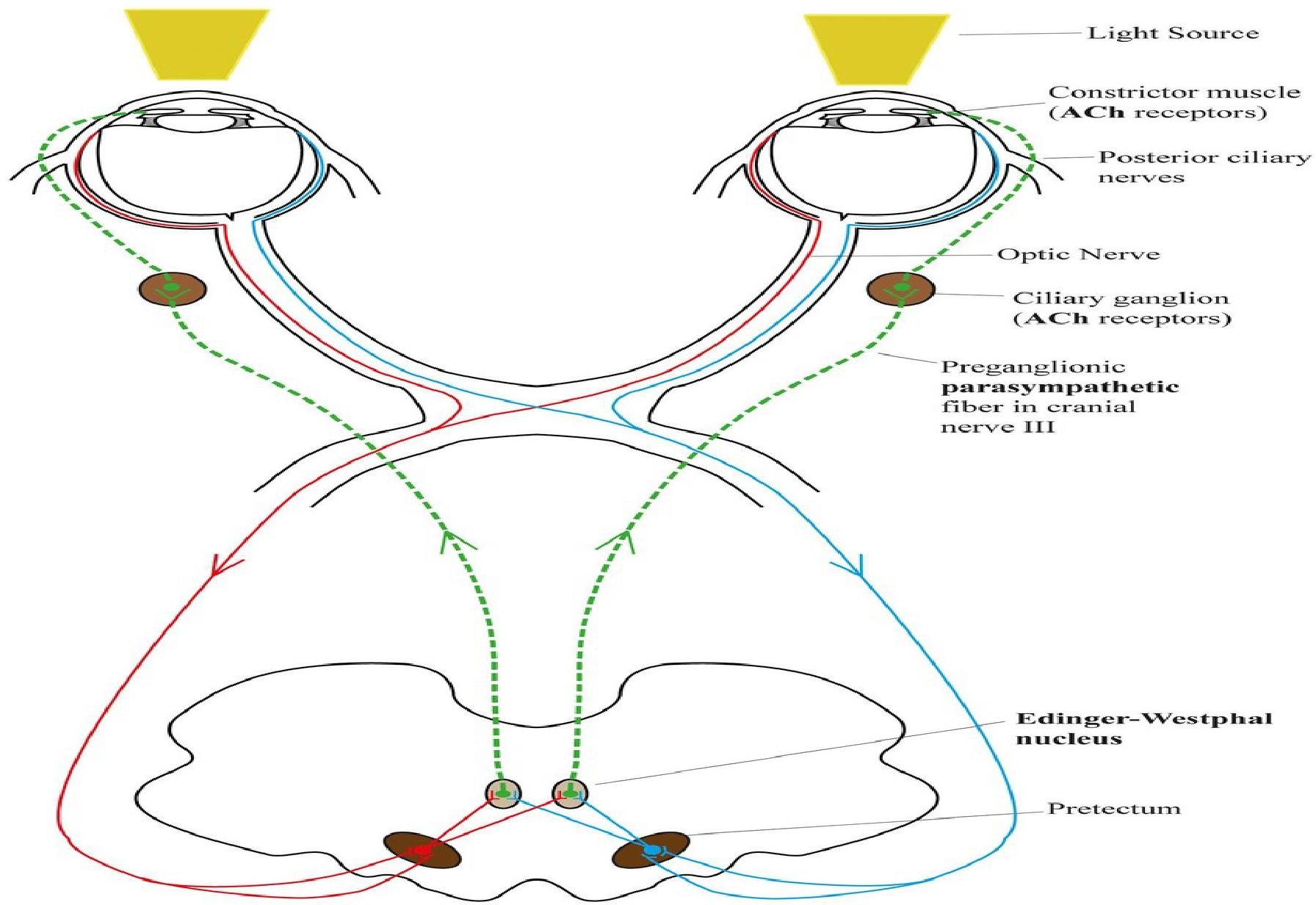
progressive vision weakness, with color blindness, visual field decreased, and reflex is non reactive.
testing with acuity chart and ishara, field, and light reflex.
a. Optic neuritis
- Monocular visual loss (in up to 20% of patients), often with pain during eye movement.
- Decreased pupillary reaction to light (RAPD; reactive only on normal optic to the opposite, otherwise non reactive.) and loss of color vision.
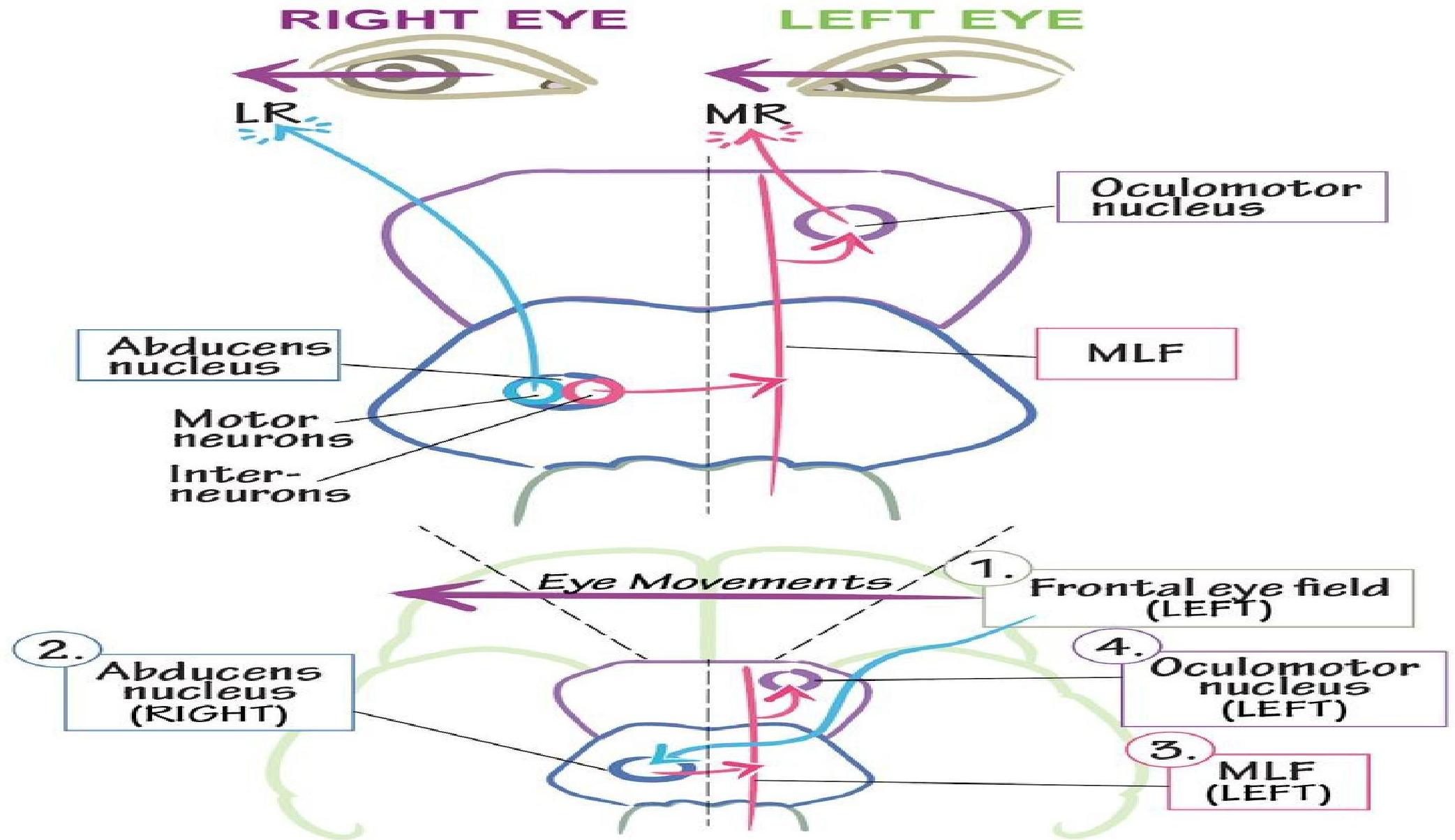
b. Internuclear ophthalmoplegia
- Strongly suggests the diagnosis.
- A lesion in the medial longitudinal fasciculus results in ipsilateral medial rectus palsy on attempted lateral gaze (adduction defect) and horizontal nystagmus of abducting eye (contralateral to side of lesion). Diplopia can occur.
5. Brain stem
- Pseudobulbar palsy due to demyelination of the bulbar neurons V, VII, IX, X and XII with appearance of clinical manifestations.
6. Cerebellar involvement
- Can cause ataxia, intention tremor, dysarthria
Crossed twice, ipsilateral involvement - Hypertonia masked hypotonia if… - moving arm tremor w/ finger nose test - dyskinesosia - rebound phenomena, staktito (type speech is characterized of… ) - horizental nystagmus , ataxic gait.
7. Loss of bladder control
-
Consequence of upper motor neuron injury in spinal cord, or demyelination of pontine neurons
due demylentiation of microtuntuion centere in pontine
8. Autonomic involvement
- May present as impotence and/or constipation
9. Cerebral involvement
- May occur in advanced illness and manifests as memory loss, personality change, and emotional lability; anxiety and depression are common.
10. Neuropathic pain
- A frustrating but common complaint that manifests as hyperesthesia and trigeminal neuralgia
Important Clinical Signs
-
Uhthoff’s sign is the worsening of neurologic symptoms in multiple sclerosis (MS) and other demyelinating diseases when the body is *overheated. This may occur due to hot weather, exercise, fever, saunas, hot tubs, hot baths, and hot food and drink. Increased temperature slows nerve conduction, but the exact mechanism remains unknown.. Z
-
Lhermitte’s sign (also known as Lhermitte’s phenomenon or the barber chair phenomenon) is the term used that describes a transient sensation of an electric shock that extends down the spine and extremities upon flexion and/or movement of the neck. Z
C. Course
1. Initial Presentation
- Most patients at initial presentation are in their 20s to 30s and present with a localizing deficit such as optic neuritis, one-sided weakness, or numbness. Patients may or may not go on to develop MS. The initial presentation is termed a clinically isolated syndrome, since it is not sufficient to fulfill MS diagnostic criteria.
2. Relapsing-remitting MS
- The pattern of flares (relapses) followed by either full recovery or partial recovery with residual deficits, creating a new baseline.
3. Secondary progressive MS
- Often starts with a relapse-remitting pattern, then changes to a gradual worsening of disease that may or may not involve obvious flares.
4. Primary progressive MS
- Has a progressive course of accumulating disability from the onset and represents about 10% of patients.
D. Diagnosis
1. Clinical Diagnosis
- The diagnosis is essentially clinical—suspect it in young adults with relapsing and remitting neurologic signs and symptoms that are difficult to explain (due to involvement of different areas of CNS white matter). Nevertheless, on suspicion, order the MRI and consider LP, because it is important to diagnose MS with as much certainty as possible due to the implications surrounding the management approach.
2. MRI
- Most sensitive test and is diagnostic in the majority of cases. The number of lesions on the MRI is not necessarily proportional to disease severity or speed of progression. - Test also for b12, differential for numbness.
3. LP and CSF analysis
- Although no laboratory tests are specific for MS, oligoclonal bands of immunoglobulin G are present in 90% of MS patients.
4. Evoked potentials
- Can suggest demyelination of certain areas by measuring the speed of nerve conduction within the brain: newly remyelinated nerves will conduct sensory impulses more slowly.
E. Treatment
There is no cure for MS. But the primary goals are:
- Treatment of acute attacks
- Modify the disease course
- Symptoms management
1. Treatment of Acute Attacks
- High-dose IV corticosteroids can shorten an acute attack. Oral steroids have not shown the same efficacy.
- Plasma exchange may be used for patients with a poor response to steroids.
- Studies have shown that treatment of acute exacerbations does not alter the outcome or course of MS.
- Most acute attacks resolve within 6 weeks with or without treatment.
2. Disease-Modifying Therapy Z
GC VIRUS?
-
There are many newer therapies, and management options are evolving. Therapy should be started early to avoid progressive, irreversible disability.
-
The older injection therapies are effective and include interferon-based therapies (e.g., interferon β-1a; (given with reccurent attacks in recent year - reduce pro- inflammator cytokines and increase anti inflam cytokines)) or glatiramer acetate; (synthetic polypeptide, similar to myelin protiens,; G-oiter, G-esophagus .
-
Natalizumab is a very effective infusion therapy, especially for those with active disease, though it increased the risk of progressive multifocal leukoencephalopathy???.
-
If convenience is a priority, then oral options include dimethyl fumarate, teriflunomide, and fingolimod.
-
Those medications are experimented on EAE models of MS
Interferon-beta Z Z
-
Mechanism of action is complex, involving effects in cellular function and it appears that interferon directly increase the expression of anti-inflammatory cytokines Z while downregulating the expression of proinflammatory agents
-
Adverse effects include flu-like symptoms, myalgia, depression and fatigue (60% of the patients) Z
-
Can result in neutralizing antibodies
-
It is only licensed for use only in patients with relapsing remitting form of multiple sclerosis, who have had at least 2 relapses in the previous 2 years and who are able to walk unaided
Glatiramer Acetate
-
A synthetic polypeptide Z that compete with autoantigen, myelin basic protein Z
-
The most common adverse effects of the drug include injection site reaction, postural hypotension , dry mouth, esophageal ulceration z, and goiter Z.
-
The adverse effects are usually mild in intensity and generally well tolerated by the patients Z
Mitoxantrone
-
It works by intercalation Z with DNA molecule, which in turn causing single and double stranded DNA disruption and suppress DNA repair via inhibition of topoisomerase II.
-
Thus, this drug potently inhibit T and B lymphocyte as well as macrophage
-
Adverse effects include alopecia Z, leukopenia, acute myelogenous leukemia Z, opportunistic infections Z and it is blacked box due to its cardiac toxicity Z
-
It is a second line agent for patients who continued to have the relapses after INB AND GA
Natalizumab
-
Monoclonal antibody targeting alpha 4 integrin on leukocytes
-
Alpha-4 integrin Z inhibits it which integrin iis essential for WBCs to cross the blood brain barrier
-
Reapproved by FDA in June 2006 after initial concerns with links with progressive multifocal leukoencephalopathy???
jc /? gc virus- immune veselence,…
Dimethyl Fumarate (FL(A)SH)
-
The precise mechanism of action of dimethyl fumarate is not clear.
-
The main activity of DMF is considered to be immunomodulatory, resulting in a shift in T helper cells (Th) from the Th1 and Th17 profile to a Th2 phenotype.
-
Adverse effects include flushing and gastrointestinal events, such as diarrhea, nausea and upper abdominal pain. The drug label includes warnings about the risk of anaphylaxis Z and angio-edema Z, PML Z, and hepatotoxicity Z
Fingolimod (Lymphnoid spihingosine sphignge)
-
Fingolimod is a sphingosine-1-phosphate receptor modulator, which sequesters lymphocytes Z in lymph nodes, preventing them from contributing to an autoimmune reaction.
-
Fingolimod is associated with potentially fatal infections Z, bradycardia Z, hemorrhaging focal encephalitis, and brain herpes Z.
-
Fingolimod has also been known to cause macular edema, resulting in decreased vision. Therefore, frequent surveillance eye examinations are required while taking this medication.
can cause bradycardia at start of medication, must be taken in hopsital for monitoring.
Teriflunomide
-
It inhibit dihydroorotate dehydrogenase, an enzyme essential for de-novo synthesis of pyrimidine preferentially in the activated immune cells. Z
-
Adverse effects includes hepatic damage Z raised ALT and AST so LFTs should be monitored regularly, Hair thinning, peripheral neuropathy, interstitial lung disease z , increase risk of serious infections and teratogenicity
-
Some of the adverse effects can be reversed by rapidly clearing the drug by administering cholestyramine or activated charcoal (accelerated elimination procedure) Z
leflumanide for RA
inhibit pyrimidinine, hepatototxiity, ild, hair thinning. reversed if by cholestramine
3. Symptomatic Therapy
- Baclofen - GABA - B AGONIST ??? or dantrolene??? MUSCLE RETIC…CALC.. for muscle spasticity. Z
- Carbamazepine - typical convulsant - closes sodium channel - hepatic enzyme inducer. Z (Trigeminal neuralgia) /// or gabapentin - best if for neuropathic pain.
- Treat depression if indicated. SSRI ; prozac; sexual dysfunction - may go bipehreroin with smoking cettation.
- Sildenafil pde inhibitor - for sexual dysfunction.; blue vision sidefec Z
- Intermittent self catheterization and muscarinic agonist for bladder dysfunction
F. Poor Prognostic Features
- Male gender
- Elderly first attack after the age of 60
- African-Hispanic
- Presence of lymphoid follicles in the CNS
- Primary progressive disease