Lens
Lens
A 13 years-old boy complains of diminution of vision in his left eye, He cant read words over the board. This condition started since two years after blunt trauma to this eye by foot ball, but increase slowly over the past months. He dos not wear glasses. His best corrected vision is 6/6 right eye and 6/60 left eye. His examination is significant dense lens opacity in his left eye, small corneal opacity in left eye, bilateral reactive pupils, normal IOP and normal right fundus. History of squint surgery in left eye 9 years ago.
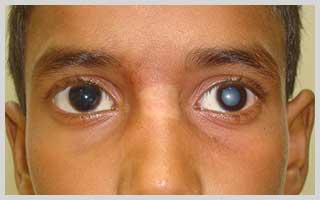
Cataract Overview
Diagnosis
Left traumatic cataract
Causes of chronic painless visual loss Z
-
Cataract
-
Glaucoma
-
Age-related macular degeneration
-
Refractive error
-
Retinitis pigmentosa
-
Diabetic retinopathy
-
Which part of lense is left inside eye after cataract surgery
-
= posterior capsule
Chronic Visual Loss
History
- Age
- Onset
- Duration
- Severity of visual loss compared to baseline
- Monocular vs. binocular ?
- Any associated symptoms
Examination
- Visual acuity assessment
- Visual fields
- Pupillary reactions
- Penlight or slit lamp examination
- Intraocular pressure
- Ophthalomoscopy
- red reflex
- assessment of clarity of media
- direct inspection of the fundus
Types & Age Groups
| Type | Age Group | Laterality | Notes |
|---|---|---|---|
| Senile | Old age | Bilateral | Most common in elderly |
| Traumatic | Young | Unilateral | Often due to injury |
| Congenital | Infants/Children | Uni/Bilateral | Present at birth |
Anatomy
- Lens Location: Posterior segment of the eye
- Attachment: Suspensory ligament (zonules of Zinn)
Pathogenesis
- Causes: Protein degeneration, cellular apoptosis leading to cataract formation
Treatment
| Age/Condition | Management |
|---|---|
| < 18 months | Treat cataract (conservative or surgery) |
| > 18 months | Cataract operation + intraocular lens (IOL) |
| Postoperative | Correct aphakia: contact lens, IOL implant, glasses (glasses not suitable for unilateral cases) |
| Traumatic cataract | Treated similarly to senile (older) patients |
Essential Investigations
- Biometry (for IOL power calculation)
- Ocular ultrasound (especially if fundus view is obscured)
Clinical features
- lens
- Age
- Visual acuity
- Ocular examination
- investigation
- Tension
Treatment
Surgical Management
Since the child is over 18 months and has significant visual impairment (6/60 in the affected eye), the definitive treatment is cataract surgery:
-
Lens aspiration / Phacoemulsification (depending on cataract hardness)
-
Posterior chamber intraocular lens (IOL) implantation
- Usually placed within the capsular bag (posterior capsule left intact if possible)
-
Posterior capsulotomy may be performed in children (manually or with Nd:YAG laser postoperatively) to prevent posterior capsule opacification