Professor of Ophthalmology Dr. Amani Badawi
Table of Contents
- Eye Anatomy
- Eye Components
- Anatomy of the Eye
- Anatomy of the Lens
- Lens Anatomy Details
- Lens Substance
Classification
On Etiology
-
Developmental
- Congenital Cataract (genetic, metabolic)
-
Acquired
- Senile Cataract
- Complicated Cataracts
- Metabolic Cataracts
- Drug-induced or toxic Cataracts (e.g., steroids)
- Traumatic Cataracts
- After cataract
Cataract
What is Accommodation?
- The capability that eyes change refractive condition in order to acquire clear near sight.
Lens Disease
- May affect structure, shape, and position
- Change of transparency
- Cataract
- Position and morphological abnormality
- Dislocation
- Malformation
- Change of transparency
Definition
- The lens becomes cloudy and scatters the light rays. This results in blurred vision.
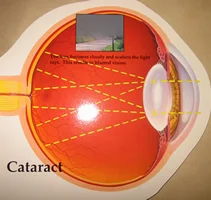
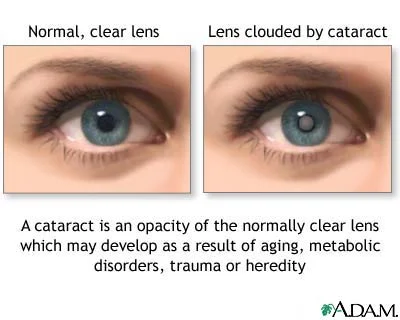
What is Cataract?
Normal, clear lens
Lens clouded by cataract
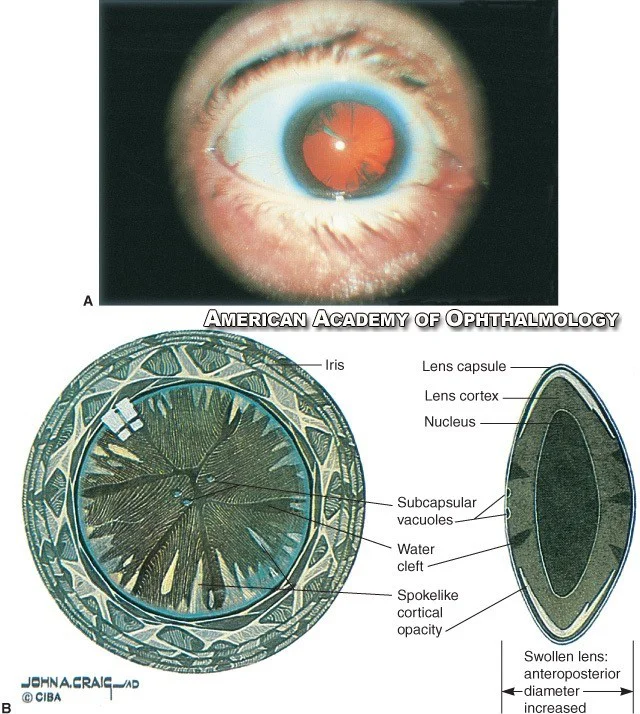
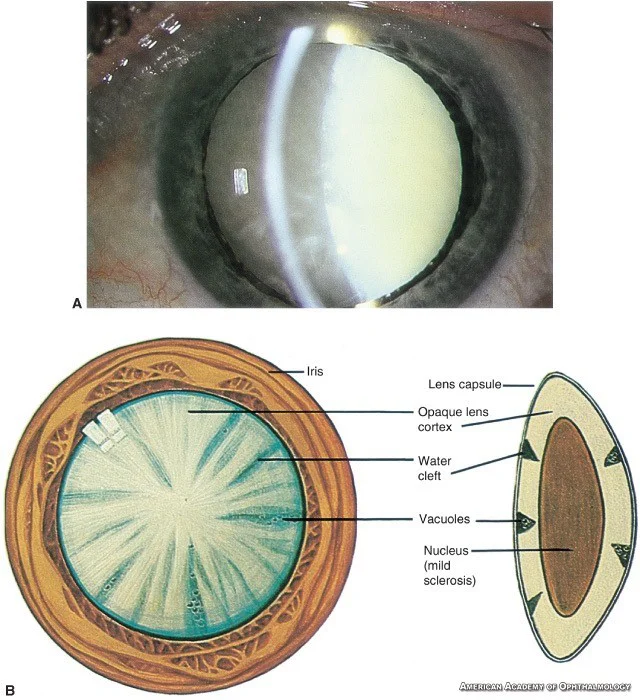
A cataract is an opacity of the normally clear lens which may develop as a result of aging, metabolic disorders, trauma, or heredity.
Pathogenesis
- The common route that causes cataract is the oxidation injury by peroxide free radical.
- Apoptosis—hot spot of research R
- AE: Any factors that change the intraocular environment to affect lens metabolism.
- Such as: aging, mechanical, chemical, operation, inflammation, metabolic
- Malformation
- Congenital factors
Mechanism
- Many factors → lens capsular change & damage
- → osmosis increase, loss of protective screen,
- metabolic disorders → protein degeneration,
- cell apoptosis → lens opacification → cataract
Treatment of Cataract
- Drug? NO USE
- Operation: The only effective therapy
- ICCE (intracapsular cataract extraction)
- ECCE (extracapsular cataract extraction)
- Phaco (phacoemulsification)
Preparation for Cataract Surgery
-
Biometry: The calculation of required IOL power Z
- Keratometry (K) (corneal curvature)
- Axial length (AL) of eye (ultrasound)
- IOL power = A constant - 2.5x AL - 0.9 K
- Eg: 118 - 2.5x 24 - 0.9x45 = 17.5 dioptres IOL power
-
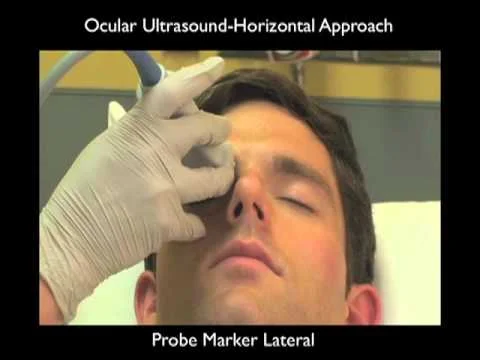
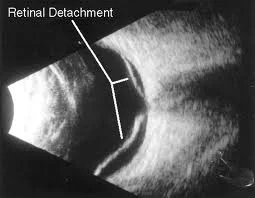
Ocular ultrasound (US): z
- To assess the posterior segment esp in dense cataract
-
Others
- Ocular: VA, LP, color vision, anterior segment, fundus, IOP, SLE, EKG, VEP, etc.
- System: BP, blood sugar, etc.
- Endothelial cell account (specular microscopy)
- Wash conjunctival sac and lacrimal canal, dilate the pupil
Way of the Surgery
- ICCE And ECCE
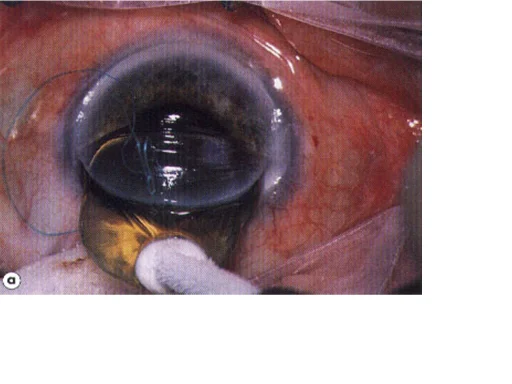
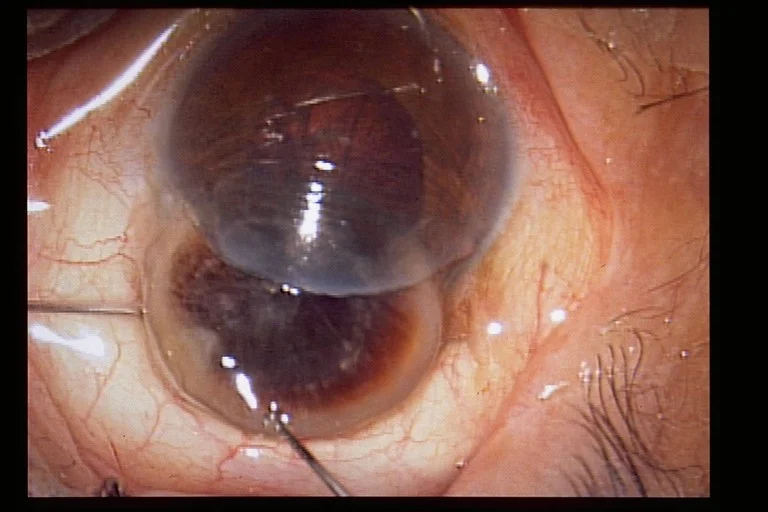 ICCE the whole lens
ECCE the whole lens except posterior capsule for implant IOL
Phaco
- Small incisional Phacoemulsification surgery (Developed by Kelman, USA)
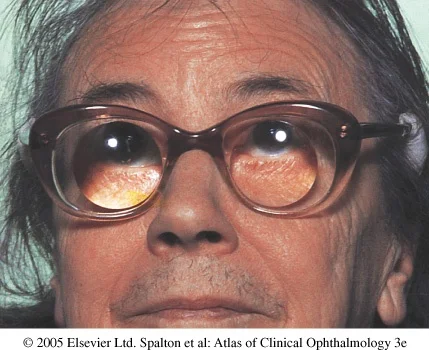
Refractive Correction of Aphakia
-
Spectacles
-
Contact lens
-
IOLs: Multifocal, Accommodatable
-
Refractive surgeries
-
Nbs
- Phakia: Presence of the crystalline lens in the eye
- Aphakia: Absence of the crystalline lens of the eye
- Pseudophakia: “Fake lens” an artificial lens implanted in your eye to replace your own natural lens (IOL).
Before IOL Implantation was Developed
- Aphakic spectacles (not suitable for unilateral aphakia)
- Contact lenses
Treatment
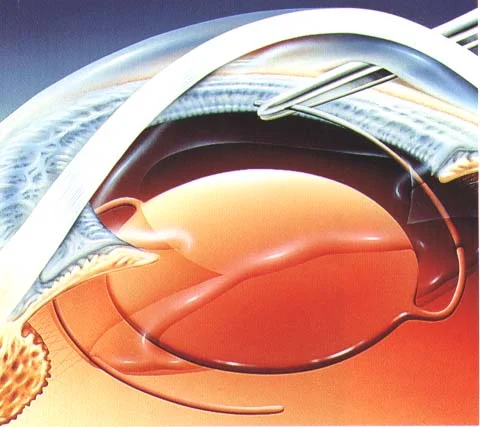
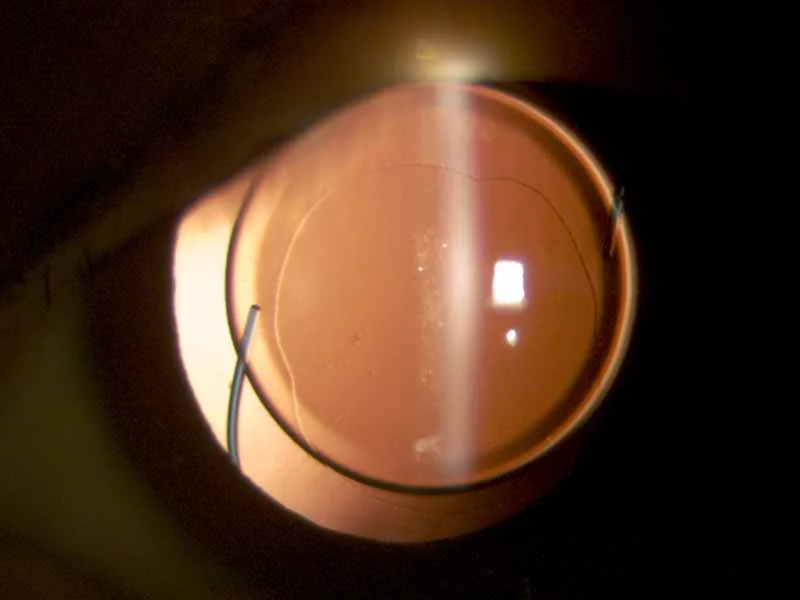
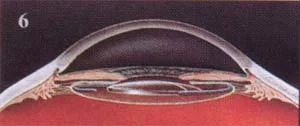
- Phaco & Flexible -IOL
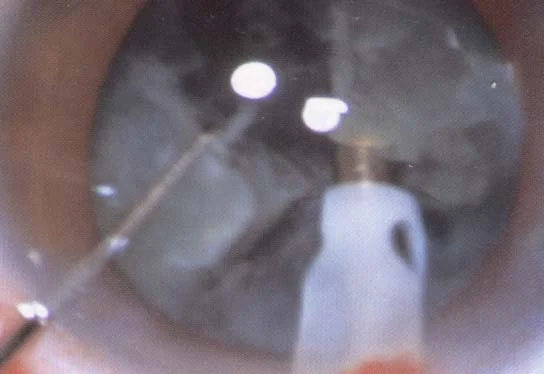
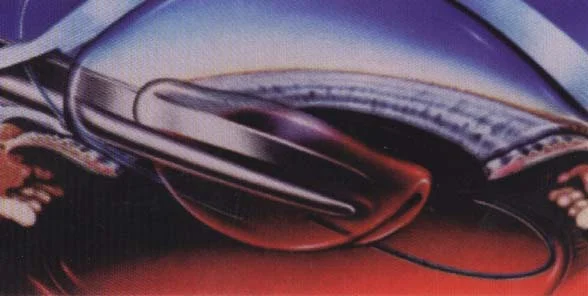
IOL (Intraocular Lens) Implantation
Operative Complications
- Posterior capsular rupture
- Vitreous loss
- Posterior loss of lens fragments or nucleus
- Suprachoroidal (expulsive) hemorrhage
Post-Operative Complications
- Posterior capsular opacification. Posterior capsular opacification (PCO) is the most common post-operative complication of cataract surgery. … Z
- Raised intraocular pressure. …
- Corneal decompensation. …
- Cystoid macular oedema. …
- Retinal detachment. …
- Endophthalmitis. … Z
- Refractive surprise.
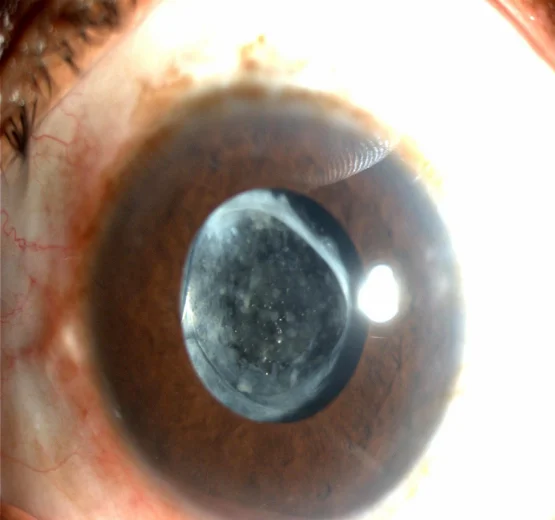
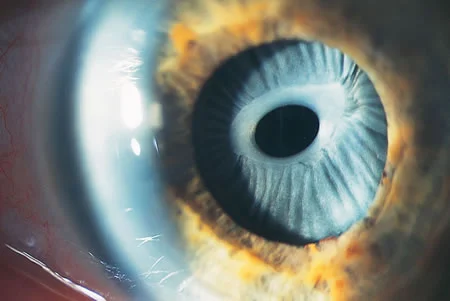
After Cataract
- Now usually called PCO (posterior capsular opacification)
- Adult: 30-50%
- Child: 100%
- Pathogenesis:
- Proliferation, migration & metaplasia of lens epi.
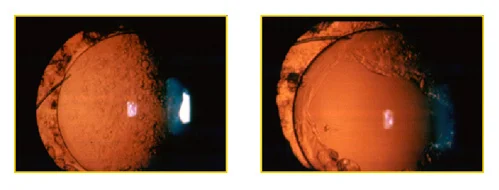
YAG Laser Capsulotomy
- Treatment of PCO
- A technique in which a laser beam is used to make a small opening in the clouded capsule to let light pass through
Lens Dislocation
- Etiology:
- Congenital
- Marfan syndrome
- Traumatic
- Spontaneous
Clinical Manifestations
- Subluxation Marfan syndrome Z
- Dislocation; trauma anterior or posterior chamber
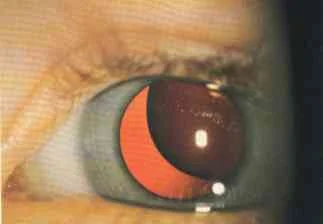 Subluxation
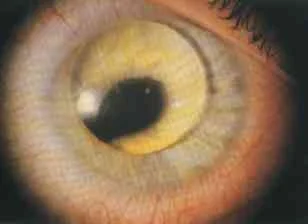
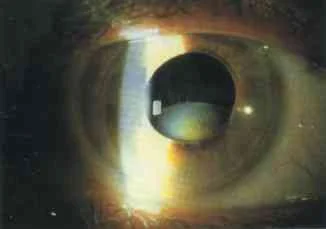
mohammad saudi teacher coming to emergency after severe car accident complaining of sudden loss of vision in right eye,
Findings deep anterior chamber aphakia, no hx of cataract operations
What is diagnosis Posterior dislocation
What is essential investigation scan ultrasound
Complications
- Uveitis
- Secondary glaucoma
- Retinal detachment
- Corneal turbidity
Cataract
- Opacification of the lens.
- Congenital cataracts usually are diagnosed at birth.
Unilateral Cataracts
- Usually isolated sporadic incidents

Bilateral Cataracts
-
Often inherited and associated with other diseases.
-
They require a full metabolic, infectious, systemic, and genetic workup.
-
The common causes are hypoglycemia, trisomy (eg, Down, Edward, and Patau syndromes), myotonic dystrophy, infectious diseases (eg, toxoplasmosis, rubella, cytomegalovirus, and herpes simplex [TORCH]), and prematurity

Cataract - bilateral
Opacity of the lens
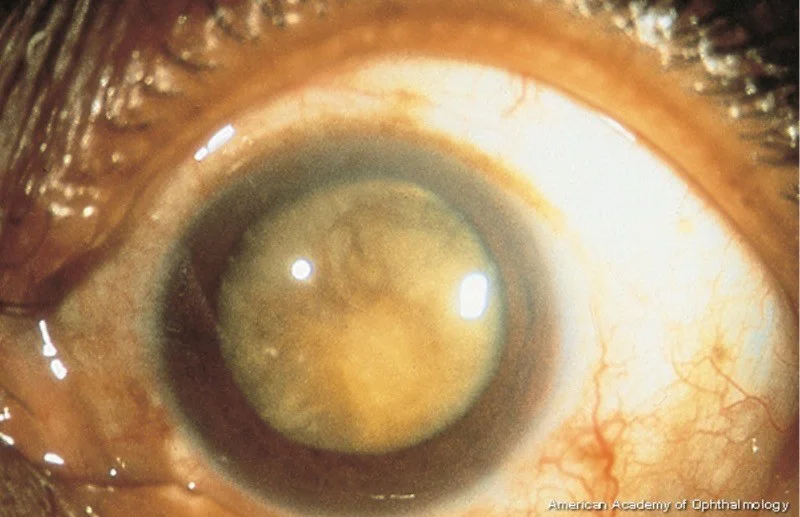
Causes of Cataract
- Age
- Trauma
- Systemic diseases - DM
- Myotonic dystrophy
- Medications
- Steroids
- Chlorpromazine
- Miotics