Poliovirus Infections — overview
- Poliovirus is an enterovirus that infects humans and can produce a spectrum of outcomes, from asymptomatic infection to life‑threatening paralysis.
Etiology & virology
- Classification: member of the family Picornaviridae, genus Enterovirus, species Enterovirus C.
- Structure: non‑enveloped, single‑stranded, positive‑sense RNA virus.
- Stability: highly stable in liquid environments.
- Serotypes: three serotypes — 1, 2, 3.
Clinical spectrum
- Infection ranges from no symptoms to severe paralytic disease. Approximate frequencies:
- Asymptomatic: ~70% of infections.
- Minor (abortive) illness: ~25%, low‑grade fever, sore throat, malaise.
- Nonparalytic (aseptic meningitis/meningomyelitis): 1–5%, may follow minor illness; sometimes with paresthesias.
- Paralytic poliomyelitis: <1%, abrupt onset of asymmetric acute flaccid paralysis with areflexia.
Poliovirus — causes of paralytic disease
Acute paralytic disease is caused primarily by wild polioviruses and, more rarely, by the oral poliovirus vaccine (OPV).
-
Vaccine‑associated cases
- Vaccine‑associated paralytic poliomyelitis (VAPP) can occur in vaccine recipients or their close contacts.
- Circulating vaccine‑derived polioviruses (cVDPVs) can arise when OPV viruses regain neurovirulence and transmissibility through sustained person‑to‑person transmission in areas with inadequate population immunity. cVDPVs may acquire virulence properties indistinguishable from wild polioviruses.
-
Immunodeficiency risk
- Individuals with B‑lymphocyte (antibody) immunodeficiencies — particularly primary (congenital) B‑cell defects — have an increased risk for VAPP and for prolonged infection.
- Prolonged shedding in immunodeficient persons can lead to immunodeficiency‑associated vaccine‑derived polioviruses (iVDPVs) derived from the vaccine virus.
-
Key takeaways
- Wild polioviruses are the main cause of paralytic disease.
- OPV can rarely cause VAPP or give rise to cVDPVs/iVDPVs, especially where population immunity is low or in persons with B‑cell immunodeficiency.
Poliovirus Infections: Paralytic Form Details
Paralytic poliomyelitis — overview
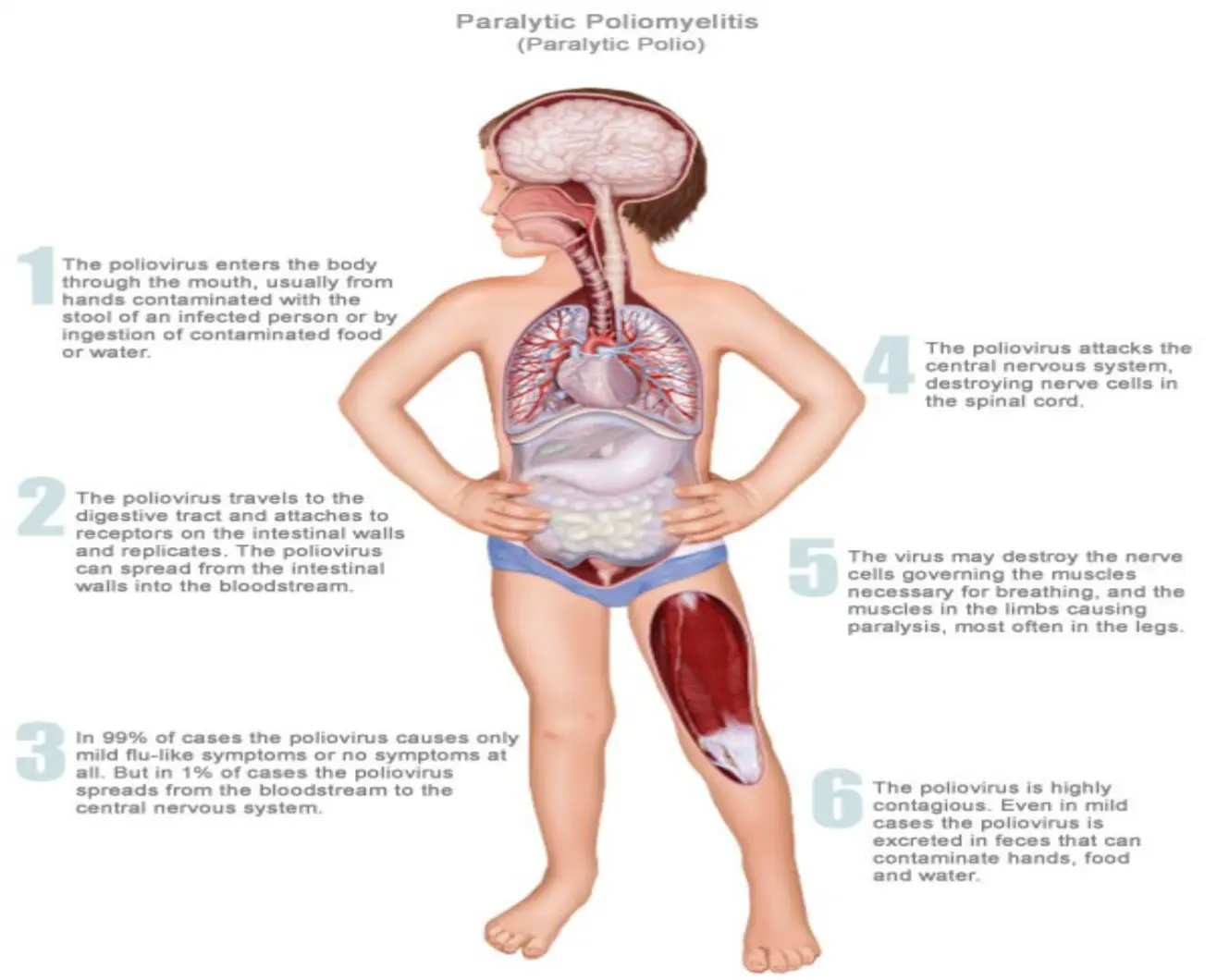
Paralytic poliomyelitis is a severe form of polio that causes sudden, uneven paralysis and loss of reflexes in affected limbs. It occurs in less than 1% of infections; of those who develop paralysis, about two‑thirds experience lasting weakness.
Initial symptoms & progression
- Typically begins with mild, non‑specific symptoms for a few days: fever, sore throat, headache, nausea, constipation, and general discomfort.
- After a brief symptom‑free period (about 1–3 days), paralysis can set in quickly.
Characteristics of the paralysis
- Usually asymmetric (uneven) and tends to affect proximal muscles (those closer to the body’s center) more than distal muscles.
- Loss of reflexes in the affected limbs is common.
- If the infection involves the nerves controlling breathing or the brainstem (bulbar involvement), patients may require ventilatory support or other respiratory assistance.
The paralysis is characterized by:
- Lower limb muscles are the most commonly .affected
- Asymmetrical
- Non progressive maximal from the start
- Purely motor no sensory affection
- ( +Of lower motor neuron type hypotonia loss + +of tendon reflexes muscle wasting reactions .of degeneration
Poliovirus Infections: Paralytic Form Details Diagnostic Findings ( ) , ,Spinal fluid analysis CSF often shows signs of viral meningitis with a slight increase in cells mostly lymphocytes.
Long-term Complications: Post-Polio Syndrome Adults who had paralytic polio as children may develop non infectious post polio syndrome 15 to 40 years later , , .This condition causes a slow worsening weakness in the muscle groups originally affected along with common muscle and joint pain 25% to 40% polio survivors
DIFFERENTIAL DIAGNOSIS OTHER CAUSES OF LOWER MOTOR NEURON DISEASE:
- Guillain-Barre syndrome.
- Spinal cord lesions ( transverse myelitis ,tumor)
- Muscle dystrophies
- Organophosphorus and lead poisoning.
PSUDO-PARALYSIS:
Painful conditions interfering with movement of one or more limb ( arthritis , toxic synovitis ,osteomyelitis ,unrecognized trauma , dislocation ,fracture)
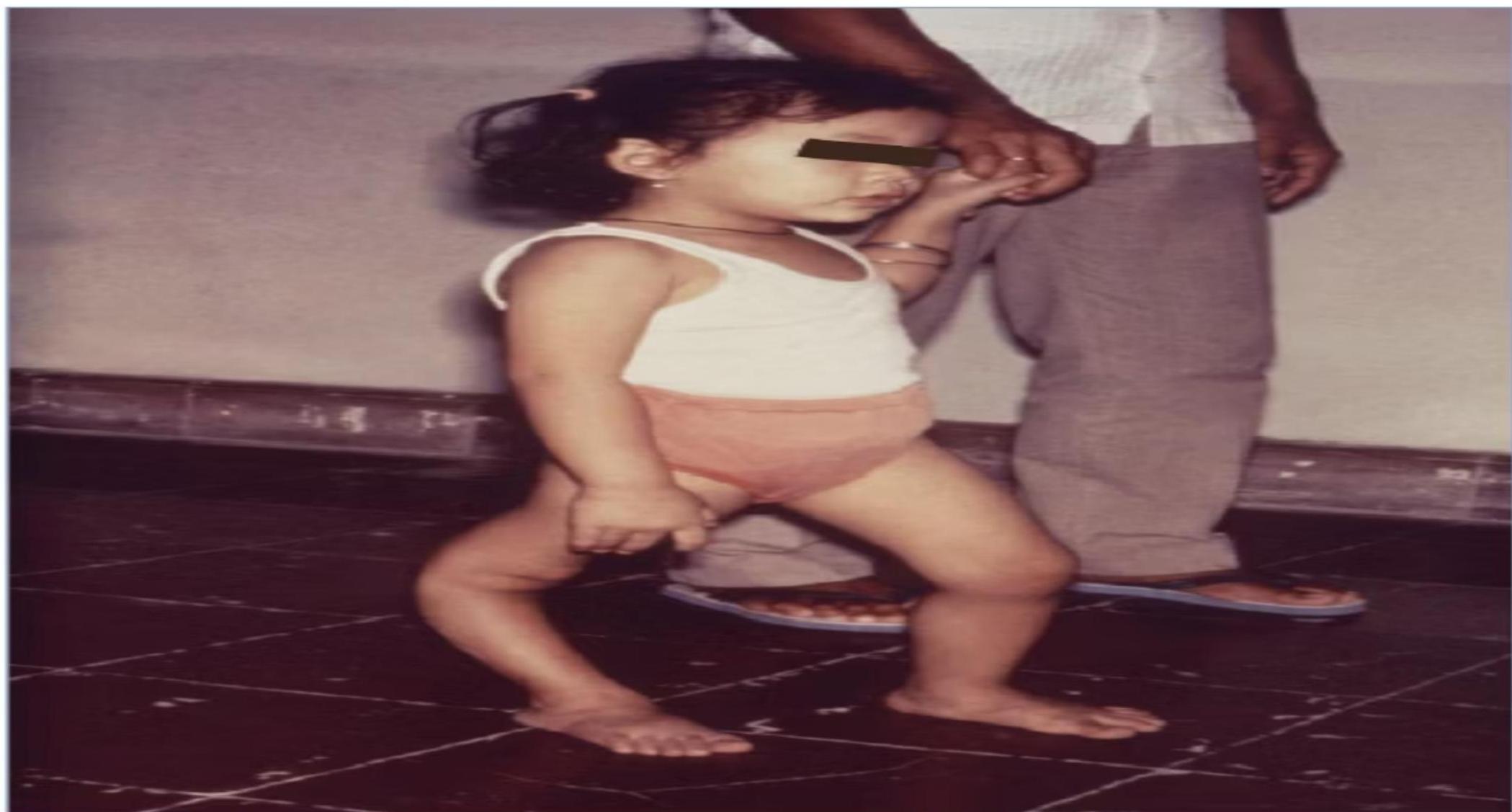
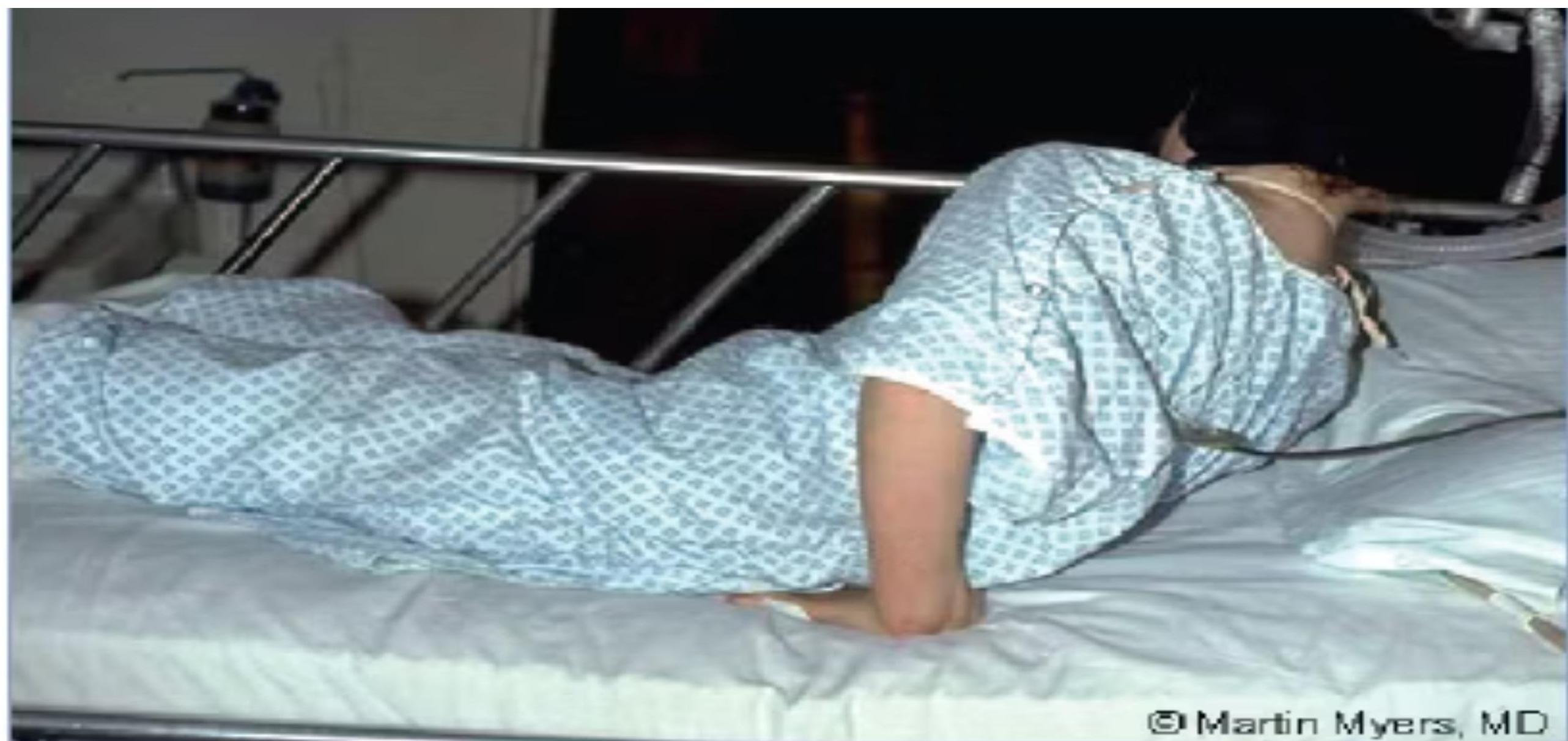 Left: Deformity of right lower extremity. Right: Bulbar poliomyelitis with tripod sign.